
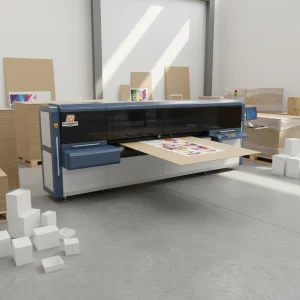
Famous High Speed Automatic Digital Single Pass Corrugated Board Printing Machine Large Format Carton Box Manufacturer, Company
Request Export Specs
Commercial-grade flatbed and hybrid UV hardware ready for global batch dispatch, containerized freight, and multi-market deployment.
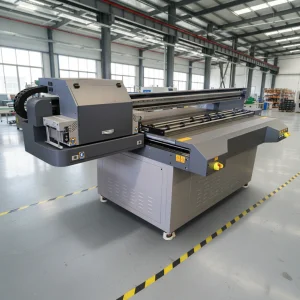
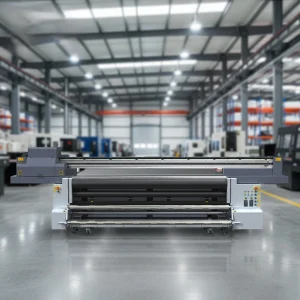
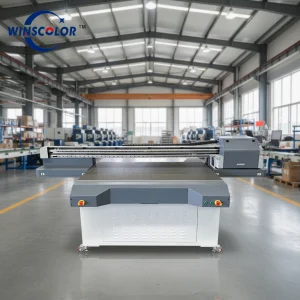
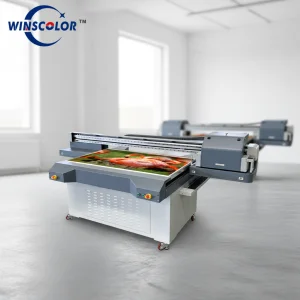
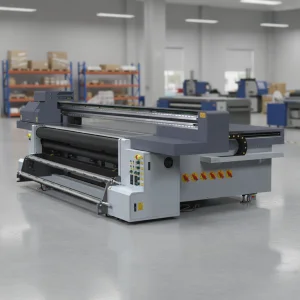

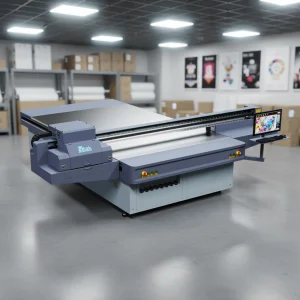
Analyzing key structural shifts moving global printing manufacturers from analog roll systems and pad screens toward agile piezo flatbed architectures.
Modern wholesale flatbed printers have transitioned from standard binary drop matrices to advanced grayscale piezoelectric printheads (such as Ricoh Gen6 and industrial Kyocera arrays). By modulating variable droplet volumes between 2.5pl to 15pl, exporters offer machines capable of ultra-fine rendering alongside heavy ink density for thick acrylics and ceramic base coats.
The traditional mercury arc vapor curing mechanism has been comprehensively displaced by directional UV-LED solid-state arrays. LED modules eliminate ozone emissions, run cool across thermo-sensitive substrates like thin styrene or corrugated flutes, and slash factory electrical overheads by up to 65% while delivering instant on/off duty cycles.
B2B markets are demanding sensory interaction. Modern export platforms support synchronous tri-layer curing: White Base + Full CMYK/LC/LM + Overcoat Optical Varnish. This allows packaging converters and signage houses to construct structural textures, braille notations, and selective 3D relief depths up to 2.0mm directly in a single pass without silkscreens.
How state-level advanced manufacturing clusters, integrated component ecosystems, and standardized assembly protocols ensure cost competitiveness and machine longevity.
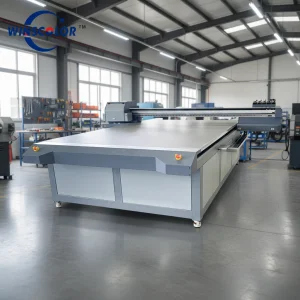
The Jinan and Guangdong industrial corridors integrate precision linear guide rails, magnetic raster strips, dual-zone heavy milling gantries, and negative-pressure ink delivery circuits into centralized production parks. Chinese exporters retain rapid turnaround advantages, machining customized beds (e.g., 2500×1300mm to 3300×2100mm) with tight delivery leads compared to Western assembly lines.
Export-tier machines undergo 72-hour dynamic printhead stress checks, mechanical bed stress-relief thermal cycles, and sub-micron laser interferometer alignment across gantry axes. This eliminates horizontal banding, stepping deviation, and vacuum bed warpage before industrial crating and ocean containerization.
By optimizing assembly architectures and partnering with OEM inkjet software providers (Onyx, Caldera, Photoprint), domestic Chinese factories enable global printing converters to cut acquisition CAPEX by 40-50% while enjoying open-source ink profiles, significantly reducing the cost-per-square-meter of cured formulations.
Engineered for complex surfaces requiring non-standard curing chemistries, adhesion promoters, and automated height sensors.
E-commerce unboxing and fast-turnaround retail POS displays require elimination of plate-making tooling costs. Using high-speed flatbeds or single-pass inline systems, converters print runs from 1 to 5,000 units on coated cardboard, kraft liner, and honeycomb boards with instant variable-data serializations.
Tempered architectural glass panels, kitchen splashbacks, and vitrified tiles deploy specialized silane coupling primers. Flatbed machines apply microscopic primer matrices followed by high-opacity white backing, generating scratch-resistant, humidity-proof interior wall panels and splash decor.
Aluminum composite sheets (Dibond), anodized nameplates, and appliance control panels leverage rigid UV ink formulations. Resistance against oil abrasion, UV weather fading, and high-temperature thermal cycling positions flatbed UV printing as a superior direct-marking solution over screen printing.
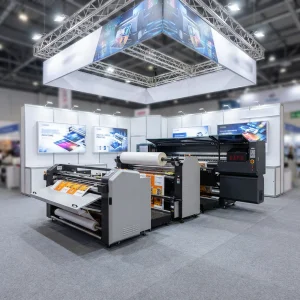
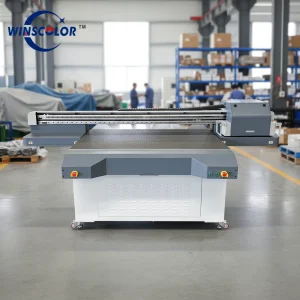
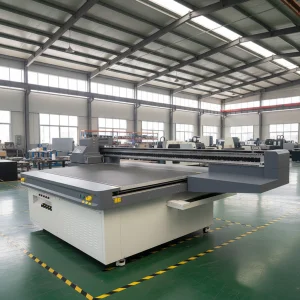
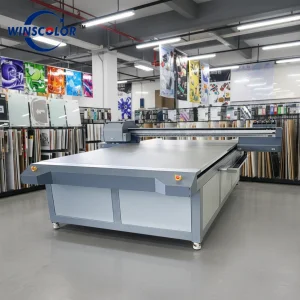
Extended inventory comprising precision rotary attachments, dedicated board printers, and high-resolution commercial systems.

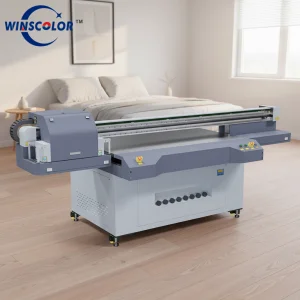
Key technical criteria, customs clearance guidance, and integration specifications addressing professional procurement queries.