
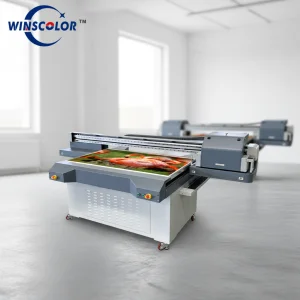
Top-tier engineered UV flatbed and hybrid solutions optimized for polymethyl methacrylate (acrylic) and rigid production environments.
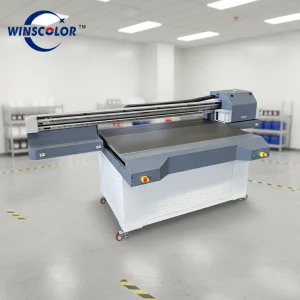
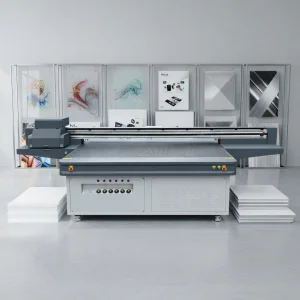
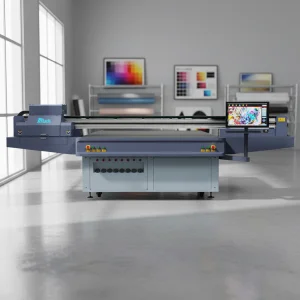
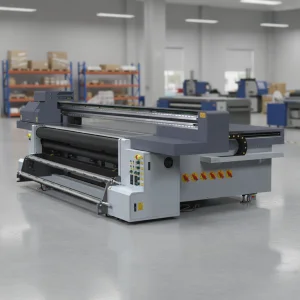
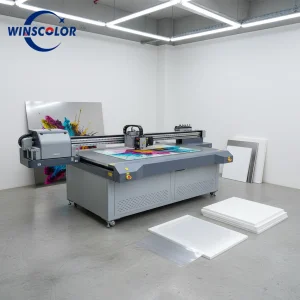
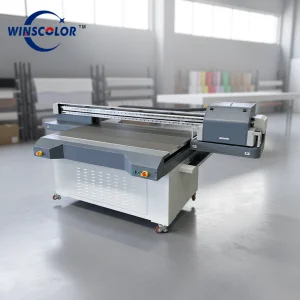
A comprehensive examination of transitioning rigid acrylic decoration away from legacy screen setups toward high-yield industrial inkjet technology.
The global sheet-fed acrylic printing market is experiencing a profound transition away from traditional screen printing toward direct-to-substrate digital UV cure technologies. In the past, decorating cast or extruded polymethyl methacrylate (PMMA) demanded costly screen setups, prolonged drying cycles, massive volatile organic compound (VOC) emissions, and high reject rates on multi-color registration. Modern digital acrylic printing systems solve this bottleneck by running plate-free short-to-medium runs with instant LED curing.
From an industrial perspective, acrylic represents one of the most demanding rigid polymers. Its exceptionally slick, non-porous surface tension (typically between 38 and 42 dynes/cm) necessitates carefully engineered micro-piezo chemistry and pinpoint thermal stabilization during the curing cycle. Without precision UV waveband management (395nm vs 365nm), radiant heat warps high-gauge acrylic sheets or causes ink embrittlement, ruining high-end architectural and retail installations.
Global brand houses in North America, Western Europe, and the APAC region are restructuring retail and POP display pipelines. Standardized sign dimensions are shrinking in volume per artwork while expanding drastically in custom Stock Keeping Units (SKUs). Wholesale suppliers operating high-speed digital acrylic machinery capture this value by delivering overnight localized replenishment cycles without maintaining finished goods inventories.
Why Jinan Yingcai Digital Technology (Winscolor) provides an unassailable performance-to-cost ratio for commercial and industrial print houses worldwide.
China's heavy industrial regions, notably centered around Shandong and Jinan, maintain a concentrated supply chain for structural CNC milling, heavy gantry temper heat treatment, and precision honeycomb vacuum table machining. Our plant leverages these co-located foundries, executing automated stress-relief annealing on every welded steel chassis. This prevents long-term beam deflection, which is the primary cause of drop-placement error across wide flatbeds.
We combine domestic structural dominance with global tier-1 motion and fluid handling mechanics. Winscolor units incorporate Japanese Ricoh Gen6 industrial piezo printheads with isolated dual-circulation negative pressure loops, German IGUS low-friction cable drag chains, and Taiwanese Hiwin linear rails driven by dual Panasonic AC digital servo drives. This provides European-standard precision at an accessible wholesale factory gate cost.
Before any wholesale machine receives an export packing manifest, it passes continuous 72-hour operational load tests. This includes laser-interferometer table leveling across 16 vacuum zones, continuous high-frequency drop ejection diagnostics, and substrate adhesion validation across high-gloss PMMA panels. This ensures rapid on-site commissioning once crates arrive at overseas facilities.
Tactical breakdown of how wholesale acrylic UV printing machinery translates into high-margin revenue streams across target industries.
Cosmetic visual merchandising demands razor-sharp photographic transitions and pristine solid color fills. With optical-grade cast acrylic, our equipment executes second-surface "sandwich" printing—laying down Color + White + Color or Color + White + Black for day/night illumination. This ensures the graphic is completely shielded behind the clear acrylic face, preventing surface scratches and cleaning-chemical degradation.
Regulatory architectural signage in North America and Europe mandates tactile character elevation and Braille dot compliance (such as Title III ADA standards). By leveraging dedicated varnish and structural white ink stacks, Winscolor printers accumulate ink relief up to 1.5mm in a single print cycle, completely eliminating the labor of inserting physical acrylic or metal beads manually.
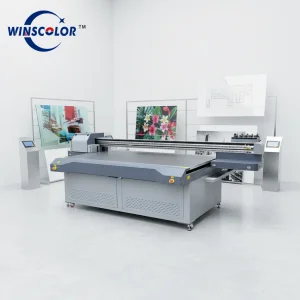
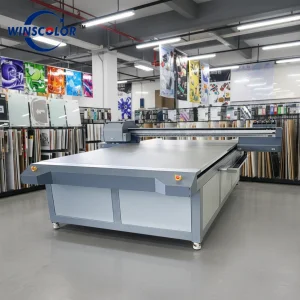
High-end interior fit-outs substitute fragile plate glass with impact-resistant acrylic panels. Large flatbeds such as the YC2030 and YC2513 models deposit graded frosted patterns, stained-glass faux textures, and full-bleed high-gloss architectural motifs. The adjustable curing irradiance prevents excessive heat deformation on oversized acrylic partitions.
The engineering breakthroughs shaping next-generation digital flatbed and hybrid productivity platforms.
Piezoelectric printheads have evolved from single-size drop ejectors to sophisticated multi-drop greyscale units. Modern Ricoh Gen6 systems dynamically toggle firing chambers between 5, 10, and 15 picoliters. Ultra-fine 5pL drops resolve complex highlight skin tones and photorealistic product details directly over transparent PMMA, while heavier 15pL droplets drive dense background saturation in high-speed draft modes.
Traditionally, acrylic requires manual solvent-wiped primers to ensure cross-hatch adhesion (ASTM D3359 Class 5B). The market is moving rapidly toward automated digital primer jetting directly from dedicated printhead arrays. Primer is laid down selectively only where pigmented ink will fall, conserving chemistry and maintaining 100% optical clarity on unprinted acrylic borders.
Rigid PMMA has a thermal expansion rate that causes sheets to buckle under excessive heat. Modern flatbeds implement closed-loop LED-UV curing with micro-step power modulation. The RIP software matches LED wattage dynamically to carriage travel speed, pass counts, and media thickness, preventing heat warping while guaranteeing a complete monomer conversion cure.
Unwrapping protective film from acrylic sheets creates high electrostatic surface charges (often exceeding 15kV). This static deflects airborne ink droplets, resulting in unsightly overspray and dot drift. Next-gen industrial machines now integrate active ionizing air knives directly onto both gantry travel flanks, neutralizing charges milliseconds before ink impact.
Key technical specifications, duty cycles, and maintenance matrices that enterprise procurement teams must verify before vendor contracting.
Procuring wholesale printing platforms requires calculating complete cost profiles rather than just machine FOB prices. Key operational factors include: (1) Ink Consumption Efficiency: Running high-pigment load UV ink sets reduces usage per square meter to roughly 8–10ml/m². (2) Printhead Replacement Cycles: Ricoh Gen6 silicon piezos offer MTBF lifespans exceeding 36 months under disciplined cleaning regimes. (3) Power Overhead: Low-power LED-UV arrays reduce factory energy draws by up to 65% compared to metal halide lamp systems.
Look for machines built on an integrated steel double-gantry framework with automated thickness measurement. High-precision acrylic work requires a dynamic bed planarity under ±0.03mm across the entire length of the vacuum bed. If gantry runout exceeds 0.05mm, white-to-color edge registration degrades, resulting in unacceptable halo rings along clear-cut acrylic borders.
Titanium dioxide (TiO₂) white pigments are heavy and settle rapidly inside delivery tubing and sub-tanks, risking catastrophic nozzle blockages. Enterprise-grade buyers must confirm continuous white ink agitation loops, sub-tank micro-pumping, and automated head-purging routines that keep pigments suspended during weekend production standstills.
In-depth operational clarity addressed by our chief applications engineering department.
Delamination stems from inadequate surface energy. We recommend using a specialized UV curable primer applied via wiping or dedicated automated print channels. In addition, our machines leverage 395nm wavelength LED systems matched precisely to photoinitiator concentrations in the ink, ensuring maximum cross-linking adhesion.
Our Jinan manufacturing facility maintains continuous production across 6 lines. Standard modular models (like the YC2513 or YC1610) typically ship within 10–14 working days. Bespoke gantry modifications, custom multi-zone vacuum layouts, or special dual-row head configurations ship in roughly 20–25 working days.
Braille mode runs via specialized RIP curve parameters. The carriage deposits targeted multi-layer white ink droplets onto specified vector coordinates, instantly gelled by low-power pinning LEDs. A final pass seals the raised profile with high-durability matte or gloss varnish, hitting precise dome geometry and height requirements.
Winscolor provides comprehensive technical onboarding: real-time remote video commissioning, complete electrical diagnostics via network-linked PLC systems, and direct parts dispatch. We also support local distributor field technician training across the Americas, Europe, and Southeast Asia.
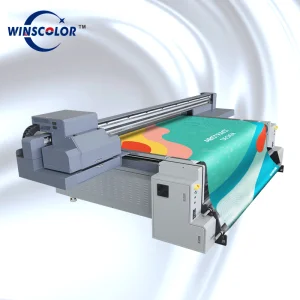
Explore our complete export-certified lineup of large-format UV flatbed, hybrid, and rotary printing machinery.

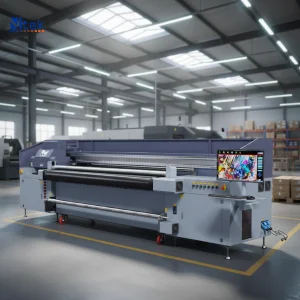
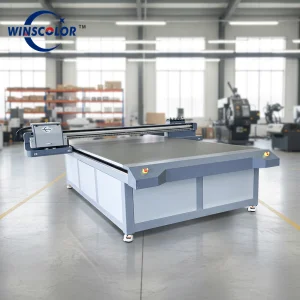
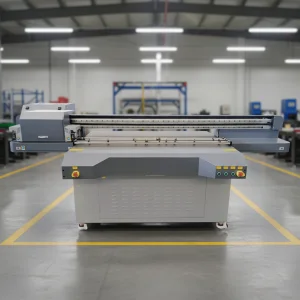
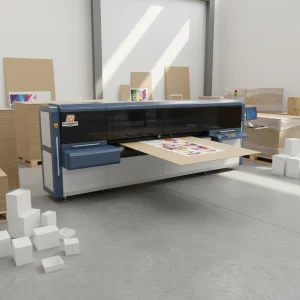

Submit your substrate dimensions and target output. Our application engineers will calculate custom configuration schemes, ink consumption models, and sample validation schedules.