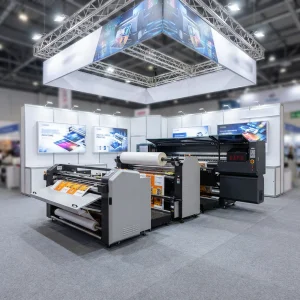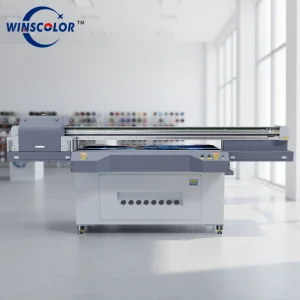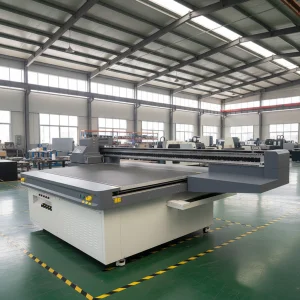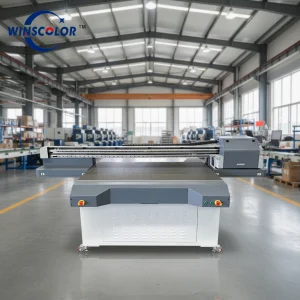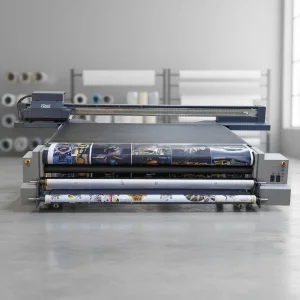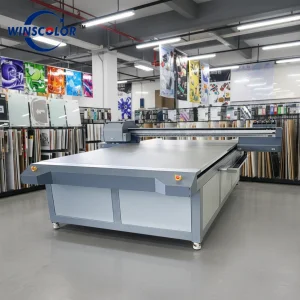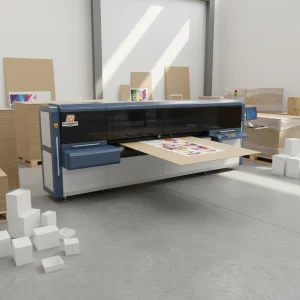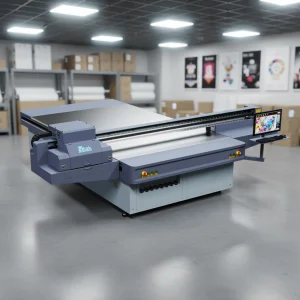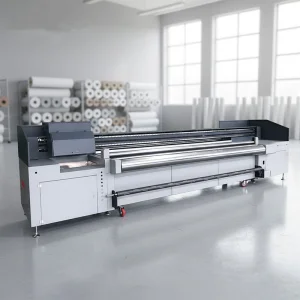
High-Quality Large format UV Inkjet Hybrid Flatbed Printer Roller Printing Machine Company, Companies
View Specifications →
Explore production-verified direct-to-metal UV printing platforms delivering ultra-durable curing, high jetting frequency, and microscopic dot precision on all solid aluminium alloys.
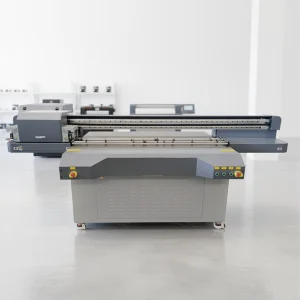

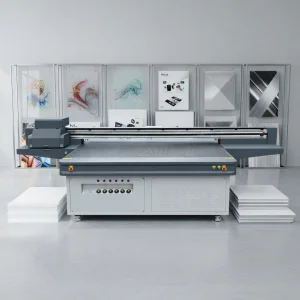
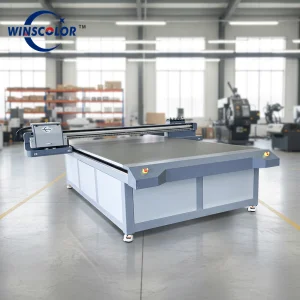
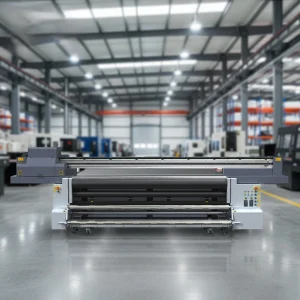
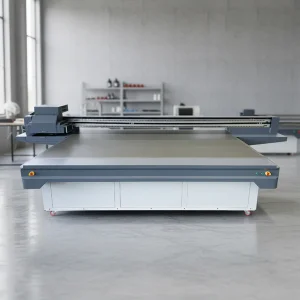
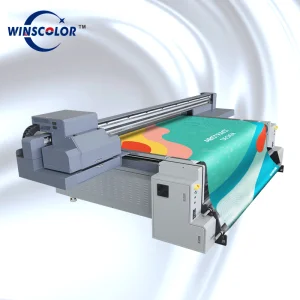
Why Tier-1 industrial buyers, signage converters, and OEM brand distributors consolidate their flatbed and hybrid hardware procurement directly with our Jinan production campus.
Unlike light architectural frames, our aluminium-optimized printing platforms utilize five-axis CNC milled steel bed structures, heat-treated to 600°C to relieve internal stresses. This structural rigidity eliminates mechanical vibration when carrying dense, oversized raw metal sheets weighing over 150 kg.
From custom vacuum table partitioning designed specifically for standardized composite panels (such as 1220×2440 mm or 1500×3000 mm) to custom multi-row Ricoh Gen5/Gen6 and Konica Minolta array configurations, we deliver bespoke hardware integration with client software and specialized PLC lines.
By operating six automated production lines in Jinan, Shandong, we retain absolute control over motion controllers, ink degas manifolds, negative-pressure circuits, and LED curing assemblies. We pass on 30% to 45% capital expenditure savings directly to commercial distributors and enterprise end-users.
A deep technical review of adhesion mechanics, UV-LED surface tension dynamics, and the migration from traditional screen printing to direct-to-substrate digital systems.
Direct printing onto non-porous aluminium (including mill finish, brushed, mirror, and coil-coated sheets) presents chemical adhesion difficulties due to low surface energy (typically below 34 dynes/cm) and native oxide layers. Conventional inkjet fluids suffer from de-wetting, reticulation, and poor cross-hatch adhesion test performance (ASTM D3359 Class 0B).
Winscolor engineering integrates advanced surface pretreatment with specialized functional ink channels. By implementing in-line pneumatic flame treatment, corona stations, or integrated piezo-jetted chemical primers, surface dyne levels are consistently elevated to above 48 dynes/cm. This promotes cross-linking with multi-functional acrylic monomers during instantaneous UV-LED polymerization, reaching Class 5B scratch resistance without post-baking.
The global aluminium fabrication and signage sector is shifting rapidly away from screen printing and post-applied self-adhesive vinyl decals. Screen printing requires lengthy plate preparation, hazardous solvent cleanups, and high minimum order quantities. Laminated vinyl overlays suffer from edge-curling, delamination under outdoor UV exposure, and thermal expansion failure when metal substrates fluctuate in extreme weather.
Digital UV flatbeds enable variable data marking, photorealistic photographic rendering (up to 2400 DPI interpolated), micro-text readability down to 2 pt for industrial asset tags, and multi-layer structural relief printing (3D tactile Braille and simulated embossing) in a single workflow. Production setups take seconds rather than hours, reducing make-ready material waste to zero.
| Substrate Profile | Recommended Pre-Treatment | Inkjet Chemistry | Curing Configuration | Mechanical Adhesion Metric |
|---|---|---|---|---|
| Anodized Architectural Aluminium | Zero (Direct) or IPA Degreasing | Hard Industrial Pigmented UV | Dual Water-Cooled UV-LED (14–16 W/cm²) | ASTM D3359 Grade 5B (Cross-Hatch) |
| Aluminium Composite Panel (ACM/Dibond) | Static Elimination + Air Blade | Flexible / Semi-Rigid UV Curable | Adjustable LED-UV (8–12 W/cm²) | Grade 5B / Resistant to CNC Routing |
| Brushed / Mirror Finished Alloys | Digital Jetted Primer (Channel 7/8) | High-Density CMYK + White Underbase | Pinning Curing + Post Full-Power Curing | Pencil Hardness ≥ 4H |
| Industrial Cast Metal Equipment Enclosures | Plasma Pre-treatment or Silane Wipe | Solvent-Resistant Chemical UV Ink | High-Dose Full UV Exposure | Resistant to MEK (500+ Double Rubs) |
Purpose-built engineering adapted for varied commercial production lines, high-throughput manufacturing plants, and heavy fabrication centers across the world.
Direct printing on external aluminium composite materials (ACM) and massive solid aluminium rain-screens. Features weathering-resistant automotive grade pigments that resist UV degradation, acid rain, and thermal cycling up to 10 years outdoors.
Micro-droplet technology (5 pl variable drop size) delivers sharp rendering for electrical schematics, CE certification badges, laser-readable QR barcodes, and control dials on brushed aluminium plates with high resistance against abrasive wear and oils.
Bespoke interior acoustic baffle printing, simulated wood-grain patterns, marble replication, and custom high-gloss textured graphics printed directly onto perforated aluminium suspended ceiling tiles without plate fabrication costs.
Beyond isolated printing machinery: holistic factory integration covering loading automation, vacuum flow management, and RIP colour profiling.
Aluminium sheets frequently feature micro-curvatures or slight edge burrs. Our equipment integrates 6 to 8 independently controlled vacuum sectors driven by twin turbine blowers, delivering reverse air-float loading for frictionless repositioning of 150 kg panels.
Equipped with dual pneumatic height-detection pins and multi-point infrared collision sensors, the printhead carriage automatically establishes the optimal 1.5 mm jetting clearance, preventing physical strikes on warped metal sheets and safeguarding head longevity.
Metal substrates act as natural heat sinks, cooling ambient table temperatures. Our constant-temperature sub-tanks and heated carriage manifolds maintain ink viscosity at precisely 42°C, ensuring consistent drop formation and meniscus stability in any workshop environment.
We streamline cross-border equipment purchases for North American, European, Middle Eastern, and APAC industrial operations through strict quality controls.
All electrical enclosures, emergency cutoff interlocks, and shielded wiring comply with CE Low Voltage (LVD) and Electromagnetic Compatibility (EMC) directives, ensuring immediate compliance inspection clearance worldwide.
Before marine export crating, every machine undergoes a full 72-hour operational cycle on solid aluminium plates, validating nozzle consistency, vacuum pressure stability, UV curing intensity, and servo heat distribution.
We support our international dealer networks with remote telemetry diagnostics, complete spare assemblies, and on-site deployment engineers for turn-key factory commissioning, operator calibration, and workflow training.
Machinery is vacuum-sealed with desiccant chambers, wrapped in multi-ply moisture barriers, and secured inside steel-braced, fumigated composite wooden crates to ensure zero rust or alignment shifts during oceanic transit.
Comprehensive technical guidance compiled by our application engineers addressing procurement, maintenance, chemistry, and operational longevity.
Adhesion relies on surface activation and chemical cross-linking. While anodized aluminium has natural microscopic pores that anchor cured ink, raw or mirror-finish aluminium requires either an in-line wipe/flame treatment or our automated primer jetting system. The primer acts as a molecular bridge between the inorganic metal alloy and the organic UV acrylic resin, yielding maximum adhesion ratings (Class 5B) under standardized cross-hatch tape tests.
Yes. By pairing our specialized semi-flexible industrial ink formulations with precise LED-UV curing profiles, the cured polymer matrix retains sufficient elongation (up to 120%). This enables secondary post-processing—such as CNC router cutting, scoring, 90-degree folding, and hole punching—without brittleness, edge fracturing, or micro-cracking along the fold line.
Ricoh Gen6 industrial printheads are fabricated from full stainless steel, eliminating the solvent erosion risks common to plastic components. Gen6 heads feature higher jetting frequencies (up to 50 kHz) and can throw ink droplets across wider standoff distances (up to 4 mm), which is vital for heavy metal plates where perfect microscopic planarity cannot be guaranteed.
Unlike traditional mercury arc lamps that emit high infrared heat and cause metal sheets to warp and expand during printing, Winscolor utilizes chilled, water-cooled narrow-band UV-LED lamps (395 nm). The heat imparted to the substrate is negligible, preventing thermal distortion, registration shift, and gantry carriage collisions even during multi-pass heavy white and spot varnish jobs.
At standard ink coverage (CMYK full colour graphic at approximately 10 ml/m²), the ink consumable cost averages between $0.60 and $0.95 USD per square metre. Even when jetting high-opacity white ink underbases and architectural gloss protective varnish layers, full-coverage production costs rarely exceed $1.80 to $2.20 USD per square metre, delivering wide profit margins compared to outsourcing.
Every commercial Winscolor unit includes a comprehensive 12-month structural and electronic warranty (excluding consumable printhead physical damage). We provide overseas distributors with core backup spare component packages (pumps, solenoid valves, encoder strips, servo boards), rapid 24-hour DHL part dispatch, and dedicated encrypted live engineering support channels.
Review our extended fleet of digital production platforms engineered for aluminium sheet metal, corrugated carton conversion, architectural glass, and multi-layer rigid industrial substrates.