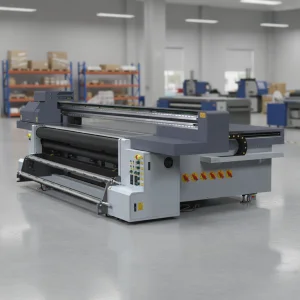
Explore our core industrial flatbed and hybrid roll-to-sheet machines configured with multi-channel variable grayscale technology for heavy manufacturing, signage, and packaging operations.
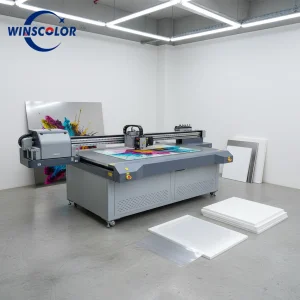
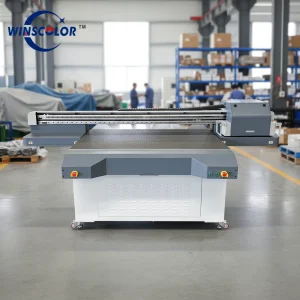
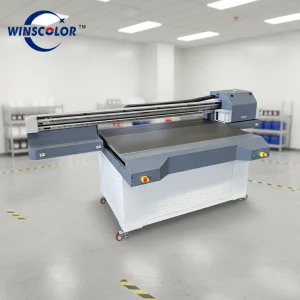
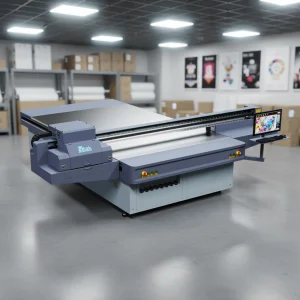
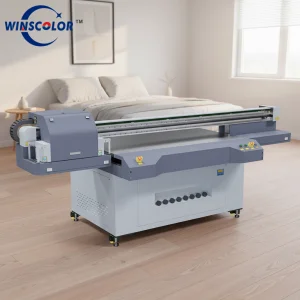

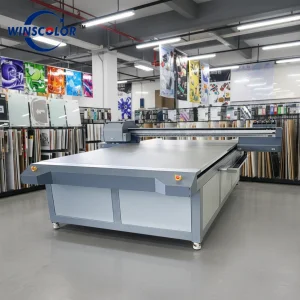
A rigorous examination of multi-drop piezoelectric actuation, dynamic sub-tank meniscus negative pressure control, and cold LED-UV cross-polymerization.
The transition from conventional solvent-based and mercury-arc UV systems toward Hybrid LED UV digital printing machinery represents a paradigm shift in modern commercial and industrial production. Unlike dedicated flatbed systems confined solely to rigid boards or standard roll-to-roll plotters restricted to flexible vinyl, a true industrial OEM Hybrid machine relies on an engineered vacuum mesh conveyor with automated pneumatic pinch tension rollers. This dual-kinematic architecture facilitates micron-precise feeding of rigid honeycomb board, tempered glass, acrylic, and heavy aluminum sheeting, while seamlessly transitioning to thin PVC film, polyester canvas, backlit textiles, and synthetic leather without mechanical reconfiguration.
At the center of our Jinan manufacturing plant's research and development roadmap is the integration of high-frequency industrial piezoelectric drop-on-demand printheads, specifically the Ricoh Gen6 (MH5320), Kyocera KJ4A, and industrial Konica Minolta lines. Operating at firing frequencies up to 50 kHz with minimum variable droplet sizes starting at 3.5 to 5 picoliters, our printer electronics regulate jetting velocity using closed-loop waveform micro-tuning. By orchestrating ink surface tension and viscosity dynamically across fluctuating factory ambient conditions, our proprietary motion-control algorithms completely neutralize trailing satellite droplets and micro-banding.
Dual independent sub-tank negative pressure systems for white ink and CMYK+Lc+Lm+Varnishes. Industrial vacuum transducers maintain ink-air liquid interfaces within ±0.02 kPa, preventing printhead nozzle starvation during ultra-high-speed bidirectional scanning.
Equipped with dual water-cooled linear LED arrays emitting 395nm wavelength irradiance with output up to 16 W/cm². Instantaneous UV curing eliminates substrate thermal deformation on heat-sensitive soft films, ultra-thin polystyrene, and shrink sleeves while cutting power consumption by 65%.
Precision-milled gantry beam structured from high-rigidity annealed aviation aluminum supported by Japanese dual THK or Hiwin linear guideways. Incorporates Renishaw metal optical encoder linear scales achieving positioning repeatability within 0.005 mm across full spans.
Real-world integration workflows tailored for industrial sign fabricators, interior decor ateliers, packaging converters, and commercial manufacturers.
Engineered for high-volume interior fit-outs in European and North American markets. Utilizes inline silane coupling primers sprayed via auxiliary jetting channels, followed by dense white blockout layers and tactile gloss varnish textures. Eliminates kiln-firing setups for bespoke balustrades, splashbacks, and feature walls.
Eliminates plate-making fees and lengthy prepress setup in regional packaging plants. Supports single-wall, double-wall corrugated card, SBS board, and honeycomb containers with variable data barcodes, serialization, and high-impact regionalized branding with zero minimum order quantities (MOQ).
Applies specialized ultra-flexible inks (capable of 200% mechanical elongation without micro-fracturing) directly onto treated anodized aluminum sheets, polycarbonate dials, and acrylic instrument panels for automotive aftermarket suppliers and industrial equipment builders.
Addresses rapid day-night shift visual needs via automatic five-layer printing (Color + White + Blackout + White + Color). Provides uniform optical density on tension fabric systems, backlit PVC banners, and backlit PET film without hot spots or washed-out imagery.
Provides localized tactile patterns on PU/PVC artificial leathers, custom footwear uppers, and decorative upholstery. Deep-build varnish matrices simulate authentic animal grains, tactile geometric knurling, and localized anti-abrasion topcoats in a single pass.
Synchronized continuous rotary fixtures handle 360-degree seamless printing on tapered drinkware, aluminum flasks, wine bottles, and cosmetics tubes. Continuous electronic step-angle indexing prevents seam overlap or color misalignment across curved perimeters.
Why Jinan Yingcai Digital Technology (Winscolor / NTEK) delivers an unbeatable price-performance ratio, rapid lead-times, and customized equipment frameworks.
The manufacturing infrastructure of high-speed industrial UV equipment hinges on extreme structural rigidity and precision component consolidation. Nestled within Shandong province's advanced mechanical equipment corridor, Winscolor leverages deep industrial clustering. We source raw castings, precision heavy steel box beams, and aviation-grade extrusions from regional suppliers located within a 50-kilometer radius. Every heavy machine chassis undergoes an exhaustive stress-relieving heat-treatment cycle, including 72-hour thermal annealing and ultrasonic flaw testing, followed by five-axis CNC bridge milling in a single fixture clamp. This meticulous manufacturing process ensures our base tables remain completely warp-free across decades of heavy shift cycles.
For international original equipment manufacturers (OEMs) and national master distributors, Winscolor provides comprehensive custom engineering. From tailored machine chassis industrial styling, custom-branded RIP software packages, and customized vacuum chamber zoning to proprietary firmware tuning and PLC industrial automation handshakes, our 100+ R&D engineering staff handles customized hardware and software rollouts in as little as 30 to 45 business days.
| Evaluation Parameter | Winscolor / NTEK OEM Factory Platform | Tier-1 Western European / US Brands | Small-Scale Regional Assemblers |
|---|---|---|---|
| Structural Machine Frame | Heavy-duty annealed steel box frame, five-axis CNC milled | Cast iron / heavy aluminum welded gantry | Standard sheet metal bolted chassis |
| Ink Delivery & Calibration | Closed-loop negative pressure + constant heat recirculation | Patented automated recirculation systems | Gravity feed or basic float sensor sub-tanks |
| Component Integration | Panasonic/Delta AC Servos, THK Rails, IGUS Drag Chains | Proprietary servo drives, precision linear magnetic motors | Unbranded stepper motors, generic local guide rails |
| OEM Customization Flexibility | 100% turnkey: Custom chassis, firmware, UI, PLC protocols | Rigid catalog configurations with minimal customization | Basic cosmetic labeling without engineering changes |
| Consumables & Spare Parts Cost | Open ink architecture, direct factory spare part pricing | Strict RFID cartridge lockouts, high maintenance contracts | Open market parts with inconsistent quality verification |
| Average Lead Time | 15 to 25 calendar days for standard configurations | 90 to 120 calendar days from factory order | 20 to 30 days but subject to stock availability |
A macro-economic analysis of how industrial digital UV inkjet systems are replacing legacy screen-printing and roll gravure across the world.
Facing steep domestic shopfloor labor costs, US and Canadian sign and display converters prioritize large hybrid UV platforms (such as the YC3200HR) equipped with automated media loading tables, automatic pin-registration, and continuous high-speed roll feeds to enable single-operator workflows.
Under strict EU Green Deal standards, European print houses are transitioning away from solvent printing and conventional mercury vapor curing. Low-VOC, zero-ozone LED UV curing formulations certified under REACH and RoHS directives dominate buying decisions in Germany, France, and the UK.
Industrial textile, footwear, and consumer electronics hubs in Vietnam, Indonesia, and India are upgrading legacy screen-printing carousels to multi-channel UV flatbeds and hybrids, slashing pre-press setup times from days to minutes while enabling short-run custom manufacturing.
Harsh operating environments subject to high ambient temperatures and dusty conditions demand ultra-rugged, dust-sealed optical systems and constant-temperature water chillers. Winscolor's reinforced air filtration and enclosed industrial electronics thrive under these rigorous settings.
A strategic preview of next-generation jetting systems, artificial intelligence edge compute, and bio-derived photopolymer chemistries.
Upcoming platforms integrate inline high-speed micro-CCD line-scan sensors on the carriage base. If an individual nozzle drops out mid-job, the vision engine detects deflection in real time and automatically reallocates droplet volumes across surrounding functioning nozzles, eliminating visible banding and scrap.
Transitioning toward Silicon Micro-Electro-Mechanical Systems (Si-MEMS) printhead architectures featuring 1200 dpi native resolution per individual head. Delivers crisp 2-point micro-text for security printing, pharmaceutical labels, and electronic component serialization.
Integrating hybrid 365nm + 395nm LED lamp arrays. Shorter 365nm wavelengths trigger immediate surface cure to lock dot gain and prevent feathering, while longer 395nm photons penetrate deep down into thick white and varnish layers to ensure maximum substrate adhesion.
Enterprise-grade manufacturing rigor backed by internationally recognized quality certifications and responsive overseas technical coverage.
All machinery assembled at Jinan Yingcai Digital Technology Co., Ltd is engineered to comply with international health, safety, and electrical standards. Every export batch undergoes thorough safety audits to ensure compliance with CE Directives (Machinery Directive 2006/42/EC and Low Voltage Directive 2014/35/EU), complete electromagnetic shielding adhering to FCC Class A and EN 55032, and strict hazardous material restrictions compliant with RoHS 2.0. In addition, all internal electrical cabinets, pneumatic harnesses, and circuit breakers utilize standardized Schneider, Omron, and Mean Well components holding UL recognition for effortless localized electrical inspection throughout North America.
Before crating in ISPM-15 export seaworthy wooden cases, every printer undergoes 72 hours of uninterrupted dry cycling and print calibration. This includes heavy solid-fill CMYK testing, high-contrast micro-text verification, and laser interferometer rail straightness inspections.
Every motherboard integrates embedded TCP/IP diagnostic gateways. Our specialized bilingual support engineers provide remote screen sharing, real-time waveform updates, and diagnostic troubleshooting within a 2-hour response window, supported by global spare parts dispatch.
We provide full master-class training modules for partner field service engineers, covering full gantry assembly, electrical schematics, printhead voltage tuning, and ICC color profile generation. Complete distributor emergency spare parts kits ship alongside volume containers.
Comprehensive engineering insights resolving the most critical technical questions posed by procurement directors, factory operators, and master distributors.
While flatbeds with bolt-on roller brackets rely on the carriage gantry advancing across a static table with supplementary tension rollers, an authentic Industrial Hybrid UV Printer (such as the YC3200HR / YC2500HR) utilizes an integrated high-torque heavy vacuum conveyor belt drive with heavy pneumatic tension feed shafts. This allows continuous substrate flow without dimensional length constraints, enabling operators to print continuous 50-meter rolls of vinyl, heavy canvas, and wallpaper at maximum speed, or feed 3-meter rigid acrylic and Dibond panels across the vacuum conveyor using synchronized infeed and outfeed tables.
The Epson i3200-U1 is an economical, high-resolution (native 600 dpi) head well suited for desktop and light commercial use. However, its MEMS thin-film piezo membrane is sensitive to long shifts and heavy physical stress. In contrast, the Ricoh Gen6 is built with an all-steel, isolated metal cavity structure delivering up to 50 kHz firing frequency and handling droplet sizes from 5 to 15 picoliters. It operates reliably under higher jetting voltages, withstands aggressive industrial ink chemistry, resists mechanical head strikes on rigid materials, and typically lasts 3 to 5 years under continuous multi-shift production.
Substrates with low surface free energy (dyne level below 38 dynes/cm) require surface modification or chemical bonding agents. Winscolor addresses this through three industrial avenues: (1) Integrating automated physical corona or plasma pre-treatment units directly onto the print carriage; (2) Allocating dedicated independent printhead channels to jet specialized silane/titanate chemical primers directly onto the target print area prior to CMYK laydown; and (3) Tailoring specialized ink polymer formulas with flexible oligomers and targeted photoinitiators that bond securely to difficult non-porous surfaces.
Titanium dioxide (TiO2) particles used in opaque white inks are dense and settle rapidly if stationary. Winscolor printers prevent sedimentation via an automated four-stage system: (1) Constant mechanical stirring inside the main ink bulk container; (2) High-speed timed sub-tank closed-loop recirculation that runs continuously even when the printer is in standby; (3) Programmed micro-jetting purges at regular intervals; and (4) Intelligent physical automated carriage wiping and capping stations that prevent the nozzle plate from drying out during idle periods.
For print providers with monthly production volumes exceeding 1,200 to 1,500 square meters, ROI is typically achieved within 6 to 9 months. Savings stem from: (1) Eliminating screen-making costs, films, and toxic wash chemicals; (2) Cutting power usage by 60-70% via cold LED curing compared to mercury-arc lamps or thermal dryers; (3) Removing secondary lamination steps on outdoor graphics; and (4) Unlocking premium margin opportunities through selective tactile 3D embossing, spot varnish gloss effects, and direct rigid substrate printing.
Optimal machine performance requires: (1) Ambient room temperature maintained between 20°C and 28°C (68°F - 82°F) with relative non-condensing humidity of 40% to 65%; (2) Stable clean single-phase 220V ±10% or three-phase 380V (dependent on machine scale), coupled with an isolated true-ground resistance of less than 4 Ohms to eliminate static interference; and (3) An oil-free, dry compressed air source supplying 0.6 to 0.8 MPa for pneumatic pin registers, tension bars, and negative pressure ink valves.
Complete your production portfolio with our heavy wide-format hybrid platforms, high-speed single-pass carton systems, and modular flatbed printers.
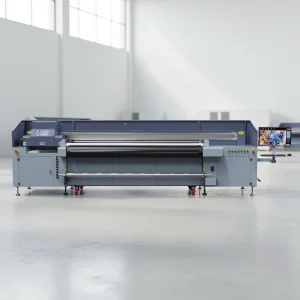
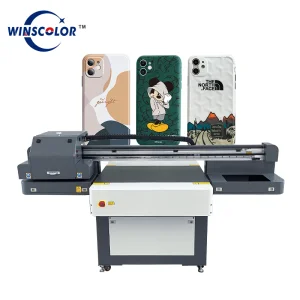
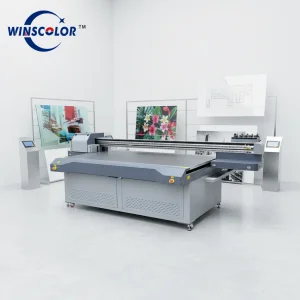
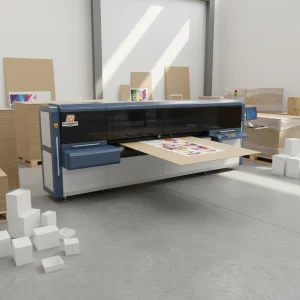
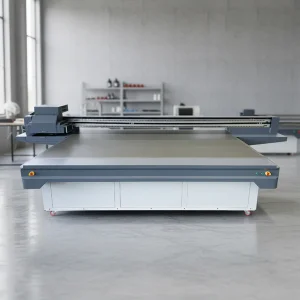
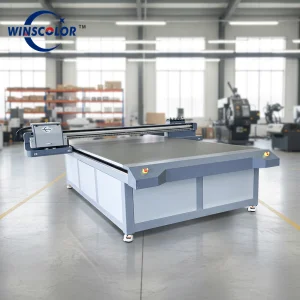
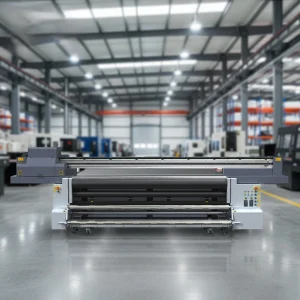
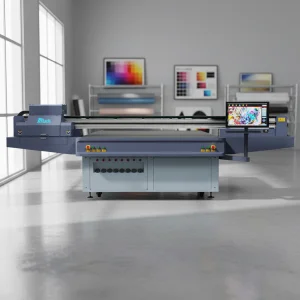
Whether you require private-label custom gantry builds, turnkey complete machinery lines, or customized firmware adaptation for specialized media, our engineering team is ready to evaluate your technical specifications.
