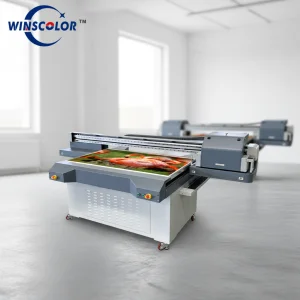
Direct factory configurations calibrated for dynamic density, photographic grain reproduction, and scratch-resistant finishes on natural and synthetic substrates.

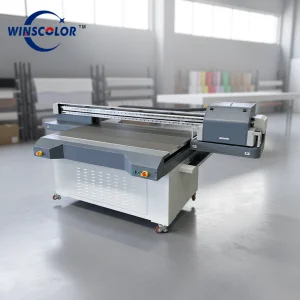
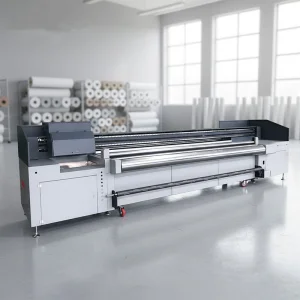
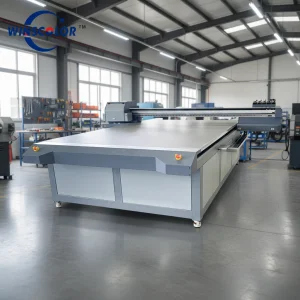

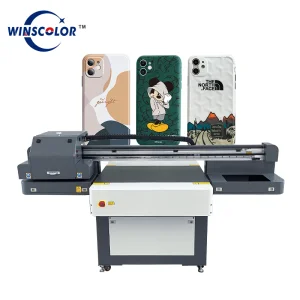

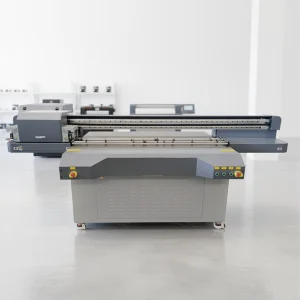
From rotary gravure and PVC lamination to on-demand digital micro-piezo curing: addressing sustainable timber manufacturing challenges across modern construction and bespoke furnishings.
Traditional woodgrain printing on particle boards or MDF demands physical gravure cylinders, extensive setup times, and massive run minimums. NTEK UV flatbed machines enable agile short-run decorative board manufacturing directly from digital raster files without mechanical tooling costs.
Wood is inherently porous and anisotropic, posing challenges for dot gain, ink sinking, and surface unevenness. NTEK industrial setups leverage variable drop-on-demand piezo printing (3.5pl to 12pl) combined with high-viscosity, fast-pinning UV inks that solidify instantly under tuned LED wavelengths.
Beyond visual replication, modern architecture and luxury cabinetry demand haptic authenticity. Utilizing multi-layer high-opacity white ink foundations paired with dual-channel UV gloss varnishes, NTEK machinery builds registered textures that precisely mimic natural wood pores, bark ridges, and saw-cut grooves.
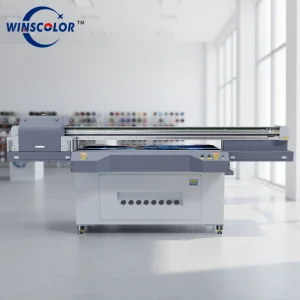
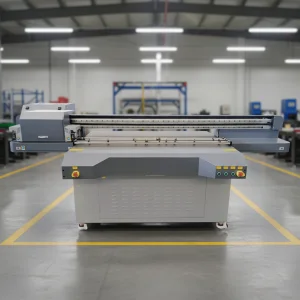
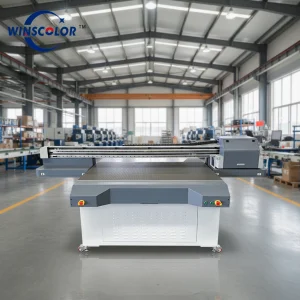
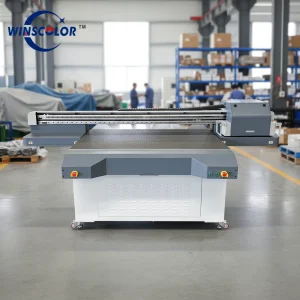
Engineered in our specialized 20,000 m² facility with six dedicated assembly lines, Jinan Yingcai Digital Technology integrates structural gantry precision with heavy-duty mechanical engineering.
Wood substrates, especially solid lumber slabs and dense composite core sheets, present substantial deadweight. NTEK structures feature heat-treated, annealed structural steel beds ground on 10-meter CNC gantries, guaranteeing zero beam distortion across years of three-shift continuous operation.
By coupling Japanese Ricoh Gen6/Gen5 printheads with Taiwanese dual Hiwin linear mute guide rails, Japanese Panasonic/Yaskawa AC servo drives, and German Igus drag chains, our assembly delivers precision positioning within ±0.02mm, competing directly with European equipment at a sensible capital threshold.
Wood boards are rarely dead flat. NTEK tables feature independent multi-chamber high-suction vacuum compartments equipped with reverse-air flotation. This enables a single operator to align, hold down, and float heavy 2000 × 3000 mm engineered wood sheets effortlessly, minimizing loading cycles.
Engineered for agile production across global furniture manufacturers, bespoke interior decorators, packaging houses, and heritage preservation studios.
Transforming ordinary birch plywood, pine, or MDF into exotic rosewood, Italian marble textures, or contemporary geometric artwork directly on pre-hung doors, sliding wardrobe faces, and kitchen panels.
Printing intricate perforated acoustic baffling systems for corporate auditoriums and hospitality venues, maintaining acoustic substrate openness while layering photorealistic art across expansive walls.
High-end spirits, collector cigar boxes, and premium tea coffrets utilizing dense white ink underlays on dark hardwoods (walnut, mahogany), finished with high-gloss localized varnishing for tactile brand marks.
Reproducing antique, reclaimed wood grain patterns on modern composite click-lock engineered flooring boards with high taber-abrasion resistance through customized UV topcoat curing sequences.
Where engineering meets environmental compliance: navigating the shifts shaping procurement decisions over the coming decade.
Conventional mercury arc lamps subject heat-sensitive thin veneers to thermal distortion, causing warp and adhesive delamination. Modern solid-state LED UV lamps emit narrow 385–395nm spectrum light without infrared heat, keeping raw timber substrates dimensionally stable.
Uncalibrated timber slabs frequently feature natural surface irregularities. NTEK integrates dual optical obstacle sensors with laser Z-axis dynamic height adjusters that map real-time topography, preventing printhead strikes while maintaining an optimal 1.5mm drop flight distance.
With tightening European REACH, RoHS, and North American CARB-2 indoor air quality regulations, NTEK collaborates closely with specialized chemical formulators to supply non-yellowing, low-odor, zero-VOC UV inks that bind to raw lignin and resinous wood surfaces.
Objective, factory-direct answers covering substrate chemistry, mechanical maintenance, primer dynamics, and production throughput.
For kiln-dried softwoods and hardwoods with low resin content, UV inks adhere directly without chemical preparation. However, oily hardwoods (such as teak or rosewood) or rough MDF benefit from a rolled or sprayed clear polyurethane or water-based UV primer to seal open capillary fibers, prevent ink sinking, and maximize ISO cross-hatch adhesion scores.
Our large-format flatbed systems (such as the YC2030 and YC2513 lines) feature pneumatic multi-zone vacuum suction tables paired with twin optical infrared anti-collision sensors. If a warped board exceeds safety margins, the carriage pauses instantly. The machine's motorized Z-axis accommodates media thicknesses up to 100mm (customizable to 400mm).
Utilizing industrial automotive-grade pigments, NTEK UV curable inks achieve outdoor UV resistance ratings of 3 to 5 years without noticeable fading. For extreme exterior exposure (architectural facades, coastal signage), an additional post-print automotive UV clearcoat or liquid lamination seals the substrate against moisture ingress and wood grain rot.
While continuous rotary laminating suits single designs across 100,000+ meters, digital UV printing breaks even on custom, short, or medium runs instantly. It eliminates cylinder engraving costs ($500–$2,000 per color), warehouse inventory for decorative paper films, and hot-melt glue hazards, delivering customized prints in minutes.
Explore our full line of flatbed, hybrid, and specialized printing machines manufactured by Jinan Yingcai Digital Technology for global distribution.