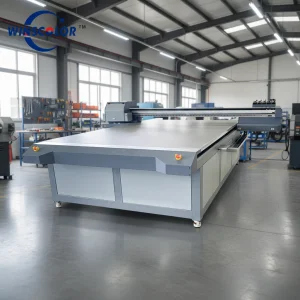
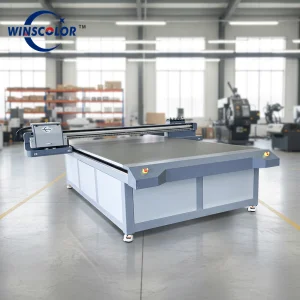
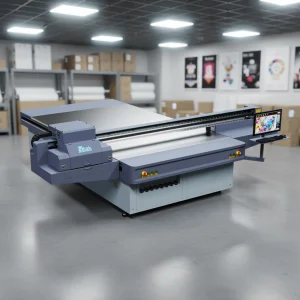
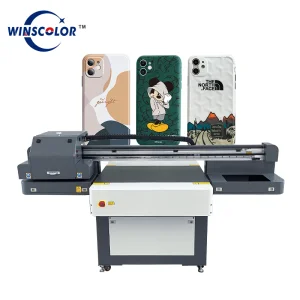
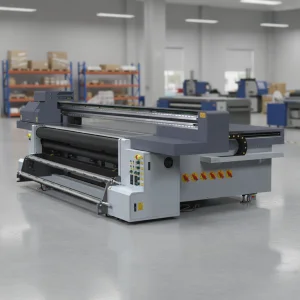
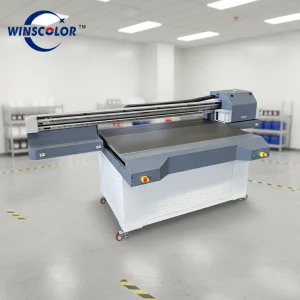
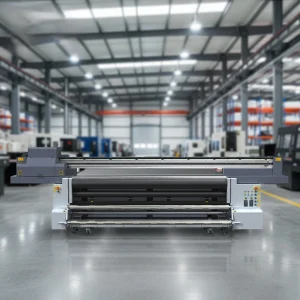
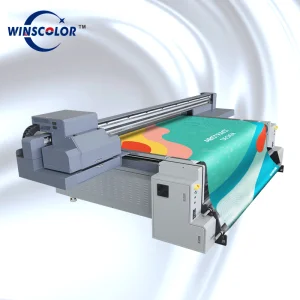
Engineered for agile prototyping, industrial membrane panels, phone cases, rigid signage, and cylindrical print production with industrial micro-piezo printheads.
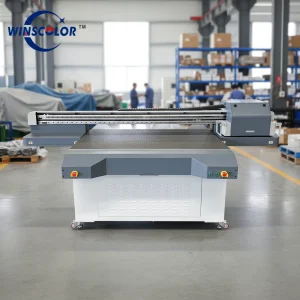
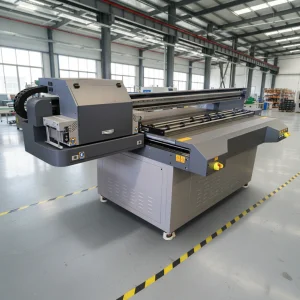
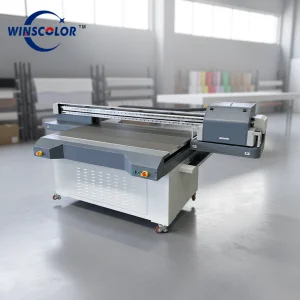

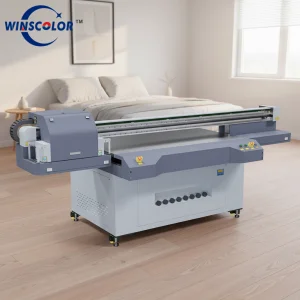
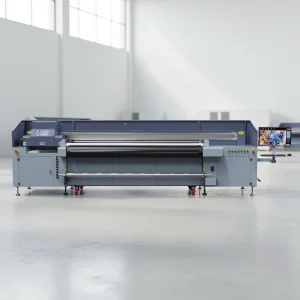

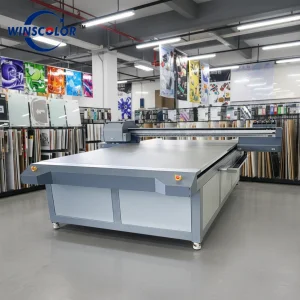
The international micro-manufacturing and industrial personalization markets are undergoing a fundamental transformation toward on-demand digital UV-curable printing engines.
Traditional screen printing and pad printing suffer from elevated plate costs, environmental VOC liabilities, and prohibitive setup cycles. The 600×900mm platform delivers true zero-plate, variable-data capabilities for zero inventory runs.
Recognized across Europe, North America, and Southeast Asia as the golden ratio footprint for commercial sign shops, gift customization hubs, and mid-sized fabrication factories requiring heavy-duty rigidity within compact floorspace.
As global supply chains demand decentralized localized customization, factory-direct exporters such as Winscolor provide CE-certified, UL-compliant, heavy-bed hardware backed by robust remote telemetric support.
Examining the structural components, motion control sub-assemblies, and piezoelectric delivery channels that differentiate industrial-grade 6090 flatbeds from lightweight desktop conversions.
Constructed from tempered structural steel stress-relieved via annealing. Employs dual Japanese THK or Taiwanese Hiwin silent linear guide rails and ground dual lead screws to eliminate carriage deflection and micro-banding.
Supports multi-head industrial configurations including Ricoh Gen6, Ricoh GH2220, and Epson i3200-U1. Capable of greyscale variable droplet formation down to 3.5 picoliters for smooth flesh tones and crisp vector lettering.
A hard-anodized honeycomb vacuum bed with partitioned high-flow zones holds warped PVC, thin acrylic, and metallic plates strictly flat, preventing head strikes and eliminating the need for mechanical clamping jigs.
Equipped with 395nm dual UV-LED water-cooled arrays. Emits cold UV radiation with zero infrared heat distortion, enabling instant curing over temperature-sensitive substrates like thin films, Styrene, and PVC foils.
Optical infrared triangulation sensors detect substrate elevation up to 150mm (optional 200mm). Dual bi-directional mechanical collision safety bars instantly halt carriage motion to protect expensive printhead faces.
Incorporates closed-loop secondary tank circulation, micro-pulsing agitation, and continuous white ink filtration to prevent titanium dioxide pigment sedimentation, nozzle starvation, and premature printhead clogging.
Every NTEK and Winscolor 6090 frame is manufactured in our Jinan 20,000 m² plant, stress-tested for 72 consecutive hours under full carriage payload prior to crating, ensuring dimensional accuracy that holds calibration across continuous multi-shift production.
Evaluating macroeconomic shifts, direct-to-film (UV DTF) proliferation, haptic print finishing, and ecological regulatory frameworks shaping the next generation of flatbed machinery.
NTEK 6090 platforms now seamlessly integrate with A/B transfer film workflows. By curing graphic prints onto release adhesives with selective varnish, operators can transfer permanent emblems onto irregular, curved, or oversized items without placing the object directly onto the bed.
Modern architectural signage mandates strict ADA tactile braille dot height and durable raised letterforms. NTEK multi-pass white layering software routines build clean, spherical braille dots and simulated leather or stone micro-textures in single inline runs.
Tightening environmental standards across the EU and North America have accelerated the phase-out of mercury-arc lamps and solvent-borne inks. LED-UV curable formulations are near-zero VOC, non-ozone emitting, and compliant with RoHS, REACH, and toy safety directives.
Advanced print workflows require remote health telemetrics, real-time consumption auditing per job, and seamless integration with Onyx, Caldera, and Photoprint RIP software for standardized international G7/FOGRA color management.
Evaluating surface dyne energy levels, primer application protocols, and industrial adhesion performance across critical production materials.
Delivers exceptional optical clarity with "sandwich" print modes (Color + White + Color or White + Color + Varnish) on cast and extruded acrylic. Essential for luxury point-of-sale displays, edge-lit LED signage, and scratch-resistant consumer awards.
Non-porous inorganic surfaces typically exhibit low surface energy below 35 dynes/cm. The NTEK printing protocol integrates inline silane coupling chemical primers to form irreversible covalent bonds resistant to moisture and cross-hatch tape tests.
From industrial equipment serial plates to branded metal electronics housings, the NTEK 6090 deposits resilient polymer layers that withstand industrial abrasion, alcohol rubs, and exposure to machine lubricants.
Wood substrates vary in moisture content and natural grain absorption. The selective white ink mode allows the rich natural timber grain to show through translucent graphic accents while providing vibrant CMYK contrast on focal design elements.
With the specialized stepper-driven cylindrical rotary attachment, the 6090 executes continuous 360-degree seamless prints on stainless steel vacuum flasks, glass drinkware, wine bottles, and cylindrical cosmetic canisters without seam overlapping.
Standard hard UV inks shatter when subjected to bending or stretching. NTEK deployable flexible UV inks allow up to 200% mechanical elongation without micro-cracking or delamination, ideal for luxury leather goods and protective phone cases.
Engineered setups tailored for commercial print shops, industrial component fabricators, and high-volume promotional merchandise producers.
Addresses the daily demand for corporate swag, custom tech accessories, and novelty items. Leveraging custom multi-cavity acrylic jigs, a single 6090 bed processes 24 to 48 phone cases or 200 pens in a single 3-minute cycle.
Tailored for electronics OEMs producing control panels, switchgear overlays, and metallic rating plates. Directly handles machined aluminum housings up to 150mm height with precision registration against internal CNC references.
Enables luxury perfume, cosmetics, and confectionery brands to produce physical mockups on genuine production carton stock, corrugated paperboard, and metallic laminates before authorizing million-dollar rotogravure runs.
Evaluating structural engineering, drive systems, and print performance parameters of industrial NTEK UV 6090 machinery against common market grades.
| Performance Parameter | NTEK Industrial UV 6090 Platform | Standard Entry-Level 6090 Flatbeds | Engineering Benefit & Significance |
|---|---|---|---|
| Base Frame & Chassis | Heavy-duty annealed steel frame, monolithic gantry | Sheet metal folding & bolted aluminum profiles | Zero micro-vibration; ensures dot placement precision over years of service |
| Motion Guide System | Dual Japanese THK / Hiwin silent linear guides | Single lightweight cylindrical rail or unbranded guides | Eliminates gantry skewing, pitch error, and carriage tilting |
| Supported Printheads | Ricoh Gen6 / GH2220 / Epson i3200-U1 (2–4 heads) | Repurposed consumer desktop printheads (XP600 / L805) | Higher native firing frequency, longer operational lifespan, and chemical resistance |
| Droplet Size & Grayscale | Variable drops: 3.5pl to 14pl multi-drop firing | Fixed drop size or unstable micro-piezo pulsing | Photo-grade photographic skin tones, no graininess on fine text highlights |
| Max Media Thickness | Standard 150mm (Customized option up to 200mm) | Limited to 50mm–80mm vertical clearance | Allows loading of pre-assembled electrical boxes, luggage, and large drinkware |
| Bed Clamping & Holddown | Hard-anodized vacuum bed with zoned vortex suction | Passive aluminum plate with manual tape/clamps | Flat hold-down of bowed plastic sheets prevents catastrophic head strikes |
| Curing Light Architecture | Dual water-cooled 395nm UV-LEDs (adjustable wattage) | Single air-cooled low-power UV array or mercury tube | Instant curing without substrate yellowing, heat warping, or ozone release |
Jinan Yingcai Digital Technology (Winscolor) continues to invest in next-generation motion dynamics, AI-assisted computer vision, and nano-photopolymer ink science.
Integrating overhead high-resolution telecentric CCD cameras that scan arbitrary substrate arrangements on the vacuum table. Advanced neural network models auto-identify component angles and offsets, mapping graphic files directly without physical jigs.
Next-generation secondary ink sub-tanks incorporate closed-loop multi-stage PID heaters and inline viscosity sensors to adjust firing waveforms dynamically, ensuring drop mass consistency whether operating in cold Nordic winters or tropical climates.
Collaborating with chemical research partners to synthesize photoinitiator blends with self-healing elastic polymers. Minor surface micro-scratches on gloss varnish layers naturally reflow under room temperature, establishing new durability standards for mobile devices.
Direct technical clarifications compiled by senior after-sales field engineers for global distributors and manufacturing buyers.
Output capacity is dictated by head configuration and pass count. In standard production mode (720×1200 dpi, 6-pass, CMYK+W), an Epson i3200-equipped 6090 outputs approximately 4 to 7 m² per hour. With a Ricoh industrial setup, full-bed cycles take between 3.5 to 6 minutes, yielding roughly 80 to 120 completed A1-equivalent plates per 8-hour shift.
Untreated glass and bare polished metals have very low surface dyne energy. To ensure scratch resistance passing the standard 4H pencil hardness and ASTM D3359 cross-hatch tape tests, our application engineers apply an inline or wiped silane-based UV adhesion promoter (primer) prior to firing ink drops.
Yes. When configured with three or four separate printhead channels, the carriage fires White underbase, CMYK graphic inks, and topcoat Varnish in a single mechanical pass. This eliminates registration error caused by multi-pass repositioning and guarantees precise tactile embossed finishes.
Titanium dioxide particles used in white UV inks are dense and settle if left stagnant. The NTEK 6090 features automatic timed secondary ink tank agitation, positive/negative pressure purging, and a continuous circulation loop through the head manifold that cycles even during printer standby modes.
As an established manufacturer exporting to over 100 countries, we provide comprehensive crated toolkits, video documentation, and dedicated English-speaking service engineers who offer live video commissioning, TeamViewer calibration, and global spare part dispatch within 24 to 48 business hours.
Industrial UV flatbed systems achieve optimal jetting reliability when operated in an ambient environment maintained between 20°C and 28°C (68°F to 82°F) with a relative humidity level of 40% to 65% non-condensing. A dust-controlled environment prevents airborne lint from settling on wet ink before it reaches the UV curing line.
Explore our broader industrial line: mid-format hybrid printers, full-size flatbed machines, and high-speed roll-to-roll UV systems.