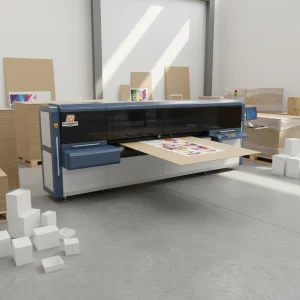
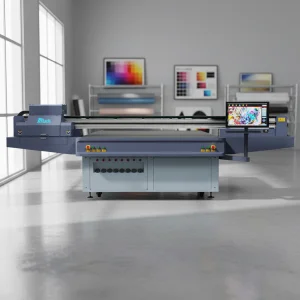
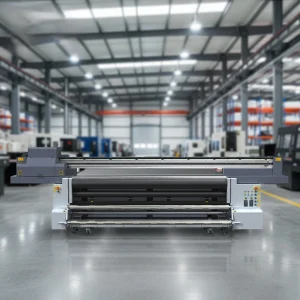
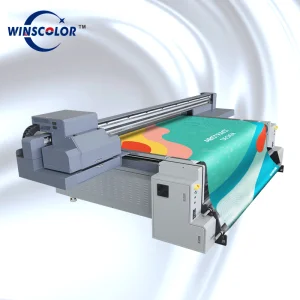
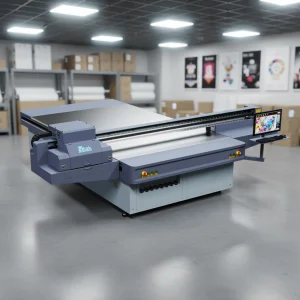
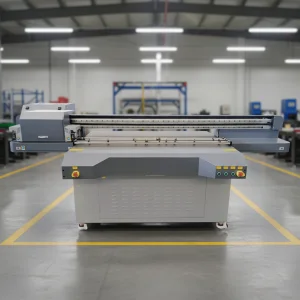
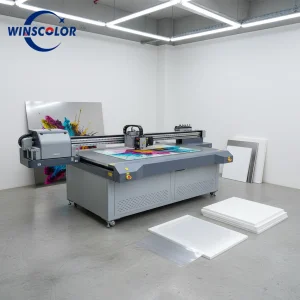
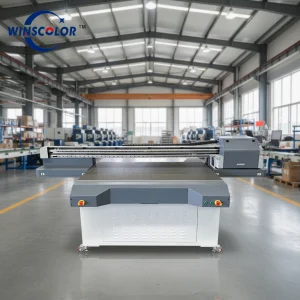
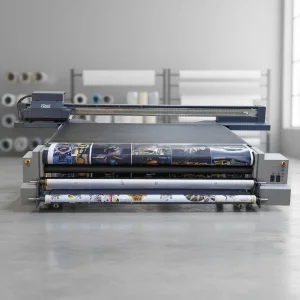
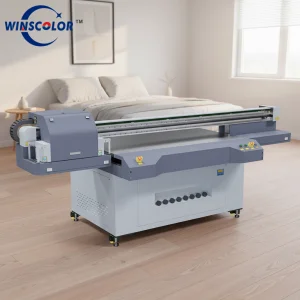
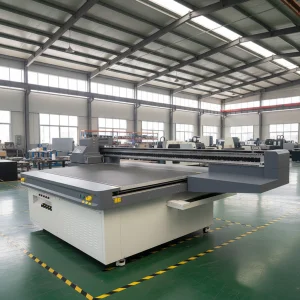
Explore our flagship configurations equipped with industrial Ricoh piezoelectric heads, sub-micron gantry stability, and dual LED curing modules.
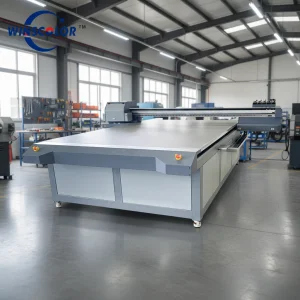
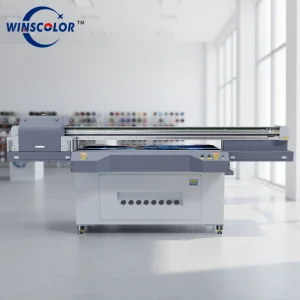

Strategic transformation, micro-factory paradigms, and supply chain decoupling driving decentralized digital direct-to-object manufacturing.
The global digital printing machinery sector has transitioned from an era of centralized, high-volume screen printing toward agile, decentralized on-demand digital micro-manufacturing. As supply chains demand reduced lead times and personalized packaging surges across North America, Europe, and the Asia-Pacific, small and mid-format UV digital printing machines (ranging from 600×900mm up to 1600×1000mm and 2500×1300mm footprints) represent the highest compound annual growth rate (CAGR) segment within industrial inkjet printing.
As an established OEM/ODM pioneer, NTEK (Winscolor / Jinan Yingcai Digital Technology Co., Ltd) operates at the nexus of precision motion control, advanced ultraviolet photochemical crosslinking, and intelligent variable-droplet piezoelectric jetting. The technical mandate for contemporary print service providers (PSPs) and industrial fabricators is clear: eliminate plate-making overheads, curtail VOC emissions via energy-efficient LED-UV curing, and achieve micron-level dot placement accuracy on virtually any substrate, from thermo-sensitive acrylics and polycarbonates to primed structural metals and architectural ceramics.
Global brands are replacing cross-border bulk ordering with localized just-in-time (JIT) production. NTEK small-format digital printing systems allow domestic print providers to fulfill orders within 24 hours without dead inventory risks.
Commoditized 2D graphic printing has suffered price compression. NTEK machines leverage multi-layer spot UV varnish and dual-white ink systems to produce 3D tactile embossing, braille signage, and luxury textures yielding up to 300% profit margins.
Stricter EPA and REACH emissions frameworks are penalizing solvent-based screen print lines. UV-LED photopolymerization yields instant ink curing without hazardous organic emissions, slashing power requirements by up to 65%.
How NTEK integrates Japanese industrial piezo printheads, dual linear encoder rails, and dynamic meniscus pressure control into a robust chassis.
NTEK flatbed systems deploy industrial drop-on-demand Ricoh Gen6 and Gen5i printheads featuring multi-drop gray scale capability (down to 3.5 picoliters). With isolated ink pathways and stainless steel construction, these heads operate continuously at firing frequencies up to 50 kHz without thermal degradation or cross-talk.
Maintains sub-atmospheric pressure in printhead reservoirs through closed-loop digital feedback sensors. This prevents nozzle starvation during high-speed reciprocating passes, stops ink dripping during carriage deceleration, and stabilizes meniscus curvature for superior droplet roundness.
Constructed with honeycombed aircraft-grade aluminum alloy tables, our suction platforms feature independent electronic zone toggling. When handling heavy acrylic sheets or glass slabs, operators can switch to air flotation for scratch-free, effortless repositioning.
Equipped with high-intensity 395nm water-cooled UV-LED curing engines. Heat-sensitive substrates such as PVC foam boards, polystyrene films, and thin PET packaging sheets avoid thermal warpage or yellowing while achieving instantaneous cross-linking and surface hardness.
To eliminate mechanical backlash over extended shifts, NTEK engineers employ dual Japanese THK linear mute guides and Delta AC servo systems. The heavy-duty structural steel frame undergoes stress-relieving heat treatment to ensure dimensional precision across millions of cycles.
| Performance Parameter | NTEK Small UV (YC6090 / YC1610) | NTEK Mid-Format (YC2513 Series) | Conventional Screen / Solvent Systems |
|---|---|---|---|
| Native Resolution & Droplet Size | Up to 1200×2400 DPI (3.5 – 7 pL variable) | Up to 1200×2400 DPI (5 – 14 pL high drop) | Fixed ~300 DPI equivalent / screen line counts |
| Setup Time & Tooling Cost | 0 minutes / $0 plate fee | 0 minutes / $0 plate fee | 45–120 mins / $50–$250 per color screen plate |
| Substrate Compatibility Range | Rigid boards, pens, bottles, acrylic up to 100mm | Full 2.5×1.3m sheet stock, doors, metal, stone | Restricted to flat, rigid sheets; limited rotary |
| White Ink Circulation Mechanics | Continuous auto-stirring + sub-tank pulse cycling | Automated timed agitation with anti-sedimentation | Manual mixing; frequent ink settlement and clogging |
| Curing Energy Consumption | < 1.2 kW (Dual water-cooled LED) | < 2.5 kW (Dual water-cooled LED) | 8.0 – 18.0 kW (Mercury lamps + thermal ovens) |
Overcoming the chemical surface tension limits across glass, acrylic, metal, wood, corrugated packaging, and rotary consumer merchandise.
Inorganic non-porous surfaces suffer from poor intermolecular ink wetting. NTEK matches automated inline corona or chemical silane coupling primers that bond covalently with SiO2 lattices, achieving cross-hatch adhesion scores of 5B (ASTM D3359) resistant to moisture, detergents, and thermal shock.
Clear polymers require absolute optical clarity and light diffusion control. NTEK's "Sandwich Print" algorithm coordinates Color + White + Color layers simultaneously, delivering high-contrast graphics that shine vividly under LED edge-lighting or daylight without internal reflection ghosting.
For industrial nameplates, electrical control panels, and outdoor road signage, NTEK UV curable inks maintain high flexibility. Coated metal blanks printed flat can undergo CNC shearing, scoring, and punching post-cure without edge-chipping or surface micro-delamination.
Natural grain absorbency variance can degrade color fidelity. NTEK's high-opacity white ink creates a neutral base substrate, preserving the tactile depth of natural wood grain while printing high-fidelity photographic artwork, geometric motifs, or custom parquet patterns.
Leveraging our modular rotary synchronization bracket, small-format machines effortlessly print 360-degree seamless graphics around tapered bottles, vacuum mugs, and luxury cosmetic tubes, synchronizing radial stepper pulses with carriage firing cycles.
Meeting e-commerce custom packaging demands, NTEK machines print directly onto kraft and clay-coated corrugated board with immediate drying. No flexographic plates or lengthy drying tunnels required, slashing fulfillment lead times to mere hours.
A transparent engineering analysis comparing initial capital expenditure, consumable depreciation, and throughput break-even curves.
Industrial UV inks applied through Ricoh variable-droplet nozzles average only 8 to 11 ml of ink per square meter at 100% CMYK image coverage. Average fluid cost translates to roughly $0.35 – $0.55 per m², drastically outperforming screen print setups for production runs below 5,000 units.
Traditional screen and pad printing require prepress film generation, chemical emulsion exposure, frame stretching, and solvent screen cleaning. An NTEK digital system eliminates all prepress tooling, converting non-billable setup hours into profitable production cycles.
Factories shifting from outsourced print operations to an in-house NTEK YC1610 or YC2513 platform report full machine amortization within 5 to 9 months based on standard single-shift utilization, driven by captured margin previously paid to external print houses.
NTEK engineering pairs equipment with leading professional RIP software suites, including Photoprint, Onyx, and Caldera. The raster engine executes specialized 16-bit color lookup tables (LUTs), intelligent stochastic screening algorithms, and automated spot-white generation. By previewing ink density gradients prior to jetting, operators eliminate ink wastage, ensuring international delta-E (ΔE < 1.5) color compliance across disparate global print runs.
Analyzing industry-wide technical trajectories that will govern digital inkjet machinery design over the next five years.
Future iterations of NTEK small digital printing machines will integrate inline high-speed linear CMOS cameras. When nozzle deflection or clogging is detected, the RIP automatically redistributes the droplet volume across adjacent working nozzles, guaranteeing zero banding and uninterrupted overnight unattended print runs.
As food-contact packaging and children's toy safety regulations become more stringent, our chemistry division is advancing water-based UV curable inks. These formulations retain the instant LED curing benefits of UV chemistry while replacing monomer vehicles with water, achieving ultra-thin ink layer films with zero odor and zero migration.
Every NTEK printer integrates smart CAN-bus sensor networks tracking UV-LED output irradiance, vacuum bed suction pressure, printhead carriage temperature, and sub-tank fluid viscosity. Real-time telemetry syncs with the Winscolor Global Service cloud to alert operators regarding filter replacement cycles and mechanical wear weeks before failures occur.
Comprehensive engineering clarifications addressing the most common concerns of global distributors, factory managers, and technical buyers.
Explore our wide-format flatbeds, corrugated packaging presses, and multi-functional digital printing machinery.