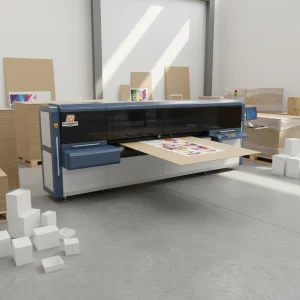
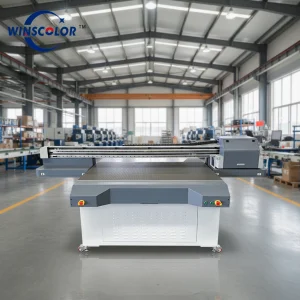
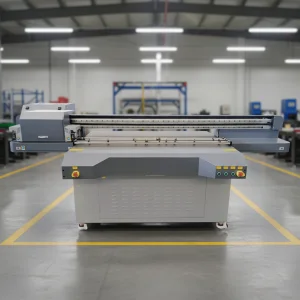
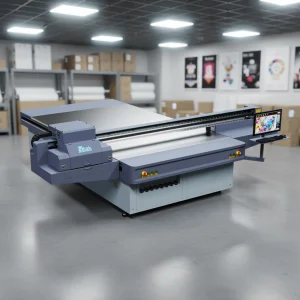
Explore our core industrial UV flatbed, hybrid, and direct-to-substrate digital systems calibrated for non-porous metallic and composite materials.



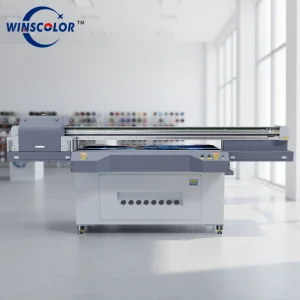
A comprehensive examination of ink-substrate surface energy dynamics, sub-micron mechanical gantry stability, and photochemical cross-linking in extreme environments.
Direct digital printing onto metallic substrates—such as raw extruded aluminum, passivation-treated SUS304/SUS316 stainless steel, galvanized sheet metal, brass, and tinplate—has historically represented one of the most demanding challenges in industrial drop-on-demand (DoD) inkjet printing. Unlike paper, cardboard, or unfinished wood, non-porous metals offer zero capillary absorption. As a result, the physical adhesion of the printed layer is strictly dictated by interfacial thermodynamics and chemical covalent bonding.
In the NTEK industrial UV printing system, this hurdle is resolved through a three-stage mechanical-chemical integration process:
Milled from aircraft-grade cast-steel dual linear beams, annealed to eliminate internal micro-stresses. Delivers repeat registration repeatability within ±0.02 mm across heavy sheet runs.
Dual active ion-bar arrays neutralize up to 25 kV electrostatic charges generated during metal sheet loading, preventing stray ink satellites and nozzle deflection.
Independently micro-valved dual negative pressure reservoirs isolate white and color ink channels, preserving steady meniscus pressure during multi-shift printing.
Pioneering advancements in digital drop-on-demand printing for extreme industrial and architectural manufacturing.
As manufacturing supply chains pivot from analog pad/screen printing toward autonomous lean production, NTEK's technological roadmap is driven by three core innovations:
| Technology Domain | Current State (Generation 4) | Mid-Term Target (2026–2027) | Next-Gen Horizon (2028+) |
|---|---|---|---|
| Vision Registration | High-res CCD edge-finding • ±0.05mm | 3D Laser profilometry with real-time camber correction | Autonomous AI edge-mapping with dynamic height profiling |
| Inorganic Chemistry | Acrylate-based organic UV inks + chemical wipe primer | Direct-to-metal self-priming nano-composite UV ink sets | Hybrid ceramic-sol-gel ink jetting with oven sinter curing (500°C) |
| Motion Platform | Dual Panasonic AC Servo + THK mute guide rails | Maglev linear drive motors with zero backlash (3.0 m/s travel) | Closed-loop optical encoder feedback with sub-5 micron resolution |
| Smart Factory Connectivity | RS485 / Modbus RTU • USB 3.0 / Gigabit LAN | OPC UA, SECS-GEM compliant protocols for automated factory cells | Cloud-connected dynamic digital-twin diagnostic maintenance suites |
By moving beyond traditional standalone printers, NTEK is engineering fully integrated manufacturing modules capable of robotic pallet loading, autonomous optical defect scanning, vacuum-clamping thickness adaptation, and instant post-cure automated unloading.
Customized application profiles designed to meet rigorous thermal, chemical, and abrasion specifications.
Engineered to satisfy MIL-STD-130N protocols. UV-cured identification plates resist jet fuel, hydraulic fluids, and severe salt spray testing per ASTM B117 for over 1,000 hours without delamination.
Direct printing on brushed aluminum consoles, dashboard trim, and illuminated dial switches. High-opacity white ink creates crisp backlit accents without light leakage.
Direct-to-chassis printing of high-density schematics, barcoding, and safety warnings on powder-coated steel and server rack cabinets, eliminating plastic label waste.
High-volume processing of Aluminum Composite Panels (Dibond/ACM). UV varnish overlays protect building facades and interior panels from fading, yellowing, and weathering.
Tactile spot gloss and 3D embossing for tinplate cosmetic cases, spirits packaging, and watch dials. Varnish builds up to 1.5 mm thick for distinctive embossed textures.
Engineered for high-intensity microprismatic reflective aluminum sheets. Outdoor weather-resistant inks ensure reliable visibility over years of UV and rain exposure.
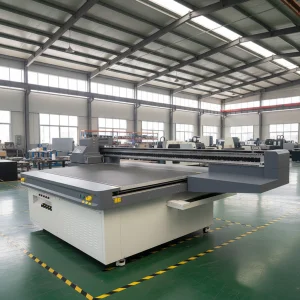
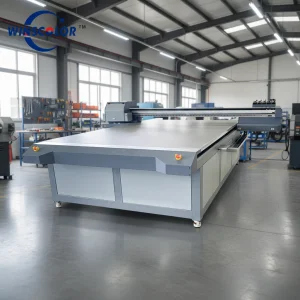
Take a look inside our Jinan production base, spanning more than 20,000 square meters of dedicated manufacturing facilities.
In the industrial capital equipment sector, machine precision relies directly on internal production discipline. Unlike kit assemblers, Winscolor (Jinan Yingcai Digital Technology Co., Ltd) operates a self-contained manufacturing campus featuring 6 production assembly lines and a dedicated mechanical engineering center:
Evaluating capital investment, variable production costs, and overall operational payback.
For operations managers and procurement directors evaluating capital equipment upgrades, total cost of ownership goes far beyond the initial machine price. Traditional screen printing and chemical anodizing lines carry substantial hidden costs: emulsion mesh setups, film generation, chemical disposal, and labor-intensive wash-ups.
| Cost Component | Traditional Multi-Color Silkscreen | NTEK Industrial Digital UV System | Enterprise Operational Advantage |
|---|---|---|---|
| Pre-Press & Make-Ready | $30–$75 per color (screens, film, exposure) | $0.00 (direct RIP to print within 60 seconds) | Eliminates setup costs on short and variable runs |
| Run-Length Break-Even | Profitable only at >500 identical pieces | Profitable from quantity 1 to 5,000+ pieces | Supports high-margin on-demand customization |
| Average Ink Cost per m² | $0.40–$0.75 (low resolution) | $0.80–$1.25 (photorealistic 1200 dpi) | Higher ink yield with fine drop-on-demand control |
| Power Consumption | 18–35 kW (thermal tunnel dry ovens) | 3.5–7.5 kW (instant cold-cure UV LED) | Over 65% reduction in electricity demand |
| Environmental Compliance | High VOC solvents, screen wash wastewater | Zero VOC, RoHS, and REACH compliant UV inks | Simplifies ISO 14001 factory compliance audits |
Across short-to-medium runs, industrial operations typically see payback on NTEK metal systems within 6 to 11 months, driven by rapid job turnaround and lower setup labor.
Built to meet strict international standards, supported by reliable spare-parts logistics and field technicians worldwide.
Certified in compliance with EU Directive 2006/42/EC and electromagnetic compatibility standards (EN 61000-6-2, EN 61000-6-4) for dependable electrical safety in sensitive plant environments.
Configured with UL-recognized internal wiring harnesses, Schneider contactors, and Omron safety relays to meet North American electrical safety inspection codes.
Critical mechanical and electronic spares—printheads, boards, pumps, UV LED arrays—are stocked across regional distributor hubs in Europe, the Americas, and the Middle East for 48-hour dispatch.
Technical guidance compiled by our application and mechanical engineering teams.
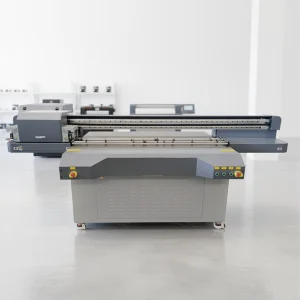
Explore the remainder of our equipment portfolio, engineered for diverse substrates from architectural glass and heavy sheet metals to roll-fed media.



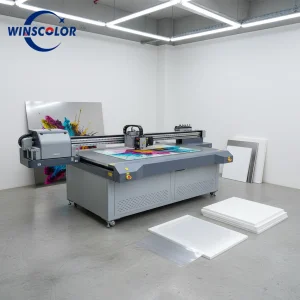
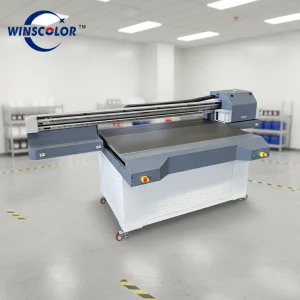
Send us your specific aluminum alloys, stainless steel parts, or coated sheet samples. Our lab will run adhesion, salt spray, and optical tests, returning a full laboratory application report alongside your printed specimens.
