
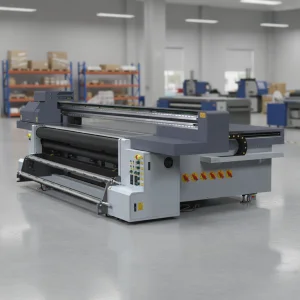
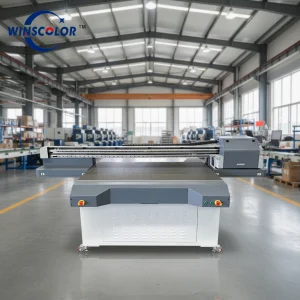
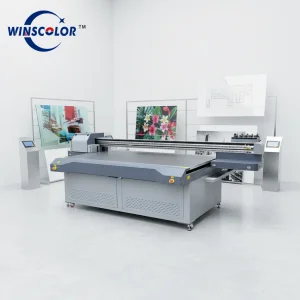
Explore our core industrial configurations equipped with piezoelectric drop-on-demand drop-jet engines, localized negative-pressure stabilization, and dual UV-LED chemical curing.
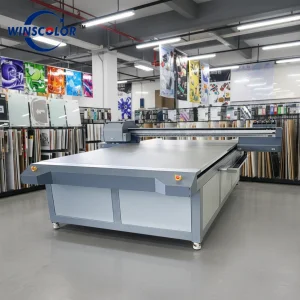
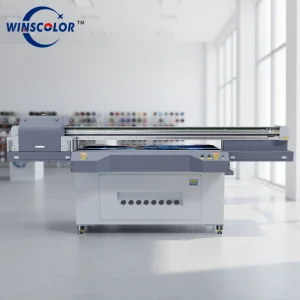
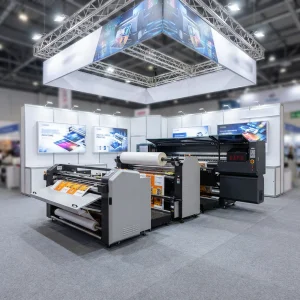
A comprehensive examination of how ceramic pigment dispersion, variable droplet wave technologies, and integrated pre-treatment have transformed direct-to-glass decorative systems.
Glass is an inorganic, non-porous hydrophilic substrate with an inherently high surface tension that repels standard organic UV curable inks. Industrial-grade glass photo printers deploy an in-line micro-spray chemical coupling agent (silane-based primer) prior to the CMYK+W deposition. This creates a covalent chemical anchor directly between silica tetrahedrons and the UV oligomer resin structure, eliminating delamination issues even when exposed to high ambient humidity or continuous thermal fluctuations.
Achieving realistic photographic depth on architectural floating or tempered glass requires simultaneous multi-layer jetting. Our industrial Ricoh Gen6 and high-end printhead arrays allow a synchronized "Colour + White + Colour" or "White + Colour + Varnish" run in a single-pass gantry stroke. This completely prevents optical moiré and registration misalignment, providing vivid front-lit and back-lit transitions for museum showcases, luxury partition walls, and high-end elevator interior cladding.
Because glass is an ultra-flat, rigid surface, kinetic bounce and airborne ink mist can degrade micro-lettering or edge sharpness. NTEK systems leverage calibrated high-speed linear motors combined with Renishaw optical metal encoders. This hardware foundation guarantees an axial flight tolerance of less than 0.01 mm, maintaining pinpoint dot positioning across 2500 × 1300 mm and up to 3300 × 2100 mm bed configurations without structural harmonic interference.
Enterprise procurement managers in the architectural, electronics, and home appliance spaces demand strict performance parameters before capital investments.
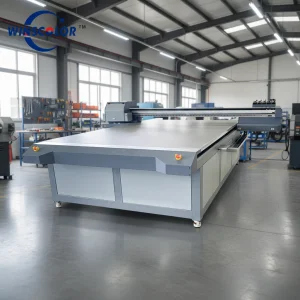
Large-format float glass requires absolute bed structural stability. NTEK flatbeds utilize a milled heavy-duty steel gantry subjected to high-temperature thermal stress relief annealing. The multi-zone zoned vacuum table securely anchors heavy structural panes (up to 100 kg/m²) without bed sag, ensuring consistent focus distance across the entire operational length.
From smart refrigerator display panels to touchscreen control switchboards, precision registration and zero conductivity pinholes are vital. Digital inkjet systems replace traditional screen printing stencils, allowing agile on-demand changeovers, bespoke SKU production, and reduced scrap rates during pilot verification phases.
Photographic memorial panels and museum-grade art reproductions demand extreme lightfastness and precise color reproduction. In addition to conventional CMYK, the incorporation of Light Cyan (LC), Light Magenta (LM), and tactile gloss varnish allows smooth tonal transitions, ultra-realistic human skin tones, and customized 3D micro-embossed textures.
Minimizing equipment downtime through rigorous component standardizations and dedicated remote-telemetry infrastructure.
Every industrial UV printing station leaves our Jinan Yingcai Digital Technology manufacturing facility with validated conformity:
Unplanned machine downtime directly damages enterprise margins. Our comprehensive overseas operational package guarantees ongoing operational security:
Emerging technology vectors currently in prototype testing across Winscolor's R&D engineering divisions.
Integration of ultra-high-speed linear CCD visual inspection bars directly behind the printhead carriage. The system reads target swatches in real-time and mathematically modifies firing frequencies for neighboring nozzles if an ink jet deflection is discovered, effectively eliminating banding artifacts before the panel completes curing.
Continuous refinement of inorganic nano-frit pigment suspension allows ceramic printing directly on non-pretreated raw glass. The jetted pattern is fused at 650°C - 700°C inside standard glass tempering furnaces, embedding the graphic directly into the glass matrix for permanent automotive, marine, and exterior facade durability.
Moving from traditional gantry shuttle systems to high-speed fixed-array single-pass lines. Designed for mass glass packaging and wall tile manufacturers requiring production speeds up to 30 to 50 linear meters per minute, seamlessly integrating into upstream automated washing and downstream robotic stacking lines.
In-depth responses compiled by our senior chemical, mechanical, and color management specialists.
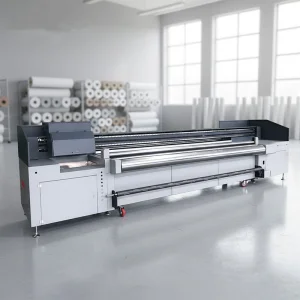
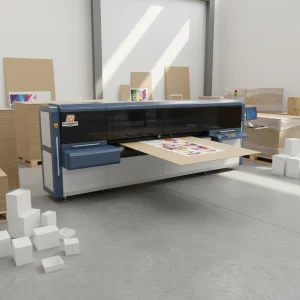
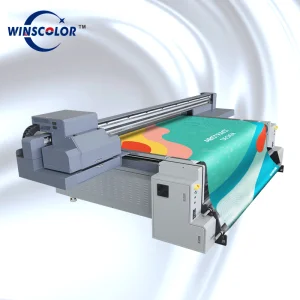
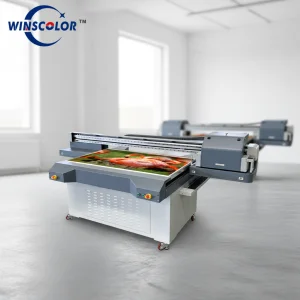
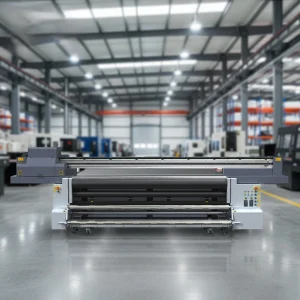
Complete your facility's production capabilities with large-format multi-substrate equipment designed for non-stop industrial output.

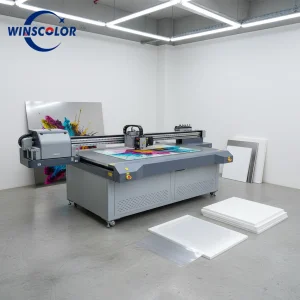
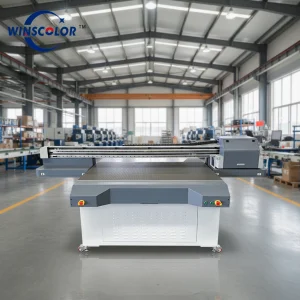
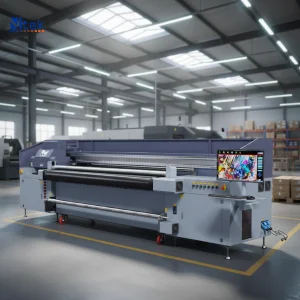
Request a custom engineering consultation, arrange physical sample proofing on your factory float glass panels, or inspect our full Ricoh Gen6 configuration schematics.