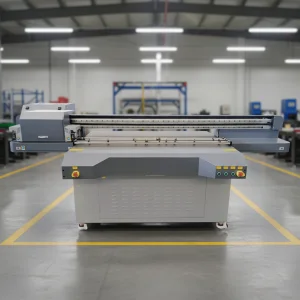
Explore our production-grade flatbed and hybrid machines fitted with Ricoh Gen6 industrial piezo printheads, dual LED-UV cold-cure systems, and pneumatic registration pins for glass doors.


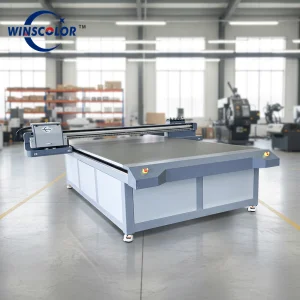
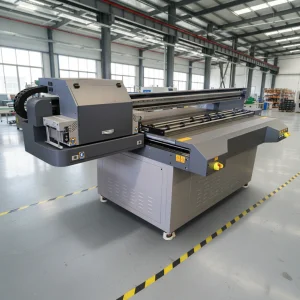
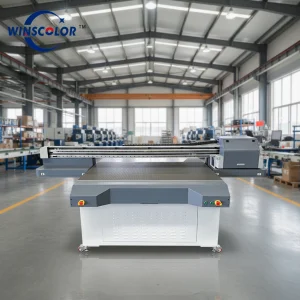

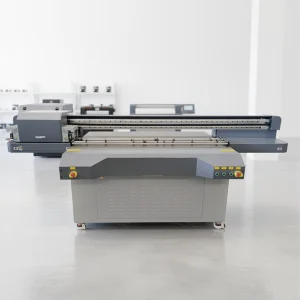
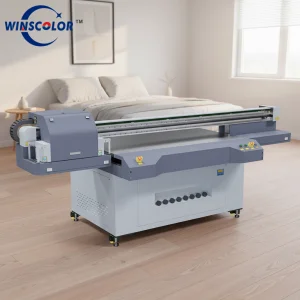
Direct-to-glass digital inkjet printing has revolutionized modern fenestration, commercial refrigeration, and interior architecture, displacing traditional screen printing by slashing turnaround times from weeks to minutes.
Modern architectural glass specifications mandate custom solar shading gradients, anti-bird strike dot matrix patterns, and photorealistic structural balustrades. NTEK flatbed machines deposit micro-precise variable droplets on tempered panels up to 3300 × 2100 mm, complying with stringent building safety codes.
Supermarket reach-in beverage coolers and cold-chain display cases require high-opacity black borders, brand iconography, and conductive busbar concealing. Our UV digital formulations maintain cohesive adhesion under sub-zero thermal cycling without delamination or embrittlement.
Oven fascias, induction cooktop surrounds, wine cooler glass, and bathroom shower doors demand ultra-fine haptic texturing and deep scratch resistance. NTEK’s synchronous white-plus-varnish channel delivers embossed decorative textures that pass ASTM D3363 pencil hardness standards.
Glass is an inorganic, non-porous hydrophilic substrate with an inert molecular structure (SiO₂). Achieving permanent bonding between organic UV photopolymers and smooth float glass requires precision chemical surface preparation.
Raw float glass typically presents an inconsistent surface energy ranging between 30 and 38 dynes/cm due to airborne silicone oils, atmospheric moisture, and tin bath float residues. In contrast, optimal UV ink wetting requires a substrate surface tension of at least 48 to 52 dynes/cm.
Without engineered pre-treatment, ink droplets contract into micro-beads prior to curing, triggering catastrophic delamination under humidity or abrasive contact. NTEK integrates automated plasma ionization and inline silane vaporizing bars to guarantee uniform ink cross-linking across every square millimeter of glass.
Our proprietary glass adhesion promoter utilizes bifunctional organosilane molecules (R-Si(OR')₃). The hydrolyzable alkoxy groups react directly with the silanol (-Si-OH) groups on the glass surface, forming covalent siloxane (Si-O-Si) bridges.
Simultaneously, the active organofunctional group copolymerizes with the acrylic monomers in the UV LED ink during photon excitation. This molecular anchor produces an unbreakable chemical bridge capable of achieving class 5B (ASTM D3359) / class 0 (ISO 2409) cross-hatch adhesion even after 500 hours in hot water immersion testing.
| Performance Vector | Traditional Screen Printing | Standard Entry-Level UV | NTEK Industrial Glass Engine |
|---|---|---|---|
| Pre-Press & Setup Time | 2–5 days (stencil, mesh, drying) | 15–30 minutes | Instant (Zero-plate direct RIP processing) |
| Adhesion Performance (ISO 2409) | Class 0 (Requires high-temp kiln) | Class 2–3 (Prone to edge peeling) | Class 0 / 5B (Permanent Silane Covalent Bond) |
| Multi-Color Photographic Yield | Extremely costly; coarse screens | Moderate; banding at high speed | Photorealistic 2880 DPI greyscale with micro-droplets |
| Substrate Thickness Capacity | Constrained by frame clearances | 0–50 mm | 0–100 mm (Automatic media thickness detector) |
| Thermal Load on Float Glass | Intense bake (650°C ceramic anneal) | High heat (Mercury vapor lamps) | Cold-Cure UV-LED (Zero thermal micro-stress) |
Glass sheets are among the heaviest, most rigid industrial substrates. NTEK designs reinforced welded steel structures, precision magnetic linear drives, and zoned high-pressure vacuum systems to maintain micrometer-level flatness under extreme physical loads.
Substrate weights for architectural door glass frequently exceed 120 kg per square meter. NTEK uses an aerospace-grade, gantry-milled tubular steel base subjected to 650°C thermal annealing to eliminate structural stress. It ensures zero bed deformation over decades of uninterrupted production.
Handling large, fragile tempered glass doors without surface scratching is an industrial hurdle. Our beds feature a pneumatic reverse-flow air cushion: high-pressure blower fans levitate heavy glass panels during loading, followed by powerful independent multi-zone vacuum suction to secure them firmly during printing.
For double-sided glass door printing, multi-pane alignment, or continuous patterned runs, manual placement generates unacceptable edge registration variance. Retractable pneumatic locating pins rise above the table on the X and Y axes, enabling operators to achieve ±0.05 mm mechanical registration accuracy.
NTEK industrial glass door printers are deployed in high-throughput factories worldwide, tailored to meet local building standards, safety regulations, and interior styling expectations.
US and Canadian fenestration fabricators operate under strict ANSI Z97.1 safety glazing mandates. NTEK flatbed printers deliver semi-transparent privacy frosting and architectural mullion simulations on 10 mm and 12 mm tempered shower doors, removing costly acid etching.
European Union glass processors require zero VOC output and compliance with EN 12600 pendulum impact and EN 12150 thermal resistance. NTEK’s energy-efficient UV LED curable inks pass chemical durability tests against cleaners, acids, and industrial solvents.
In high solar radiation regions (GCC countries), outdoor architectural sliding doors and high-end hotel lobby partitions face extreme UV degradation and thermal cycling up to 55°C. Our inorganic pigment systems boast an 8+ Blue Wool Scale lightfastness rating.
East Asian manufacturing hubs for commercial refrigerators rely on automated NTEK lines running high-density black mask framing for reach-in merchandiser doors, printing directly on Low-E and heated glass panels with micro-registration for perimeter seals.
Operating an industrial flatbed glass printer at scale requires a cohesive ecosystem of automated material loading, inline washing, plasma pre-treatment, digital printing, and protective topcoating.
Glass handling begins with robotic vacuum cup manipulators placing raw float glass onto an inline horizontal washing machine. De-ionized water high-pressure rinsing scrubs atmospheric dust and identifies the non-tin side via UV-reflective sensors to ensure consistent print adhesion.
Cleaned panels enter the NTEK printing zone. A traveling ionization bar neutralizes electrostatic charges to stop ink overspray deflection. The carriage fires Ricoh Gen6 piezo printheads with variable droplets (5–15 pl) while synchronized dual LED lamps freeze droplet spread instantly.
Printed panels proceed beneath high-speed line-scan cameras for automated defect detection—evaluating color fidelity, pin-holes, and geometric registration against CAD files before indexing directly to the furnace, laminating autoclave, or packaging line.
As architectural and industrial smart glass continues to evolve, NTEK's R&D engineering center in Jinan focuses on next-generation digital deposition breakthroughs.
Merging the speed of drop-on-demand piezo printing with the lifelong durability of ceramic frit inks. Our upcoming hybrid ceramic jetting heads deposit micro-ground sub-micron glass frit directly onto annealed panels, fusing completely during the 680°C tempering cycle for indestructible outdoor longevity.
Beyond graphics, digital printheads are becoming micro-dispensers for conductive functional layers. NTEK is engineering specialized jetting algorithms for silver nanoparticle busbars, transparent conductive oxides (TCO), and smart dimming privacy layers for dynamic switchable glass doors.
By leveraging real-time edge telemetry, future NTEK machines dynamically compensate for nozzle deflection caused by static air currents on large glass sheets. Factory operators gain predictive maintenance warnings, automated head flushing cycles, and unified multi-machine color matching across continents.
Direct answers to the most common queries from industrial glass fabricators, procurement managers, and international distributors.
UV digital inks cure instantly via cold LED light without needing an industrial tempering furnace (680°C). This allows high-resolution photorealistic imagery, photographic gradients, and small batch production on annealed, laminated, or pre-tempered glass. Ceramic frit fuses permanently into the glass matrix during tempering, making it ideal for monolithic building exteriors, while UV LED printing delivers higher color gamuts, lower capital expenditure, and unmatched flexibility for interior doors, shower enclosures, and appliance glass.
Yes. When paired with our organosilane chemical primer and high-grade UV inks, prints easily pass the 500-hour condensation water chamber test and the cross-cut tape adhesion test (ASTM D3359 Class 5B). In shower applications, we recommend printing on the external glass surface (Surface 1 or 4) or laminating the printed layer within an EVA/PVB interlayer for lifelong protection against hard water scales and aggressive detergents.
NTEK industrial flatbed models (such as the YC2513L and YC3321L) support glass thicknesses up to 100 mm and surface loading capacities up to 150 kg per square meter. Our reinforced base frame and multi-point air-float loading table prevent table deflection, ensuring precise carriage-to-glass head clearances (recommended 1.5–2.0 mm) across wide formats.
Commercial refrigeration doors require complete light blockage (Optical Density > 3.5). NTEK printers use a multi-layer print mode: Black + High-Density White + Black, or double-strike black using variable droplet piezo control up to 15 picoliters. This guarantees complete opacity without pinholes, even when illuminated by direct LED cooler strip lights.
Winscolor / NTEK provides comprehensive overseas engineering support. We provide pre-delivery factory video verification, comprehensive English electrical schematics, remote software commissioning, and on-site field installation and operator training. Spare parts are dispatched via DHL/FedEx priority, supported by 24/7 video diagnostics with senior engineers.
The ink is 100% cured instantly via our integrated high-intensity dual UV LED curing modules. Printed glass sheets can be handled, stacked, drilled, or transferred to double-glazing insulating lines immediately after leaving the printer bed, eliminating staging bottlenecks and dust settling issues.
Explore our full line of industrial digital UV systems, designed for precision printing on glass panels, architectural doors, ceramic boards, Dibond, and wood substrates.
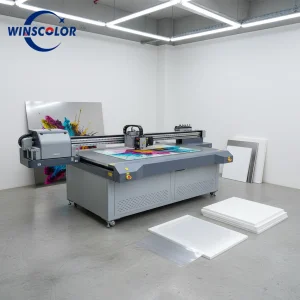
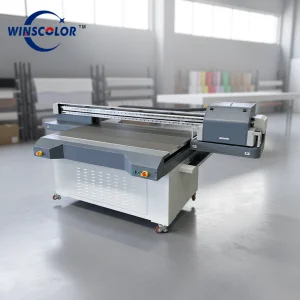

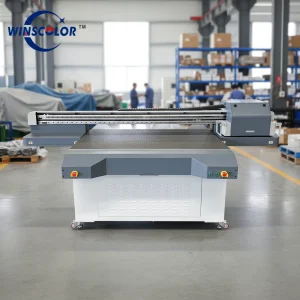



Consult with an NTEK glass application engineer today. We provide complimentary sample proofing on your specific glass samples, calculate ink yield economics per square meter, and configure custom vacuum loading beds for your factory layout.
