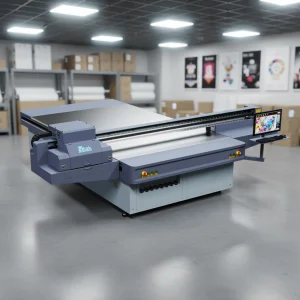
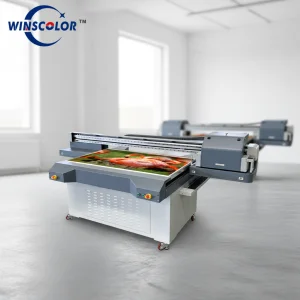
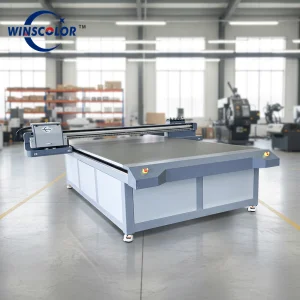
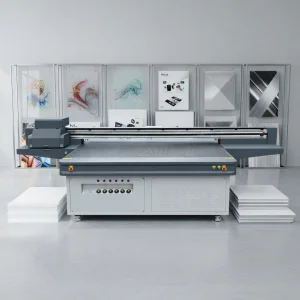
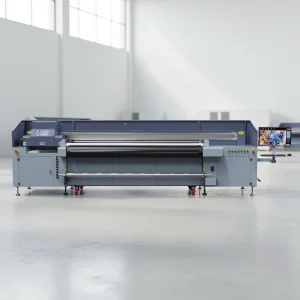
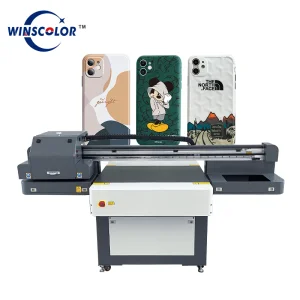
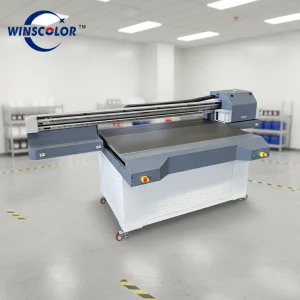
Explore our flagship high-precision digital inkjet printing machinery calibrated for immediate deployment across structural packaging, architectural glass, rigid composites, and specialty industrial components.
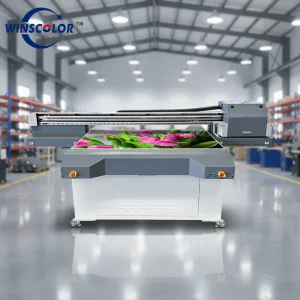

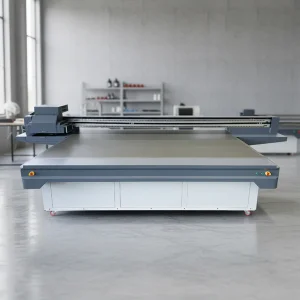
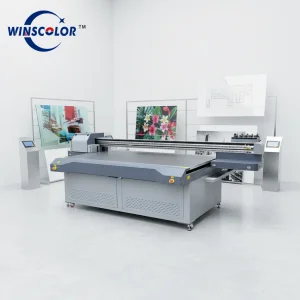
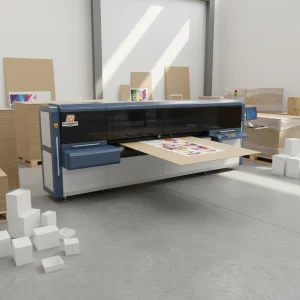
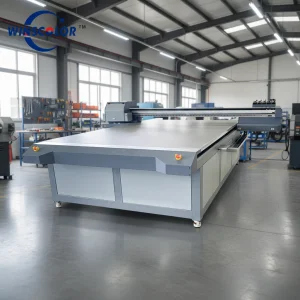
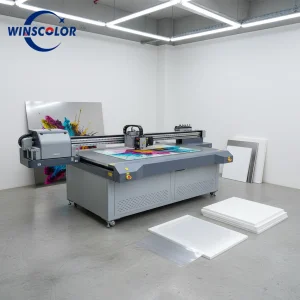
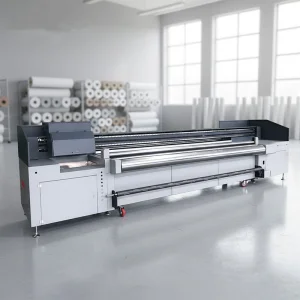
A strategic breakdown of how modern piezoelectric drop-on-demand UV-LED architectures eliminate thermal distortion, slash operating overhead, and supersede legacy solvent and screen-print systems.
Traditional arc-mercury systems introduce radiant temperatures exceeding 80°C onto media beds, causing structural expansion, warping, or chemical decomposition of sensitive substrates like thin polystyrene, hollow PVC sheets, and acrylics. NTEK UV-LED systems emit pure 395nm spectrum light without infrared waste heat, keeping substrate temperatures below 32°C for thermal equilibrium and zero edge curl.
Variable substrate formats challenge air intake stabilization. Our honeycomb cast-aluminum milling tables incorporate partitioned vacuum channels controlled by pneumatic solenoid valves. By targeting high-pressure suction exclusively beneath active media coordinates, operator efficiency spikes, edge blow-by drops to zero, and head strikes from warped boards are mathematically eliminated.
Offset lithography and screen printing mandate substantial tooling costs, chemical stencil washes, plate production, and intensive setup makeready scrap. NTEK digital flatbeds provide native on-demand flexibility: single-board prototypes or ten-thousand-unit production runs carry the exact same variable cost profile with instant job changeovers and embedded variable data printing (VDP).
A technical overview of the structural mechanics, piezo printhead calibration, and electronic motion systems powering NTEK and Winscolor precision platforms.
At the center of high-definition industrial printing is absolute mechanical rigidity. NTEK flatbed frames are precision milled from stress-relieved, heat-treated tubular steel weldments. They undergo cryogenic stabilization to guarantee zero structural deflection under 24/7 continuous operation.
Carriage locomotion utilizes dual Japanese THK silent linear guideways paired with an ultra-precise linear magnetic encoder. This eliminates back-EMF jitters, mechanical backlash, and micro-vibrations, yielding a carriage positioning repeatability tolerance within ±0.015 mm across spans up to 3.3 meters.
Furthermore, an advanced dual negative-pressure fluid management system regulates white and color circuits independently. This maintains constant meniscus pressure on the nozzle plate during high-speed multi-pass carriage accelerations, completely preventing ink weeping or nozzle starvation.
| Engineering Metric | Standard Production Spec |
|---|---|
| Printhead Technology | Industrial Piezo Ricoh Gen6 (MH5320) / Gen5 Option |
| Native Drop Velocity | 7.0 m/s ± 0.5 m/s Variable Greyscale (5 pl – 15 pl) |
| Ink Circulation Circuit | Continuous Sub-Tank Negative Pressure White Agitation |
| Drive System | Dual Panasonic AC Servo Motors + Linear Optical Scale |
| Curing System | Water-Chilled Dual LED Modules (395nm, 16-24 W/cm²) |
| Media Thickness Range | 0.1 mm up to 100 mm (Custom Gantry up to 150 mm) |
| Supported Substrates | Glass, Dibond, Acrylic, Wood, Metals, Corrugated, Stone |
From architectural splashbacks to aerospace avionics panels, discover how specialized multi-layer ink configurations overcome surface energy barriers.
Glass features non-porous, chemically inert surfaces with very low surface energy. NTEK incorporates in-line thermal pyro-silica or fluid chemical silane jetting primers. By applying localized primer deposits solely beneath the image perimeter, followed by high-density white and CMYK pigment stacks, our systems achieve class 4B/5B cross-hatch tape adhesion certified against steam, humidity, and UV exposure.
Regulatory architectural signage requires raised tactile lettering and hemispherical Braille dots compliant with global accessibility frameworks (such as US ADA Title III and EN 301 549). Utilizing precision multi-strike high-viscosity UV clear varnish, NTEK machines build true volumetric profile heights up to 0.8 mm in a single print pass, eliminating bead-insertion processes.
E-commerce unboxing demands bespoke graphics across fluted Kraft, white corrugated board, and folding cartons. Our single-pass and wide-format hybrid platforms eliminate mechanical flute crush using contactless jetting heights up to 5.0 mm. High pigment loading guarantees vibrant delta-E color consistency across recycled substrates without color bleeding.
Custom switch bezels, anodized aluminum dials, and polycarbonate instrument panels require superior scratch resistance and electrical insulation. NTEK machines print directly onto coated metals and treated plastics with flexible inks engineered to withstand deep embossing, 90-degree thermal forming, and die-cutting without micro-cracking.
Ensuring absolute plant safety, chemical traceability, and rapid on-site field maintenance across North America, the European Union, the Middle East, and Asia-Pacific.
Every NTEK and Winscolor chassis conforms stringently to the European Machinery Directive 2006/42/EC, Low Voltage Directive (LVD) 2014/35/EU, and Electromagnetic Compatibility (EMC) Directive 2014/30/EU. All pneumatic circuitry and high-voltage power couplings incorporate UL-recognized components, integrated emergency-stop loop circuits, and automatic optical safety-light curtains to shield plant technicians from head travel accidents.
Our OEM UV-curable ink formulations are rigorously compliant with EU Regulation (EC) No 1907/2006 (REACH) concerning SVHC (Substances of Very High Concern). Without hazardous air pollutants (HAPs) or heavy metal stabilizers, finished printed items achieve UL GREENGUARD Gold certifications, rendering them completely safe for commercial interiors, hospitals, and educational facilities.
High-volume manufacturing lines cannot afford unbudgeted downtime. Winscolor and NTEK support international production environments through an interconnected three-tier technical framework:
A look at the forward-thinking R&D trajectories transforming industrial digital printheads, AI closed-loop vision inspection, and ultra-high-frequency photochemical curing.
Future iterations of our industrial flatbed platforms integrate in-line CCD high-speed line scan cameras positioned immediately behind the printhead array. Operating in conjunction with AI edge computing, the vision system detects defective, misaligned, or clogged nozzles mid-flight during live production passes, automatically re-routing surrounding nozzles to compensate and preventing expensive substrate scrappage.
Moving past standard multi-pass reciprocating gantries, NTEK's forward pipeline emphasizes stationary full-width head arrays for corrugated carton and commercial board finishing. Printing speeds surpassing 1.5 meters per second with instant LED polymerization will bridge the performance divide between digital on-demand printing and legacy flexographic rotary production lines.
As corporate environmental ESG mandates expand worldwide, our laboratories are formulating next-generation plant-derived monomer bases. These UV inks lower dependence on petroleum-derived acrylates while delivering greater than 200% mechanical flexibility for thermoforming applications and facilitating full pulp-deinking during paperboard recycling cycles.
In-depth insights into system longevity, operational chemistry, substrate preparation, and return on investment.
Complete your production portfolio with our wide-format, high-resolution flatbed and hybrid solutions engineered for custom industrial fabrication and volume finishing.