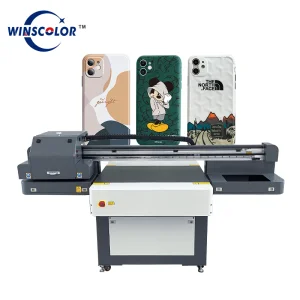
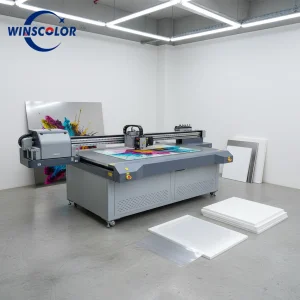
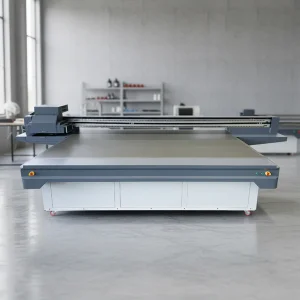
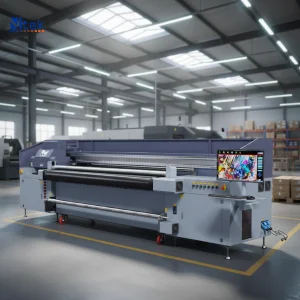
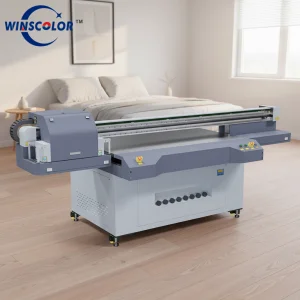
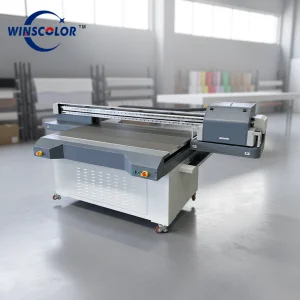
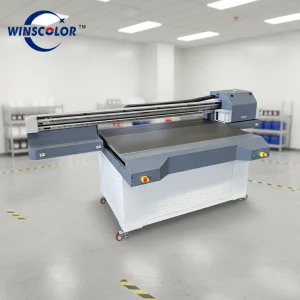
Engineered for 24/7 continuous operation with Ricoh Gen6/Gen5 and Kyocera piezo technology. Explore top-selling platforms exported directly from our Jinan manufacturing facility.
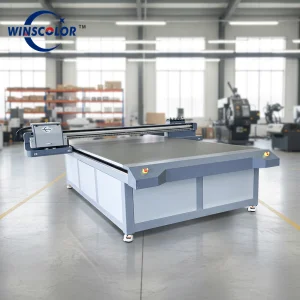
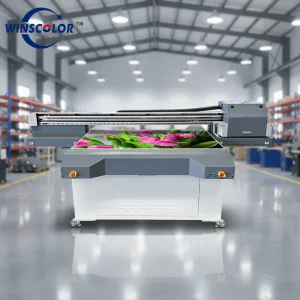
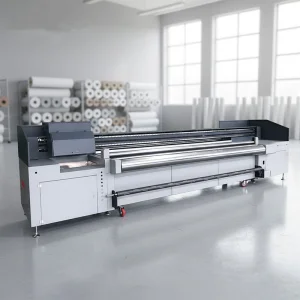
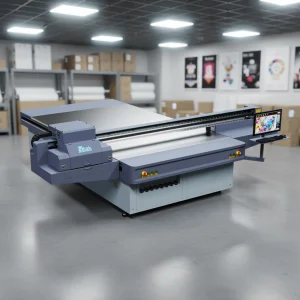
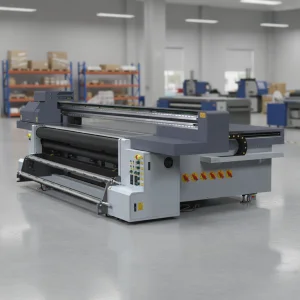
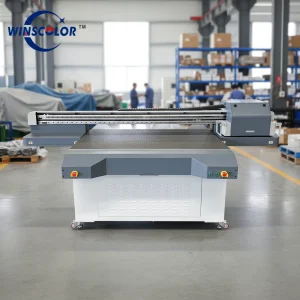
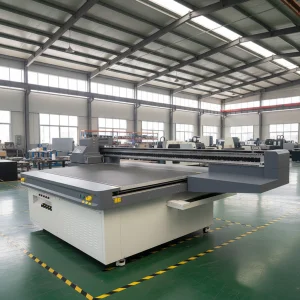
Direct Jet UV printing represents a fundamental shift away from conventional thermal transfers, screen printing, and pad setups. By integrating Piezoelectric Drop-on-Demand (DoD) printhead technology directly above a high-precision multi-zone vacuum platen, NTEK systems jet photopolymerized ultraviolet inks directly onto rigid, flexible, and irregular substrates with sub-micron dot placement accuracy.
Deploying industrial Ricoh Gen6, Gen5, and Kyocera industrial printheads engineered with durable stainless steel nozzle plates. Capable of generating variable droplets from 5pl to 18pl across high-firing frequencies (up to 50 kHz), ensuring smooth photographic tonal gradations without graininess.
Equipped with dual independent negative pressure regulation channels for color and white ink. This prevents ink starvation during continuous ultra-high-speed production runs, prevents meniscus collapse, and reduces purge maintenance cycles by more than 65%.
Advanced UV LED curing lamps delivering up to 14 W/cm² irradiance with instantaneous shutter-controlled response. Cold-cure emission limits thermal expansion on heat-sensitive substrates including thin PVC foam sheets, honeycomb boards, and styrene films.
As a pioneer in industrial direct jet manufacturing, Jinan Yingcai Digital Technology Co., Ltd (Winscolor/NTEK) leverages China’s premier industrial automation belt to achieve unmatched cost-to-performance benchmarks and strict QA compliance.
Every printer base is constructed from aerospace-grade structural tubular steel, subjected to high-temperature annealing and precision five-axis CNC gantry milling to eliminate mechanical deformation over decades of high-speed travel.
We source Japanese THK dual linear mute rails, German Igus towline cables, Italian Megadyne timing belts, and Japanese Panasonic AC servo motors. Combining global electromechanical standards with competitive direct factory integration.
Our quality assurance workflow entails 72 hours of uninterrupted dry cycling, 48 hours of high-coverage continuous print burn-in, laser interferometer gantry leveling, and micro-calibrated drop registration verification before custom crating.
The industrial inkjet sector is advancing rapidly from basic graphical printing toward specialized functional fluid deposition, high-drop jetting architectures, and closed-loop color management.
| Technological Vector | Legacy UV System Limitations | NTEK Direct Jet Next-Gen Capability | Operational Impact |
|---|---|---|---|
| Jetting Distance (Drop Height) | 1.5 mm – 3.0 mm maximum; misting and severe deviation on curved items. | High-Drop Jetting up to 15 mm – 20 mm with customized voltage waveform driving. | Direct imaging onto deep relief moldings, embossed phone cases, bottles, and architectural profiles. |
| Curing Chemistry & Energy | High-heat Mercury vapor lamps requiring warm-up, emitting ozone and high power draw. | Dual Water-Cooled LED-UV emitting pure 395nm wavelength with zero ozone generation. | Over 70% energy reduction, immediate on/off control, zero substrate thermal deformation. |
| Ink Circulation Circuit | Gravity feeding; white pigment settles rapidly, inducing nozzle blockage. | Active Sub-Tank to Printhead Internal Circulation with continuous white agitation. | 99.2% uptime reliability, consistent opacity, zero sediment accumulation in heads. |
| Layered Tactile Deposition | Requires external rotary screens or separate varnish coater. | Simultaneous CMYK + White + Varnish Single-Pass 3D textured tactile deposition. | Direct production of ADA Braille signage, leather texturing, and luxury packaging in one run. |
| Substrate Flexibility | Dedicated machines strictly separated into roll or flatbed. | Modular Hybrid Conveyor Systems handling both rigid boards and continuous flexible rolls. | Maximized shop-floor ROI, consolidating signage and flexible banners into a single equipment footprint. |
Strategic equipment acquisitions require a comprehensive lifecycle evaluation balancing capital expenditure (CAPEX), operating consumables, power usage, and mechanical longevity.
NTEK high-density micro-pigment UV inks achieve full optical saturation at an average ink coverage of just 7–10 ml per square meter. Yielding a production cost benchmark of approximately $0.38 to $0.65 per m², enabling superior profit margins on custom fabrication.
Engineered for sustained multi-shift production. Featuring magnetic encoder scales with 1µm resolution and brushless servo drives that deliver a Mean Time Between Failures (MTBF) exceeding 8,000 continuous hours under recommended industrial operating conditions.
We provide full white-label engineering for multinational machinery distributors. Capabilities include bespoke chassis industrial design, customized RIP profile packages (Onyx, Caldera, PhotoPrint), specialized GUI firmware localization, and tailored electrical wiring configurations.
Engineered across rigid and flexible substrates, our direct jet printing systems solve complex manufacturing challenges across diverse global manufacturing verticals.
Direct jet printing with industrial chemical primers ensures cross-hatch adhesion level 5B on tempered glass, decorative splashbacks, and architectural curtain walls resisting UV weathering.
Micro-droplet white and clear varnish ink layering precisely builds up tactile dots exceeding US ADA and EU accessibility regulations without metal pin pressing or manual routing.
Eliminate die and plate costs for corrugated cartons, honeycomb displays, and luxury wooden gift boxes. Supports fast variable data printing, barcoding, and localized branding runs.
Optional synchronized rotary chuck fixture allows seamless 360-degree seamless printing onto insulated vacuum tumblers, wine bottles, aluminum cans, and perfume atomizers.
Exporting industrial equipment requires comprehensive compliance documentation, robust regional distributor support networks, and guaranteed parts availability.
Every printer strictly conforms to the European CE Machinery Directive (2006/42/EC) and Low Voltage Directive (2014/35/EU). Inks are fully compliant with RoHS, REACH, and California Proposition 65 regulations, ensuring smooth customs processing.
Our localized distributor service network across North America, Europe, Latin America, and Southeast Asia ensures rapid on-site commissioning, machine installation, ICC color profiling, and operator training within 48 to 72 hours.
We maintain an extensive spare components warehouse with guaranteed express dispatch for critical components (piezo printheads, sub-tanks, servo motors, control boards, UV LED drivers) to minimize production disruptions.
Engineered answers covering ink curing chemistry, maintenance protocols, electrical configurations, and global delivery standards.
Ricoh Gen6 (MH5320) printheads feature an upgraded sub-drop capability firing variable droplets from 5pl down to minimal sizes at 50 kHz firing frequency, compared to Gen5's 30 kHz. This yields a 35–40% speed enhancement at identical resolution, lower ink consumption per unit area, and enhanced durability with aggressive UV ink chemistries.
Non-porous, low-surface-energy substrates require surface modification. NTEK provides both wipe-on chemical primers and dedicated internal printhead primer channels. Once applied, our specialty UV inks chemically polymerize into the micro-pores of the surface, passing 5B cross-cut adhesion tests, alcohol rub resistance, and boiling water immersion requirements.
Standard installation demands 220V (±10%) single-phase AC or 380V 3-phase depending on total vacuum pump configuration, 50/60Hz, grounded cleanly to earth (<4 ohms). Optimal ambient temperature should be maintained between 20°C and 28°C (68°F–82°F) with non-condensing relative humidity of 40%–65% to eliminate static electricity and maintain ink viscosity.
Yes. Through multi-row staggered printhead carriage alignment and software RIP calibration, the machine can simultaneously jet White (as a base or sandwich mid-layer), CMYK/LC/LM inks, and top-layer clear Gloss Varnish in one single carriage stroke, guaranteeing precise micro-registration without chromatic aberration.
Daily: Wipe the carriage bottom and printhead surfaces using dedicated lint-free swabs and cleaning solution; inspect waste ink bottles. Weekly: Clean the capping station, Wiper blade assembly, and encoder strip. Monthly: Check coolant levels in the UV-LED chiller unit, grease THK linear guide blocks, and inspect vacuum table suction ducts.
All export units undergo mechanical axis lock pinning, full-vacuum anti-static foil barrier bagging with moisture desiccant packs, anti-corrosive oil spraying on polished steel rails, and packaging inside ISPM 15 certified heat-treated plywood crates reinforced with heavy steel chassis bases for container loading.
From compact desktop prototypes to super-wide mural flatbed and roll hybrid printing systems. Review verified models available for direct global container shipment.