
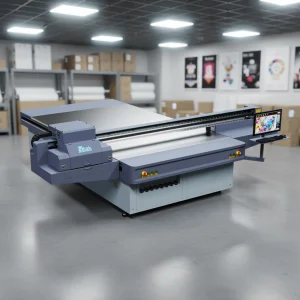
Factory-calibrated flatbed and roll-to-roll printing stations featuring industrial piezoelectric printheads, zoned vacuum tables, and instant curing LED engines built for high-throughput 24/7 commercial signage fabrication.
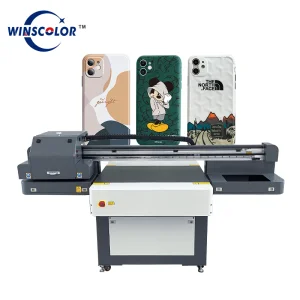
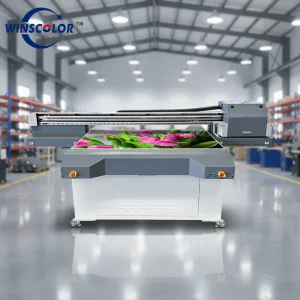
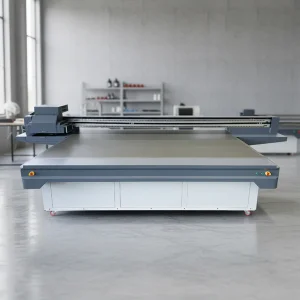
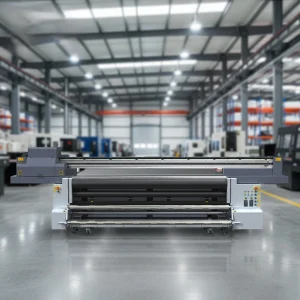
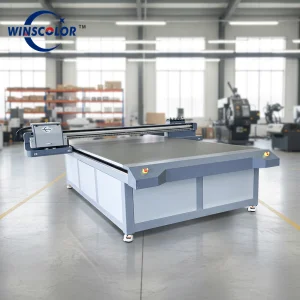

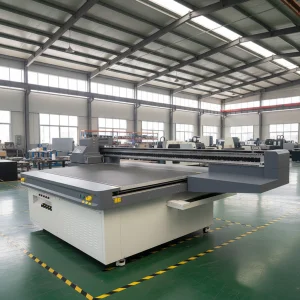
Worldwide commercial signage markets have fundamentally departed from analog screen printing and volatile solvent printing, adopting multi-wavelength LED UV digital architectures driven by environmental mandates, on-demand personalization, and extreme substrate versatility.
The adoption curve for industrial digital signboard machinery is accelerated by differing economic forces across primary trading blocs. In North America, the urgent demand for localized short-run retail display campaigns and architectural wayfinding has rendered analog screen print setup times unviable. Commercial producers require print systems capable of switching from acrylic backlit signage to corrugated point-of-sale (POS) packaging in minutes without wash-up cycles or platemaking overhead.
In the European Union, stringent emissions protocols—including the Corporate Sustainability Due Diligence Directive (CSDDD) and strict RoHS/REACH thresholds—have mandated the retirement of legacy eco-solvent machines that emit aromatic hydrocarbons. NTEK's cold-cure LED systems generate zero ozone, negligible volatile organic compounds (VOCs), and consume up to 68% less electrical energy during continuous gantry cycles.
Throughout Latin America, the Middle East, and the Asia-Pacific (APAC), explosive urban infrastructure growth, luxury hospitality developments, and expansive transport hubs demand heavy-duty, monolithic signage capable of resisting aggressive UV degradation, sand abrasion, and high moisture environments.
| Technology Vector | NTEK UV LED Flatbed | Legacy Eco-Solvent | Analog Screen Print |
|---|---|---|---|
| Make-Ready Setup | Instant / File-to-Print | 15–30 min Warm-up | 2–4 Hours Platemaking |
| Rigid Substrate Depth | Up to 100 mm (Direct) | Lamination Required | Up to 50 mm (Labor-Heavy) |
| Drying / Cure Cycle | Instantaneous LED UV | 24 h Outgassing | Air / Thermal Tunnel |
| Tactile / 3D Emboss | Native Varnish Layering | Not Possible | Multiple Screen Passes |
| TCO per m² (Short-Run) | Optimized ($0.45 - $0.85) | High ($1.20 - $2.40) | Prohibitive (>$6.00) |
Examining the physics behind piezoelectric drop-on-demand firing, continuous ink recirculation, dual-linear servo stabilization, and AI-driven spatial registration systems powering NTEK industrial printing centers.
Utilizing Ricoh Gen6 and precision industrial greyscale printheads operating between 5pl to 21pl variable droplets. High-frequency wave-shaping algorithms prevent droplet satellite deflection, ensuring sharp 2pt micro-text rendering on industrial hazard placards and luxury retail backlit films.
Heavy white pigment (Titanium Dioxide - TiO2) suffers rapid sedimentation in conventional static ink paths. NTEK integrates closed-loop constant-pressure fluid circulation directly through the printhead manifold, preventing nozzle starvation, micro-air ingress, and ink crusting during multi-shift operations.
Equipped with overhead high-resolution CCD cameras, the system instantly identifies the spatial coordinates, contour offsets, and angular tilt of irregular, pre-cut signage blanks loaded on the vacuum bed, triggering automatic offset adjustments inside the raster image processor (RIP).
Technological Roadmap (2025–2028): Development is underway on single-pass industrial signage arrays, intelligent edge-cloud telemetry for preventive printhead piezo degradation tracking, and bio-derived curable oligomers designed to eliminate non-recyclable petroleum photo-initiators completely.
Signage engineers must navigate wildly divergent surface energies, thermal expansion coefficients, and outdoor weatherability demands. NTEK printing architectures feature tailored substrate curing profiles across diverse commercial industries.
Fabricating high-durability directional pylons, illuminated corporate directories, and transit signage using brushed aluminum composite panels (ACP/Dibond) and 316 stainless steel sheets. In conjunction with our nano-silane primers, printed graphics resist UV-fading, acid rain, and automotive exhaust exposure for over 7 years outdoors.
High-turnover retail environments require high optical density, true blacks, and immaculate whites for edge-lit and lightbox signage. Utilizing five-layer synchronized output (Color + White + Black Barrier + White + Color), NTEK flatbeds produce double-sided lightbox panels that reveal zero bleed-through when illuminated.
Universal accessibility mandates demand raised tactile characters and Grade 2 Braille dots on institutional signage. Using high-viscosity UV varnish and structural white layering, our printers build up to 0.8 mm tactile dot profiles compliant with US ADA Title III and European accessibility regulations in a single pass.
How vertical integration within China's specialized CNC and digital printing industrial clusters delivers unprecedented equipment reliability, component availability, and market-disrupting capital efficiency.
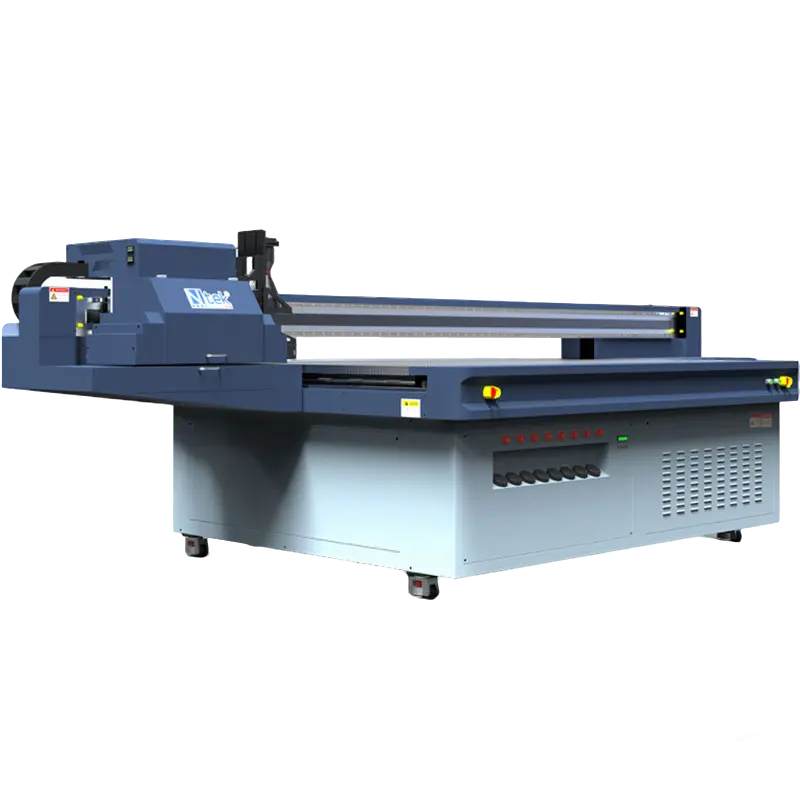
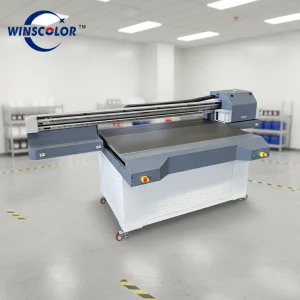
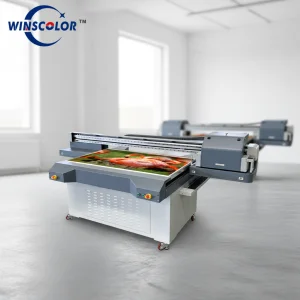
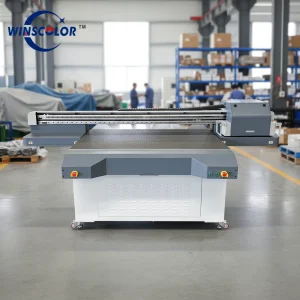
The fundamental differentiator between an industrial-grade digital signboard machine and an entry-level printer lies in structural mechanical rigidity. Situated in Jinan, Shandong—a global heartland for heavy machine tool fabrication—our manufacturing facility subjects every structural steel frame to thermal annealing furnaces to relieve internal stress before 5-axis gantry CNC milling.
This guarantees that machine beams maintain a deflection tolerance within ±0.015 mm over a 3.3-meter travel length for over a decade of continuous service. Conversely, lightweight aluminum profile machines flex over time, leading to fatal droplet displacement, optical chromatic aberration, and premature head failure.
Furthermore, the proximity to specialized component clusters—including precision ball screws, imported Japanese servo motors, high-grade magnetic encoders, and aerospace-grade IGUS cable drag chains—allows NTEK to fulfill complete custom machine orders within 14 business days, maintaining comprehensive inventory reserves of all mission-critical replacement boards and piezoelectric heads.
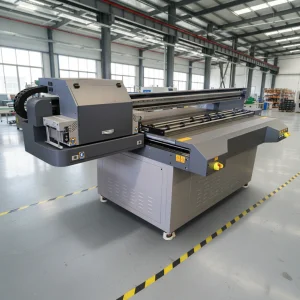
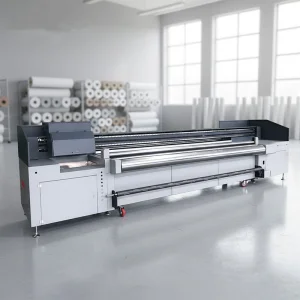
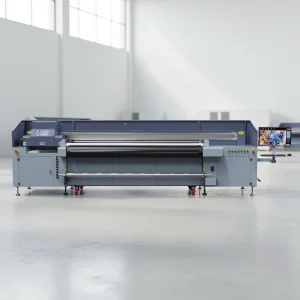
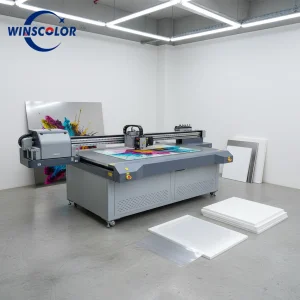
Expanding production capabilities into high-volume hybrid roll-to-roll operations, 3D raised tactile packaging finishes, and direct-to-glass architectural printing systems.
Procuring industrial capital machinery across international boundaries demands unambiguous compliance certification, robust electrical safety engineering, and an uninterruptible after-sales technical ecosystem.
NTEK machinery holds certified compliance under the European Machinery Directive 2006/42/EC, Low Voltage Directive (LVD), and Electromagnetic Compatibility Directive (EMC). Electrical cabinets feature Schneider and Omron industrial relays with CE, UL-compliant wiring schematics.
Supported by certified distributor training academies across Frankfurt, Chicago, Dubai, and São Paulo. Localized engineering units stock factory-original printheads, mainboards, linear encoders, and ink pumps for same-day emergency dispatch.
Each machine can be equipped with secure cloud-linked industrial IoT telemetry. Factory service engineers can diagnose negative pressure fluctuations, linear servo drive curves, ink viscosity changes, and RIP rendering mismatches in real time.
Addressing the operational, chemical, and economic questions most frequently submitted by signage enterprise procurement directors and factory plant managers.
Unlike legacy high-pressure mercury arc lamps that emit substantial infrared (IR) heat and heat up media up to 80°C–90°C, NTEK cold-cure UV LED arrays emit monochromatic light at 395nm with minimal IR radiation. The substrate surface temperature rarely exceeds 35°C, completely eliminating warping, edge curling, or thermal expansion on heat-sensitive 1 mm PVC boards, thin polycarbonate, or honeycomb sheets.
Under regular industrial operating conditions—utilizing factory-approved UV inks, adhering to automated cleaning cycles, and running on a steady negative pressure ink system—Ricoh Gen6 stainless steel printheads consistently deliver between 4 to 6 billion actuations per nozzle. In an active two-shift production environment, this translates to a lifespan exceeding 3 to 5 years before piezo deflection necessitates replacement.
Non-porous, hydrophobic surfaces like architectural float glass and polished stainless steel feature high surface energies that prevent cross-linking bonding with standard ink polymers. NTEK incorporates specialized liquid wipe-on or digitally jetted silane primers. When cured, this primer creates covalent siloxane bonds between the glass surface and the ink layer, achieving Class 5B cross-hatch adhesion and resisting boiling water immersion tests.
NTEK machines interface natively with industry-standard professional RIP architectures, including Onyx Graphics, Caldera GrandRIP+, and SAI PhotoPrint. Our color engineering department provides calibrated ICC device profiles configured for ISO 12647-8, G7 Idealliance, and Fogra 51 standards, guaranteeing accurate color reproduction between digital proofs and massive multi-panel signboard assemblies.
The standard NTEK YC2513L flatbed requires a stable 220V (±10%) single-phase 50/60Hz AC electrical connection with an isolated grounding rod (<4 Ohms resistance) to prevent static discharge onto printheads. Ambient operating conditions should be maintained at 20°C–28°C with a relative humidity of 40%–60% non-condensing. An oil-free compressed air source delivering >0.6 MPa is required for vacuum table pins and head maintenance systems.
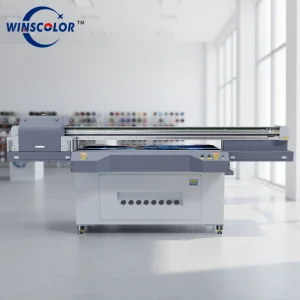
A dedicated flatbed features a stationary cast vacuum table where the gantry moves across the media, ensuring micron accuracy on heavy, thick boards (up to 100 mm depth and 400 kg weight). A hybrid printer moves the substrate across a conveyor belt with front/rear roll feeders. Hybrids offer unmatched versatility for shops producing 70% roll vinyl and 30% lightweight rigid boards (under 20 mm), whereas dedicated flatbeds remain the gold standard for high-precision architectural panels.
Consult with our senior inkjet application engineers to calculate your precise Total Cost of Ownership (TCO), receive comprehensive custom substrate print samples, and review custom OEM machine configurations tailored to your regional commercial footprint.