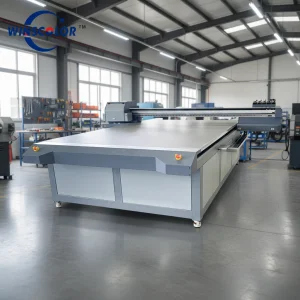
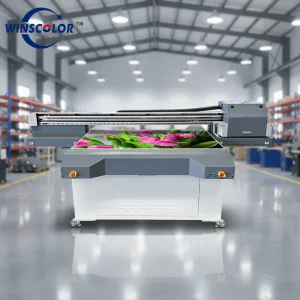
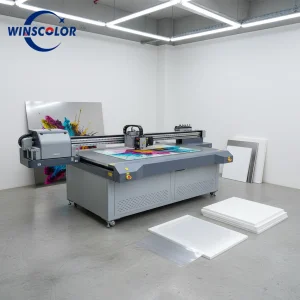
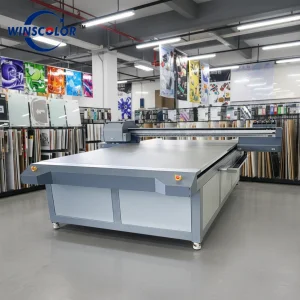
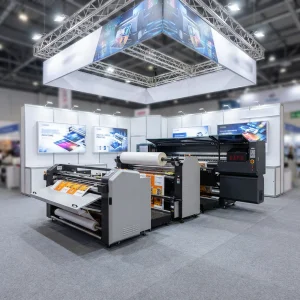
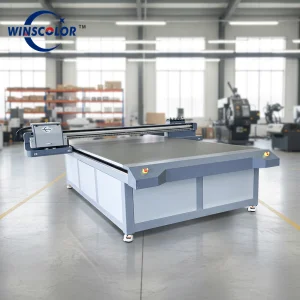
High-precision digital platforms designed for commercial decorators, glass fabricators, and architectural signage specialists requiring micron-accurate dot placement.
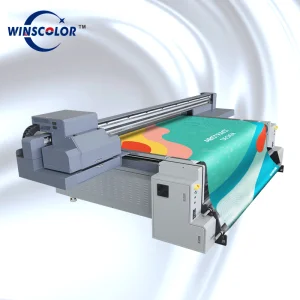
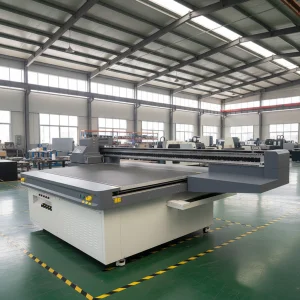
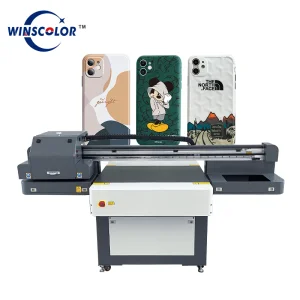
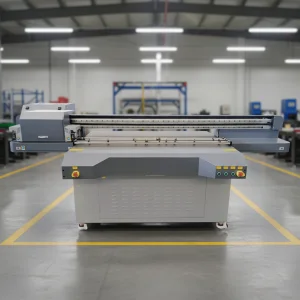
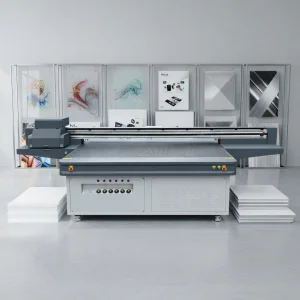
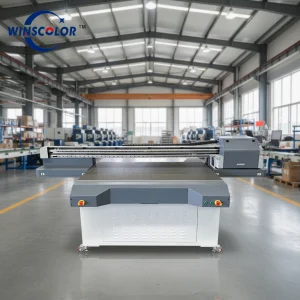
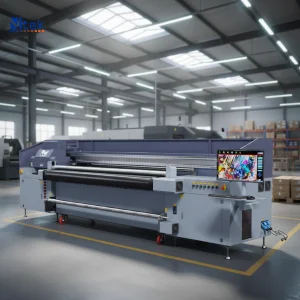
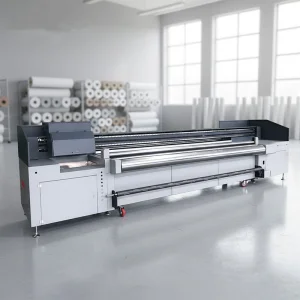
Glass is non-porous, smooth, chemically inert, and heavy. Printing onto tempered, laminated, or float glass demands structural rigidity, intelligent negative pressure controls, and chemical pre-treatment integration.
Fabricated with aircraft-grade milled aluminum and high-tensile structural steel trusses. Thermal annealing eliminates internal stresses, guaranteeing flat registration over years of high-payload cycles up to 100 kg/m².
Equipped with reverse-air flotation for effortless loading of heavy monolithic architectural glass panels. Independent vacuum zones isolate negative pressure exactly underneath the glass dimension, preventing ink mist drift.
Adjustable radiant intensity with directional shutter mechanics shields printhead nozzles from stray UV bounce on reflective mirror or float glass surfaces, preventing premature nozzle clogging during multi-pass runs.
Direct OEM & ODM manufacturing integration in Jinan guarantees stringent bill-of-materials quality, rapid prototyping, and unmatched component availability for enterprise print buyers.
Immediate regional access to high-precision THK linear guides, Megadyne timing belts, and Panasonic servo subsystems optimizes lead times down to 10–15 production days.
By eliminating middle-tier intermediaries, global procurement teams achieve a 30%–45% capital expenditure reduction while securing certified industrial spare parts inventories.
Every flatbed printer undergoes a non-stop 72-hour motion calibration and continuous continuous-ink drop inspection prior to overseas crate crating and shipment.
Need custom table lengths (up to 3.3m x 2.1m), specific dual-negative pressure pneumatic circuits, or tailored printhead layouts? Our in-house R&D adapts assemblies quickly.
International distribution requires more than good hardware; it requires rigorous regulatory alignment and rapid response engineers stationed across critical global hubs.
Our flatbed systems meet strict European CE Machinery Directive (2006/42/EC) and Low Voltage Directive certifications. Electrical harnesses follow UL508A safety schematics, facilitating trouble-free municipal safety approvals in North America and Western Europe.
Through authorized distributor networks and field application engineers in North America, Germany, Turkey, and Southeast Asia, we provide on-site commissioning, machine leveling, optical alignment, and localized operator training modules.
Built-in IoT interface allows our Jinan core R&D team to run real-time hardware diagnostics, waveform optimization, and encoder troubleshooting via secure remote links, minimizing downtime to single-digit hours.
Engineered across dynamic high-yield settings, UV flatbed glass printing replaces cumbersome screen setups with on-demand digital micro-droplet technology.
Direct printing on tempered structural glass balustrades, curtain walls, and frosted shower enclosures using inorganic ceramic-infused or adhesion-promoted UV inks that resist thermal expansion and UV bleaching.
High-opacity black border framing and tactile capacitive touch control indicators on tempered glass cooktops, refrigerator smart doors, and interactive display interfaces with exact micro-millimeter tolerance.
Bespoke splashbacks, glass tabletops, sliding partitions, and textured art panels. Layered varnish channels generate realistic tactile relief resembling carved stone, wood, or water droplets.
Where digital glass fabrication is heading over the next five years: from inline robotic loading to nano-engineered ceramic inks.
The convergence of organic UV curing with inorganic glass frits allows prints to undergo subsequent tempering at 680°C, fusing the pigment into the silicate structure for lifelong exterior weathering resistance.
Integrated machine-vision cameras automatically identify irregular glass edges, bevels, and drill holes, dynamically warping and registering the print raster file to eliminate registration errors on hand-cut stock.
Transition from manual flatbed loading to hybrid roller-vacuum lines integrated with Cartesian gantry loaders and robotic suction arms for zero-touch high-volume display manufacturing.
Key engineering and commercial considerations addressing adhesion durability, pre-treatment chemistry, and capital allocation.
Glass has low surface energy. We employ a dual-action system: surface wiping with a silane-coupling primer or inline plasma torch pre-treatment, followed by customized high-flexibility hard UV inks. This achieves an ISO class 0 (ASTM 5B) rating on standard cross-hatch tape tests.
Glass and mirrored surfaces reflect significant amounts of UV radiation back upward toward the carriage bottom. If not mitigated by engineered physical light-baffles and fast-gated LED arrays, this reflection cures ink directly inside the printhead nozzles, resulting in permanent head failure.
Industrial greyscale piezo printheads like the Ricoh Gen6 or Gen5 with stainless steel nozzle plates are preferred over desktop heads. They withstand harsh environments, operate at high jetting frequencies (up to 50 kHz), and support variable droplet sizes from 5 to 15 picoliters for smooth gradients.
Yes. By utilizing specialized RIP software configurations, our printers run synchronized C+W+C (Color + White + Color) multi-layer print modes in a single pass. This ensures identical high-fidelity imagery viewed from either side without registration misalignment.
Explore our complete catalog of certified industrial printers configured for sign shops, promotional goods, packaging, and custom materials.