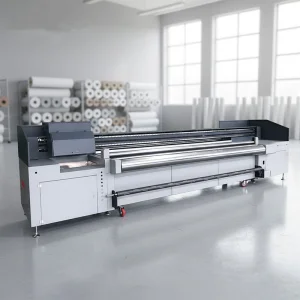
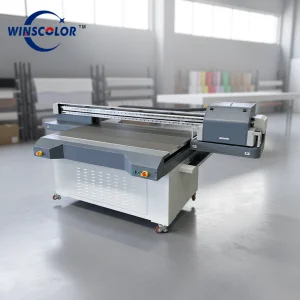
Explore Tier-1 industrial-grade digital printing engines engineered for 24/7 heavy duty operations across flexible webs, rigid substrates, and high-margin bespoke manufacturing.

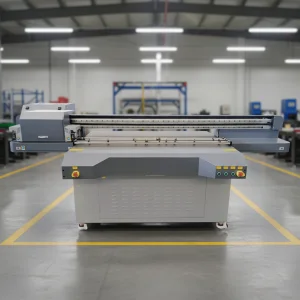
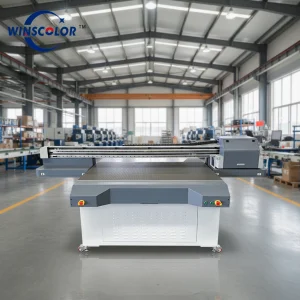
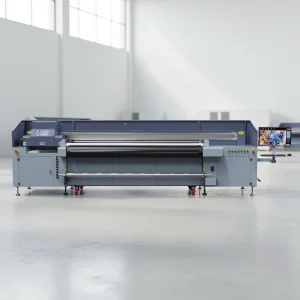
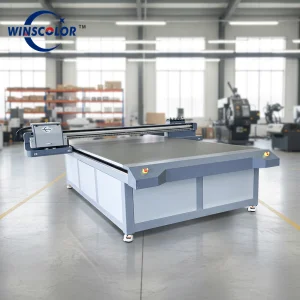



Strategic shift toward sustainable UV-LED curing, sub-micron droplet deposition, and high-yield roll-to-roll manufacturing workflows.
The international wide-format roll-to-roll (R2R) digital printing sector is navigating a fundamental operational shift. Industrial converters, digital visual merchandising providers, and commercial fabricators are aggressively migrating away from legacy solvent and eco-solvent technologies toward high-efficiency UV-LED curing and multi-functional hybrid systems. Valued at over $8.4 billion globally and accelerating at a Compound Annual Growth Rate (CAGR) surpassing 7.2%, the R2R machinery market is increasingly dominated by industrial requirements for uninterrupted continuous throughput, expanded color gamut fidelities, and zero-drying-lag turnaround cycles.
In traditional roll-to-roll workflows, throughput was frequently bottlenecked by outgassing intervals, drying heaters, and solvent evaporation chambers. Modern industrial R2R UV printing machinery solves this challenge by implementing photopolymerized monomer chemistry cured immediately by high-intensity cold-cure UV-LED diodes. The physical footprint of manufacturing facilities is reduced by up to 35% as drying racks become obsolete, while energy consumption decreases by upwards of 60% compared to legacy hot-air impingement drying tunnels. Consequently, global print operations can process delicate, heat-sensitive flexible films such as ultra-thin PVC, stretchable backlit polyester fabrics, polycarbonate overlays, cast vinyl, and metallized PET without thermal wrinkling or elongation distortion.
Deconstructing the architectural components that separate consumer-grade sign plotters from true continuous industrial R2R digital printing machinery.
Equipped with native industrial Ricoh Gen6 (MH5320) or Kyocera KJ4A printheads. These stainless-steel architecture printhead clusters deliver high-frequency firing rates up to 50 kHz with 1,280 to 2,656 nozzles per unit.
Maintains continuous dynamic equilibrium across tension zones from initial unwinding rolls to motorized dual-axis rewinding systems.
Replaces conventional rubber timing belts with high-precision linear servo motors and THK ultra-silent dual guide rails imported from Japan.
Why leading global print providers and brand owners source roll-to-roll machinery from China's premier industrial manufacturing clusters.
In the high-precision equipment domain, Jinan (Shandong Province) has emerged as the world's premier cluster for CNC machine tools, laser cutting centers, and wide-format digital printing systems. Chinese engineering manufacturers, typified by dedicated producers such as Winscolor (Jinan Yingcai Digital Technology Co., Ltd), have disrupted traditional Western and Japanese price-performance barriers. By combining extensive vertical integration, dedicated in-house R&D for motion control algorithms, and access to an unmatched domestic electromechanical supply chain, Chinese manufacturers offer distinct operational advantages:
| Evaluation Parameter | Legacy Western / Japanese Tier-1 OEM | Top-Tier China Industrial Direct Factory (e.g. Winscolor) | Strategic Impact on Print Houses |
|---|---|---|---|
| Initial Capital Expenditure (CapEx) | $140,000 – $280,000+ | $35,000 – $75,000 | Fast ROI Repayment achieved in 6–10 months vs. 3+ years. |
| Consumable & Ink Cost per Liter | $90 – $160 / Liter (Closed Chip DRM) | $22 – $45 / Liter (Open/Semi-Open Industrial Grade) | 65% Margins Slashing ink cost from $0.90/m² down to $0.22/m². |
| Customization & OEM/ODM Agility | Fixed catalogue configurations, 6–9 months lead time | Fully modular: head count, curing UV width, rotary options, 20–30 days | High Flexibility Tailored to specific roll media and inline finishing setups. |
| Critical Spare Parts Pricing | High markup (up to 400% on boards, pumps, encoders) | Direct factory component pricing (standard industrial catalog) | Low OpEx Mitigates long-term machine downtime and servicing overheads. |
Modern Chinese manufacturing is not merely about cost reduction; it represents comprehensive process control. Winscolor operates an independent 20,000 m² smart manufacturing plant with six specialized assembly lines. Before any R2R machine is packed in moisture-resistant international sea freight framing, it undergoes a mandatory 72-hour continuous burn-in test, including high-speed continuous carriage scanning, waveform drop-trajectory verification, multi-layer ink adhesion tests, and thermal imaging of UV-LED curing manifolds.
From seamless airport lightboxes to luxury textured interior wallcoverings and industrial security markings.
Silicone Edge Graphics (SEG) across transit hubs, luxury department stores, and exhibition stands mandate intense color saturation without light leakage. R2R UV printers utilizing high-density CMYK + White formulations lay down heavy ink films that will not crack upon tight tension stretching or folding.
Interior architectural décor is transitioning from analog rotogravure printing to on-demand digital roll-to-roll production. Winscolor digital systems can print seamlessly onto non-woven fabrics, heavy canvas, vinyl-coated wallpapers, and textured grasscloth.
Fleet graphics demand extreme elongation flexibility and weather resistance. Utilizing advanced polyurethane-based flexible UV inks, prints can be stretched over complex compound curves, rivets, and automotive recesses without white-haze micro-cracking or ink delamination.
Architectural glass partition graphics and retail shopfront decals require distinct appearances in daylight versus nighttime backlighting. Industrial R2R systems perform synchronous multi-layer printing:
With the rise of e-commerce SKU proliferation, packaging converters cannot afford gravure cylinder tooling fees for micro-batches. Industrial roll-to-roll printers feed barrier films, metallized BOPP, kraft papers, and shrink sleeves directly.
Beyond advertising, industrial roll-to-roll systems print tactile control panels, functional membrane overlays, automotive dashboard components, and medical instrument interfaces using polycarbonate (PC) and polyester (PET) rolls.
Anticipating the technological disruptions redefining roll-to-roll digital output over the next five years.
Leading R2R machines are integrating high-resolution CCD cameras directly above the web output zone. These optical systems scan real-time print target alignment marks, automatically correcting bidirectional step errors and carriage skew on the fly.
Furthermore, intelligent Nozzle Out Compensation algorithms detect blocked orifices via automated pattern verification. If an inactive nozzle is identified, the system calculates and deploys neighboring micro-nozzles to interpolate the missing swath dots, completely mitigating horizontal banding and saving entire rolls of expensive media from being scrapped during unattended graveyard-shift runs.
While multi-pass scanning gantries represent the backbone of commercial signage and boutique production, the industry is witnessing the migration of fixed-array Single-Pass print bars into specialized high-volume roll-to-roll finishing lines.
With stationary printhead bars spanning the full web width, linear feed velocities jump from 40–80 m²/hour up to 150–300 linear meters per minute. When coupled with water-based resin or food-grade UV-LED chemistries, these single-pass roll-fed lines are directly taking market share from analog flexographic and rotogravure packaging installations.
A rigorous engineering checklist for procurement managers, factory directors, and international buyers evaluating roll-to-roll machinery suppliers.
Never judge a wide-format roll-to-roll machine solely by its promotional exterior cover. An industrial 3.2m printer must weigh between 1,800 kg and 3,200 kg. High structural mass guarantees dampening of high-frequency kinetic oscillations caused by rapid carriage acceleration (often exceeding 1.5G). Demand factory documentation confirming the gantry beam underwent high-temperature heat-treatment stress relief annealing and precision five-axis CNC milling to prevent longitudinal warping across its working lifespan.
Piezo printheads perform reliably only when the driving electrical pulse waveform precisely matches ink viscosity and dynamic surface tension across ambient temperature fluctuations. Confirm whether the supplier provides closed-loop active heating printhead sub-tanks and an independent dual-channel digital negative pressure regulation system (one dedicated to white ink, one to color inks). This prevents white ink weeping during standby and avoids ink starvation during continuous high-density solid coverage passes.
Inspect the wattage per centimeter of the UV-LED irradiation heads. Reliable surface cure and substrate adhesion demand irradiance outputs of at least 8–14 W/cm² at the 395nm wavelength peak. Ensure the cooling system incorporates an industrial refrigerated water recirculating chiller rather than cheap ambient air fans. Stable lamp temperatures below 35°C preserve diode array life beyond 20,000 operational hours and prevent localized heat transfer onto delicate roll films.
Calculate full five-year operational expenditure: (Total Capital Equipment Cost) + (Projected Ink Volume × Cost per Liter) + (Printhead Replacement Schedule every 24–36 months) + (Electrical Power Draw kWh × Local Rates). Avoid proprietary RFID-locked closed ink systems where the supplier marks up consumable prices by 300%. Opt for reputable open or certified industrial partners like Winscolor that provide premium ink batches with guaranteed batch-to-batch spectral consistency at wholesale direct pricing.
Comprehensive technical answers directly compiled from our chief applications and field integration engineers.
Explore heavy-duty flatbed, hybrid roller, single-pass carton packaging, and high-resolution industrial marking machinery.