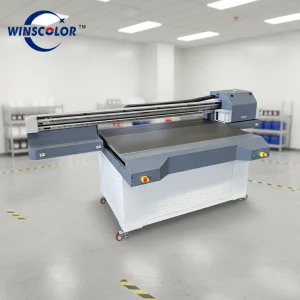
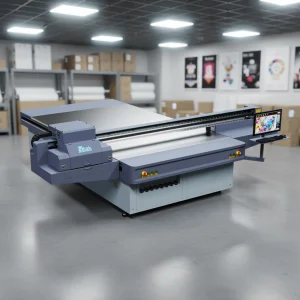
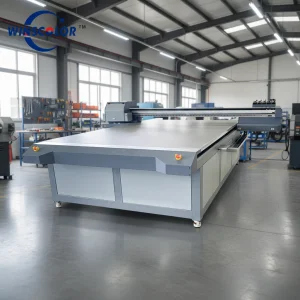
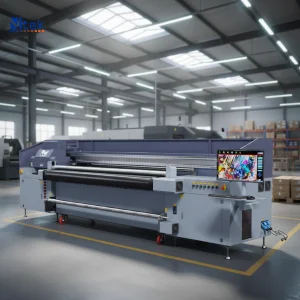
Engineered for high-duty continuous operation across bespoke luxury leather goods, automotive interiors, and rigid industrial substrates.
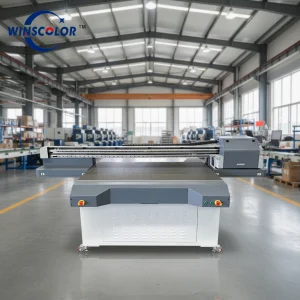

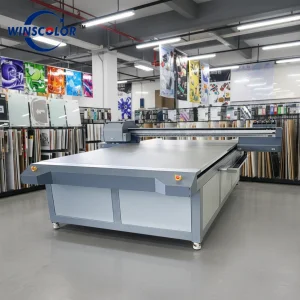
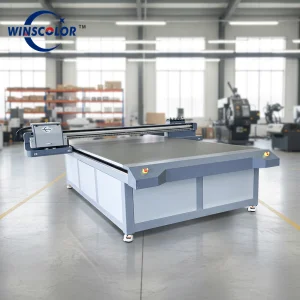
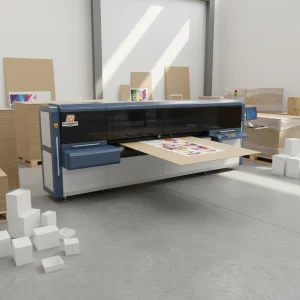
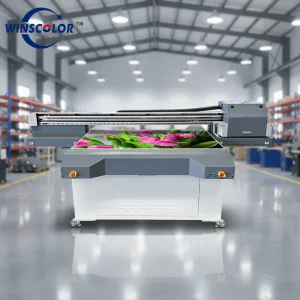
Analyzing the shift from analogue rotary screen printing to direct-to-substrate digital UV piezo deposition across international supply chains.
Traditional rotary and screen printing require elaborate plate-making, screen engraving, and chemical wash baths that make short production runs economically prohibitive. Modern leather printing machine factory standards eliminate prepress tooling entirely. Digital inkjet architecture allows luxury houses and tier-1 OEM manufacturers to switch color palettes, embossed patterns, and bespoke serializations instantly, achieving cost parity on single-piece prototypes and scalable mass-customization runs.
Unlike rigid plastics or inorganic building sheets, organic hides and synthetic microfibers exhibit substantial directional elongation, natural grain topography, and residual tanning oils. Leading leather printing machine companies engineer specialized low-viscosity UV curable inks enriched with highly elastic monomers. These polymers stretch up to 250% alongside natural hide fibers without micro-cracking, flaking, or delaminating during deep embossing or flexural fatigue tests.
Stringent ESG mandates across Europe (REACH), North America (EPA), and Asia-Pacific are curbing traditional solvent-borne tanning processes. Digital piezoelectric UV LED curing operates at cold thermal profiles, emitting near-zero Volatile Organic Compounds (VOCs) and drastically lowering water consumption. The direct ink jetting mechanism drops ink transfer efficiency close to 98%, cutting hazardous chemical runoff and post-print thermal curing footprint by over 60%.
From high-durability automotive cabins to tactile luxury goods: how multi-pass UV platforms tackle critical structural requirements.
Micro-droplet grayscale jetting (down to 5 pL) combined with high-opacity spot white allows high-fidelity photographic reproductions directly on tanned full-grain calfskin and vegetable-tanned leathers, preserving natural grain hand-feel while laying 3D haptic varnish.
Engineered for compliance with stringent automotive rub, abrasion (Taber test), and thermal exposure standards (ISO 105-B06). Digital UV systems deposit UV-resistant pigments into leather seat bolsters, steering wraps, and dashboard skins with zero flaking.
Accommodating high-frequency mechanical bending, tension stretching, and wet-dry cycles on synthetic PU microfibers and genuine leather shoe uppers. Simultaneous double-strike white underbase guarantees chromatic saturation on jet-black substrates.
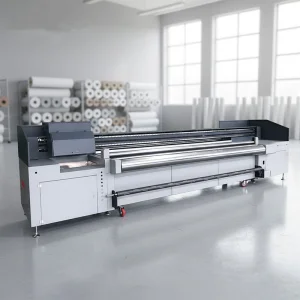
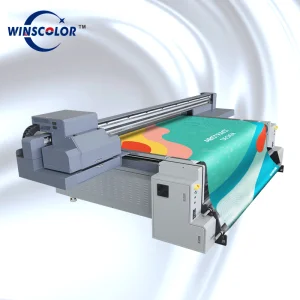
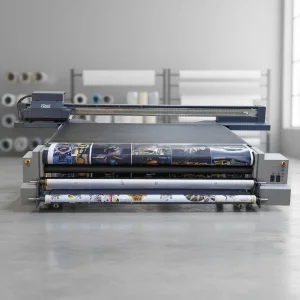
Large-format hybrid printers process continuous leather roll material and pre-cut acoustic panels up to 3.3 meters in width, producing textured wall treatments, luxury headboards, and executive interior surfaces with variable tactile reliefs.
A rigorous industrial foundation ensuring uninterrupted machine availability, worker safety, and international environmental compliance.
Every digital printing chassis engineered at our Jinan plant conforms to CE electromagnetic and mechanical directives, UL-rated high-voltage wiring standards, and RoHS toxicant reduction guidelines, ensuring rapid customs clearance and immediate commissioning in North American and European facilities.
Supported by a global logistics network, our factory provides direct cloud-connected IoT tele-diagnostics. In-house mechanical engineers can remotely evaluate waveform dynamics, positive-negative ink pressure valves, and board temperatures in real time, minimizing costly machine idle states.
Before equipment delivery, our material engineers run thorough batch testing on client leather stock, calibrating specific Ricoh Gen6 or Gen5 firing voltages and UV-LED irradiance curing curves to guarantee maximum surface tension wet-out and scratch resistance.
Strategic R&D initiatives bridging machine intelligence, tactile micro-structures, and eco-sustainable fluid chemistry.
Widespread adoption of high-frequency Ricoh Gen6 variable drop printheads, dual-side LED cold light curing, multi-zone vacuum suction zones, and automated height sensors protecting against uneven natural hide edges.
Integrating overhead industrial CCD optical scanning arrays to dynamically compensate for natural leather flaws, irregularities, and variable hide contours, optimizing pattern layout via automated nesting algorithms.
Next-generation zero-odor water-borne resin UV dispersions formulated specifically for ultra-breathable genuine leather items, maintaining raw tactile grain breathability while meeting strict consumer product safety standards.
Comprehensive engineering insights addressed to machine procurement directors, print facility managers, and OEM converters.
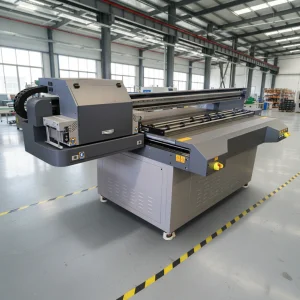
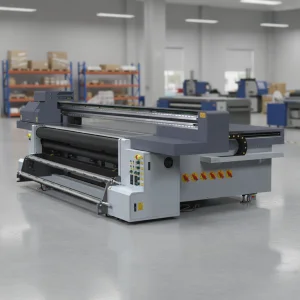
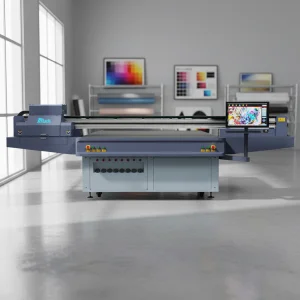
Explore heavy-duty UV flatbed and hybrid hardware built for demanding multi-shift industrial manufacturing environments.