Precision-machined digital systems with custom rotary fixtures and multi-channel vacuum flatbeds for flawless ceramic, glass, and multi-substrate manufacturing.
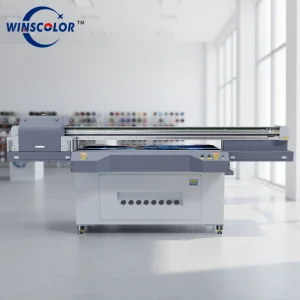
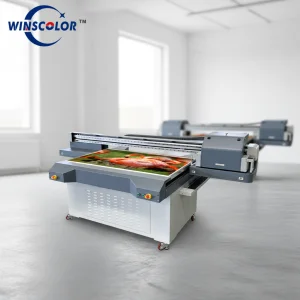
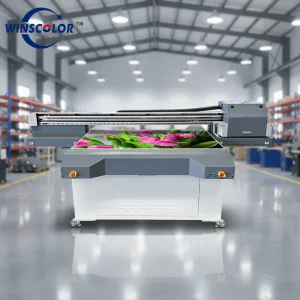
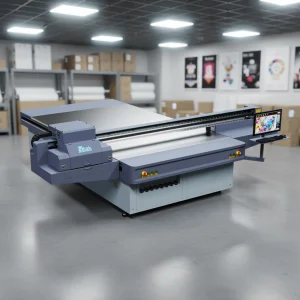
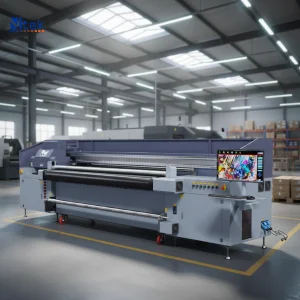
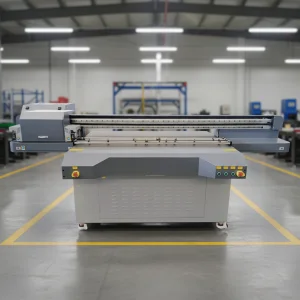
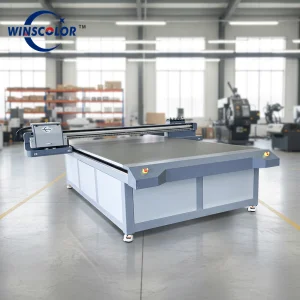
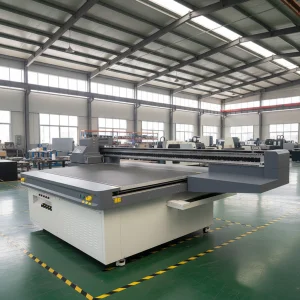
Overcoming the thermodynamic, rheological, and mechanical challenges of non-porous silica glass surfaces with micro-piezo drop-on-demand technology.
Glassware decoration has historically been constrained by the limitations of analogue screen printing, pad printing, and ceramic decal baking. These legacy methods exhibit profound structural bottlenecks: exorbitant plate costs, extended changeover times exceeding 45 minutes per SKU, high chemical hazards from volatile organic compounds (VOCs), and catastrophic scrap rates during conical alignment. Soda-lime silica glass, borosilicate laboratory glass, and lead-free crystal feature completely non-porous surfaces with surface energy often measuring below 38 dynes/cm. Without proper interfacial energy management, standard UV inks instantly form beads, reticulate, and suffer from zero interfacial shear adhesion.
As an internationally recognized glass cup printer manufacturer and supplier, our factory engineering team has redesigned the mechanical gantry and chuck rotation kinematics. By introducing synchronized direct-drive brushless servo motors linked to high-frequency optical encoders (up to 36,000 pulses per revolution), our machines eradicate step-banding, color fringe misalignment, and seam overlap errors on 360-degree cylindrical and conical drinkware.
Tapered beer pints, stemware tumblers, and handled glass mugs exhibit non-uniform radii. Our high-drop piezo printheads propel stable 5–15 picoliter droplets across distances up to 15mm without satellite aerosol misting or loss of edge definition.
Instead of traditional step-and-repeat indexing, our patented rotary algorithms execute continuous helical jetting. This ensures completely seamless graphic transitions, perfectly closed 360-degree artwork, and elimination of visible seam lines.
Glass drinkware requires extreme mechanical and hydrolytic endurance. Our dual-component inline silane primer formulation yields 5B cross-hatch adhesion (ASTM D3359) and resists over 500 industrial high-alkaline dishwasher cycles.
Strategic research initiatives shaping the next era of industrial glass cup decoration: AI vision, eco-curing, and direct-to-object robotic automation.
Real-time laser scanning coupled with machine learning vision dynamically captures run-out wobble and hand-blown glass variations, auto-compensating printhead height on the fly.
Transitioning from conventional mercury UV lamps to ultra-efficient narrow-spectrum (395nm/365nm) water-cooled LED arrays and electron-beam curing, eliminating thermal stress in brittle crystal.
Pioneering compliant UV monomer matrices specifically engineered for drinkware rim zones, eliminating toxic photoinitiator migration under strict FDA CFR 21 and Swiss Ordinance criteria.
SCARA and 6-axis robotic arm loading integration capable of achieving 1,200 units per hour continuous automated rotary throughput with auto-centering pneumatic expanding mandrels.
Tailored turnkey configurations serving premium beverage companies, hospitality procurement teams, and industrial glass container manufacturers.
Eliminate minimum order quantities (MOQs). Print full-color CMYK+W graphics, tactile reliefs, and limited-run labels directly on beer growlers, IPA pint glasses, can-shaped glassware, and cocktail tumblers.
High-end glass packaging demands optical perfection. Our multi-layer spot varnish engines apply simulated hot-stamping metallic effects, frosted micro-textures, and high-opacity brilliant white backing on colored glass.
Catering to hotels, luxury cruise liners, and corporate gift houses requiring bespoke monograms, guest-personalized banquet sets, and durable restaurant-grade wine, whiskey, and water goblets.
Inside our Jinan digital equipment base: 20,000 square meters of high-precision CNC chassis machining, calibrated electrical assembly, and rigorous ISO 9001 quality testing.
Unlike trading aggregators, Winscolor (Jinan Yingcai Digital Technology Co., Ltd) operates as a primary original design manufacturer (ODM/OEM). Situated within China's foremost industrial manufacturing cluster in Jinan, Shandong, our facility integrates heavy gantry fabrication, stress-relieving thermal annealing furnaces, 5-axis gantry CNC milling, in-house circuit board SMT lines, and cleanroom optical calibration bays.
By commanding 100% of the mechanical gantry fabrication and motion control assembly, we eliminate intermediate supply chain premiums, offering global industrial buyers a 35% to 50% capital efficiency advantage over Western equivalents, accompanied by full traceability of structural components, raw materials, and electrical sub-assemblies.
Every printer chassis undergoes 600°C thermal annealing to neutralize internal metal stress, guaranteeing that heavy gantry beams remain true within 0.015mm over a decade of continuous multi-shift production.
Dual electronic negative pressure feedback systems with independent white ink constant recirculation prevent pigment sedimentation, jet channel clogs, and pressure spikes during rapid carriage reversal.
Prior to international crating, each machine executes a 72-hour continuous test protocol: dry mechanical cycling, optical line registration, ink firing endurance, and vacuum bed flatness verification with dial micrometers.
Examine direct economic, consumable, and throughput metrics comparing Winscolor Digital Rotary UV vs. Traditional Screen & Pad Printing.
| Evaluation Parameter | Digital Rotary UV (Winscolor) | Semi-Automatic Screen Printing | Pad Printing (Tampography) |
|---|---|---|---|
| Pre-Press Tooling Cost | $0.00 (Direct PDF/TIFF RIP) | $75–$250 per color screen/mesh | $60–$180 per etched cliché plate |
| Setup & Changeover Time | < 2 minutes (Software file switch) | 35–60 minutes per color pass | 25–45 minutes with ink tray mixing |
| Color Gamut Capability | Photographic (CMYK + W + V + Lc + Lm) | Limited spot colors (1 to 4 colors) | Limited spot colors (1 to 2 colors) |
| 3D Tactile / Texture Effects | Supported (Digital varnish build-up) | Requires thick specialty emulsions | Not possible |
| Ink Consumable Cost (Per Cup) | $0.004 – $0.012 (depending on coverage) | $0.015 – $0.035 (high ink tray residue) | $0.012 – $0.028 (solvent loss) |
| Short-Run Viability (1–500 pcs) | Extremely High Margin Profitability | Massive net loss due to make-ready | Cost prohibitive |
| Eco-Compliance / VOC Emissions | Zero solvent VOCs (UV-LED polymerized) | High VOC solvent fumes & wash solvents | High solvent wash emissions |
Mean Time Between Failures (MTBF) surpasses 4,200 operating hours. All critical motion axes employ standardized Japanese THK guides and Panasonic/Delta high-torque servo packs readily available worldwide.
With factory-direct purchasing models and automated rotary drinkware capability, mid-sized printing enterprises recover complete equipment capital investment within 4.5 to 7.8 months of operational deployment.
We provide customized chassis sizing, dedicated automated multi-cup rotary fixtures, high-clearance gantry elevators (up to 450mm), and private-label firmware/software GUI for international distributor networks.
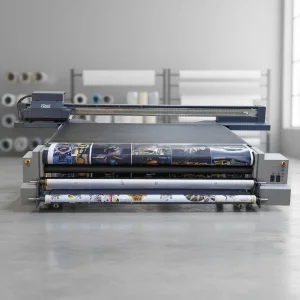
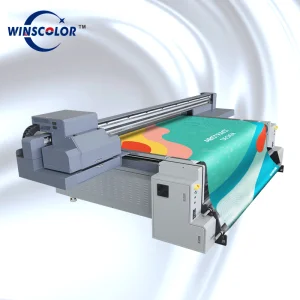
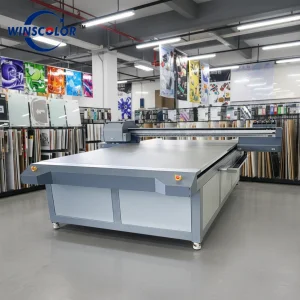
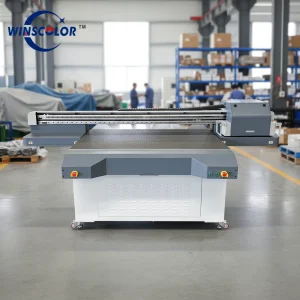
Engineered for diverse production volumes: from bespoke 1610 glass cup and bottle printing cells to high-speed 3.3m industrial roll-to-roll and hybrid lines.
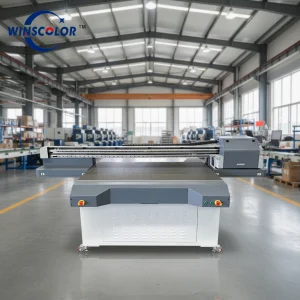
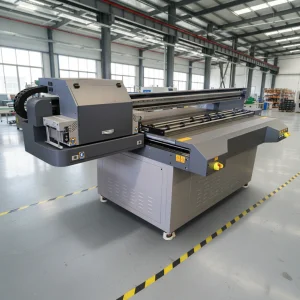
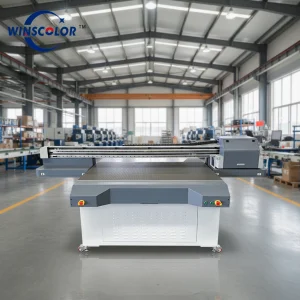
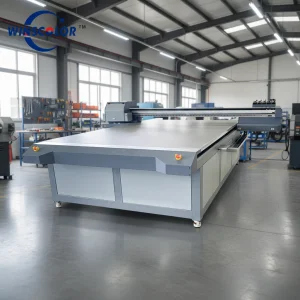
De-risking capital investments across North America, the European Union, the Middle East, and Southeast Asia with enterprise-grade SLA frameworks.
Fully compliant with the European Machinery Directive 2006/42/EC, Low Voltage Directive 2014/35/EU, CE safety marking, and RoHS 2011/65/EU hazardous substance restrictions. Electrical harnesses comply with UL 778 industrial protocols.
Multi-lingual tier-3 application engineers provide real-time diagnostic connectivity via secure encrypted VPN links. System diagnostics, wave-curve firmware optimization, and ICC color profile adjustments executed remotely within 120 minutes.
Critical components—including Ricoh and Epson printhead units, negative pressure boards, sub-ink tanks, UV-LED lamp driver modules, and optical linear encoders—are stocked in strategic international hubs for expedited 24–48 hour dispatch.
Direct technical answers from our senior automation engineers regarding ink adhesion, taper distortion, food safety, and mechanical precision.
