Heavy-bed flatbeds and continuous multi-pass architectures factory-calibrated for vitrified, porcelain, sintered stone, and structural ceramics.
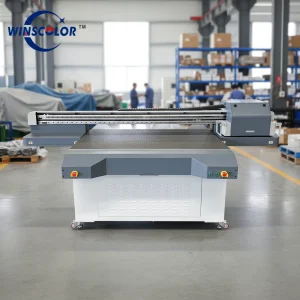
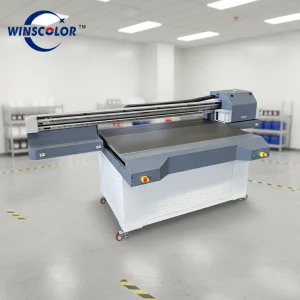
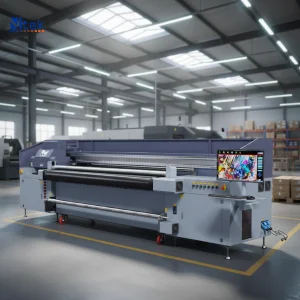
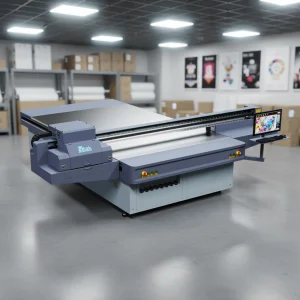
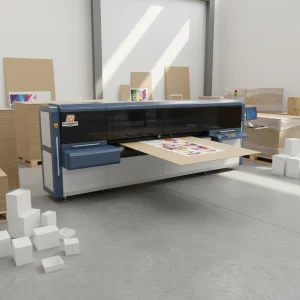
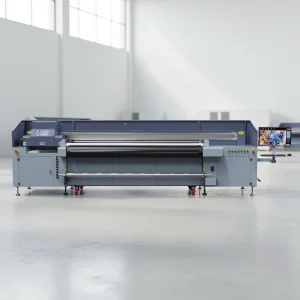
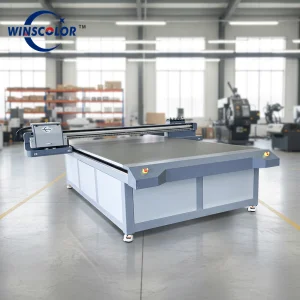

Transitioning from analog screen printing to piezoelectric drop-on-demand digital printing eliminates rotary engraving setup costs, reduces raw glaze consumption, and supports zero-inventory manufacturing.
Traditional rotary screen setups require costly photopolymer cylinder engravings and high minimum order quantities. Digital DoD inkjet technology enables single-pass runs, zero-waste shade balancing, and on-demand production schedules.
Multi-channel piezo heads (CMYK + LC + LM + White + Varnish) apply high-viscosity glossy and matte effect coatings, producing synchronized 3D grain textures that replicate authentic marble, split-face slate, and porous volcanic stone.
Ceramic slabs and solid porcelain pieces impose substantial structural loads. Our machine frames are built from double-welded steel gantries milled on German CNC centers, preventing mechanical distortion under high continuous throughput.
How tile manufacturing centers in southern Europe, Latin America, Southeast Asia, and the Middle East deploy customized inkjet systems for their respective market requirements.
In high-end Italian and Spanish tile clusters, production focuses on high-precision slab printing (1200×2400mm and 1600×3200mm). Factories install Winscolor Ricoh Gen6 and Kyocera print engines to achieve hyper-realistic vein registration matching deep wet mechanical pressing.
Projects across Riyadh and Dubai demand robust UV curing systems capable of withstanding extreme solar exposure and high ambient temperatures. Our machines use specialized high-density pigment inks engineered to resist long-term thermal expansion without flaking.
In regional manufacturing centers across Vietnam, India, and Indonesia, custom ceramic murals and bespoke pool tiles demand rapid file conversions without manual cylinder changes. Winscolor RIP software enables single-operator, multi-job queuing on one flatbed.
Continuous investment in high-frequency piezo printheads, non-destructive vision alignment, and zero-carbon curing systems.
Full-spectrum ink recirculation behind the nozzle plate eliminates sediment buildup in dense titanium oxide white inks and heavy-metal ceramic formulations, reducing nozzle dropouts in demanding industrial operations.
Integrated overhead line-scan cameras detect real-time tile placement angles, chamfers, and surface warpage on conveyor feeds, automatically correcting digital mask orientation within 0.05 seconds prior to jetting.
Developing ultra-low wattage variable curing arrays capable of pinning responsive polymer inks alongside water-based nano-glazes, reducing overall machine power requirements by more than 35% across continuous shifts.
Explore small to super-wide format printers configured for ceramic tiles, corrugated packaging, rigid architectural boards, and flexible composite rolls.
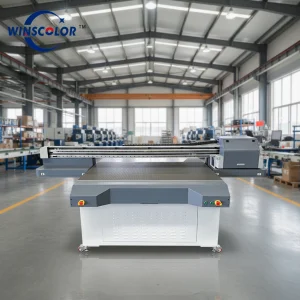

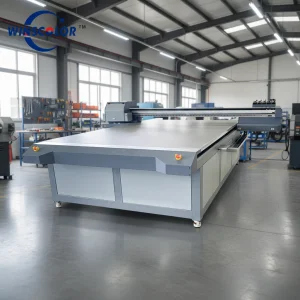



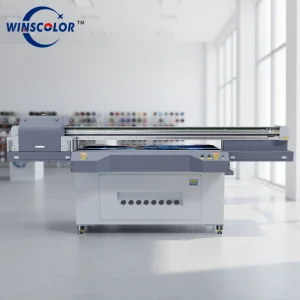
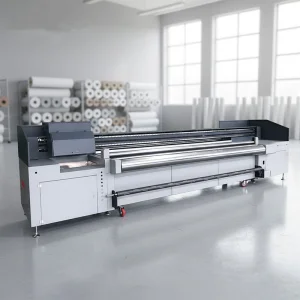
Full regulatory compliance across CE, UL, and RoHS frameworks, backed by overseas commissioning engineers and digital telemetry assistance.
Every Winscolor platform is manufactured to ISO 9001 quality management procedures and conforms to CE machinery directives (2006/42/EC). Low-heat LED curing arrays operate with zero ozone generation and comply fully with RoHS restrictions on hazardous materials.
We provide localized engineering support through regional authorized service partners across Europe, the Americas, and the Middle East. Field services include on-site mechanical alignment, ink curve profiling, and operator calibration programs.
Equipped with onboard industrial IoT interfaces, our systems transmit real-time telemetry—including negative-pressure fluctuations, carriage movement resistance, and UV-LED temperatures—to enable preventative maintenance before defects happen.
Detailed technical analysis compiled by senior application and field engineers to guide capital investment decisions.
UV flatbed printing directly applies specialized, highly durable photopolymer inks cured instantaneously by cold LED radiation. For interior decorative wall panels, splashbacks, and custom murals, UV curing eliminates the high energy consumption and kiln shrinkage issues of traditional thermal firing. When paired with our specialized ceramic primer, UV-printed tiles achieve Class 4/5 cross-hatch surface adhesion and withstand standard domestic chemical cleaners.
For high-definition decorative ceramics, we configure industrial Ricoh Gen6 or Kyocera KJ4A printheads. Ricoh Gen6 heads leverage 5pl multi-drop grayscale firing at frequencies up to 50kHz, delivering photographic gradient transitions. Where textured surfaces, deep grout line coverage, and thick varnish reliefs are required, isolated high-drop channels ensure stable ink throw across varying relief depths without misting.
Glazed porcelain and dense vitrified tiles have non-porous, low-surface-energy surfaces. To achieve industrial scratch resistance, an automated wiping or spray deposition of silane-based chemical adhesion promoter (primer) is applied. This forms strong molecular siloxane bridges with the silicate matrix of the tile, ensuring the subsequent ink layer bonds securely and resists thermal cycle stress.
Our flatbed systems feature a precision media thickness detection system and dual pneumatic anti-crash sensors on both carriage flanks. If an irregular or warped edge exceeds the programmed head clearance (typically calibrated between 1.5mm and 2.0mm), carriage motion stops instantly, preventing mechanical damage to nozzle plates. The vacuum bed features multi-zone independent suction to pull uneven substrates securely flat.
