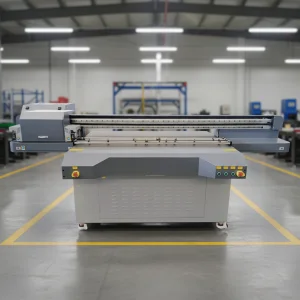
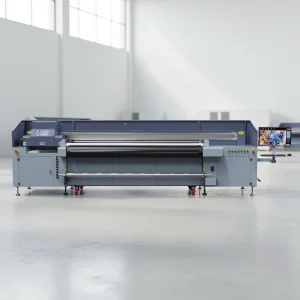
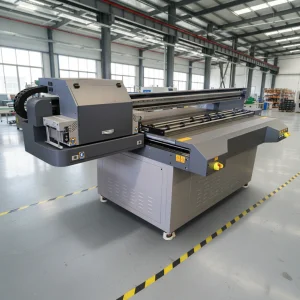
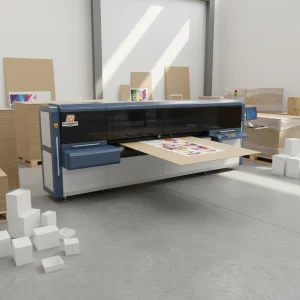
Selected precision flatbeds, rotary printers, and high-speed production engines factory-calibrated for turnkey industrial deployment.
An authoritative analysis of decentralized manufacturing, mass personalization, and how small format UV engines redefine factory floors.
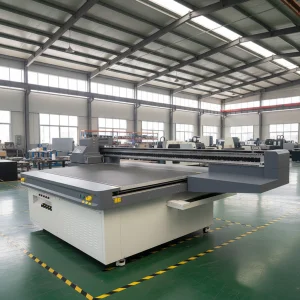
The global manufacturing paradigm has fundamentally shifted from monolithic production runs toward distributed, agile supply chains. Small UV flatbed printers (typified by 600 × 900 mm and 1600 × 1000 mm envelopes) are no longer relegated to simple souvenir branding; they serve as mission-critical hardware nodes in digital fabrication networks. By removing analog photopolymer plates, gravure cylinders, and silkscreen frames, businesses reduce zero-hour tooling overhead to absolute zero.
In conventional pad and screen printing, short runs under 500 units incur punitive unit costs due to setup times, screen stretching, color separation films, and ink washouts. Industrial UV-LED inkjet technology shifts the economic curve entirely: unit printing cost remains identical whether producing a single bespoke luxury perfume bottle or 10,000 mass-market membrane switches. Real-time variable data, individual QR codes, serial numbers, and custom haptic tactile coatings are applied in a single pass.
Traditional solvent-based and aqueous inkjet printing require chemically modified, top-coated receptive media. Industrial UV curable inks bypass this limitation through photopolymerization. Formulated with multifunctional acrylates and specialized photoinitiators, UV inks instantly transition from liquid droplets to an inert, cross-linked solid polymer matrix upon exposure to targeted 395nm LED UV irradiance. This unlocks direct-to-substrate deposition across acrylic, aluminum, ceramic tiles, soda-lime glass, polycarbonate, and natural timber.
Unpacking the structural engineering, domestic precision supply chain, and economies of scale behind China's premier UV flatbed industrial cluster.
The structural rigidity of a UV flatbed printer determines dot placement accuracy. Winscolor utilizes high-tensile rectangular steel tubing frames that undergo heavy-duty thermal annealing to eradicate internal metallurgical stresses before five-axis CNC portal milling. This eliminates micron-scale frame warping over decades of operation, guaranteeing that dual Taiwan HIWIN linear guideways maintain planarity within ±0.02 mm across the entire bed travel.
Chinese source manufacturing excellence is powered by global supply consolidation. Winscolor units fuse Japanese micro-piezo acoustic drop-on-demand printheads (Ricoh Gen6, Gen5i, Epson i3200-U1) with German Igus drag chains, Italian Megadyne synchronous belts, and Japanese Panasonic / Delta AC digital closed-loop servos. By assembling these top-tier components within our 20,000 m² Jinan intelligent manufacturing hub, we provide European industrial performance at unbeatable capital efficiency.
Beyond off-the-shelf standard models, Winscolor provides comprehensive white-label OEM/ODM solutions for multinational printing machinery distributors. From tailored gantry clearance heights (up to 400 mm for deep rotational tooling) to customized multi-zone sectional vacuum suction chambers, PLC-integrated conveyor automation, proprietary firmware waveforms, and localized RIP software UI skins, our factory provides turnkey custom manufacturing.
Discover how industrial small UV flatbeds execute microscopic registration, tactile embossing, and heavy-wear adhesion across diverse materials.
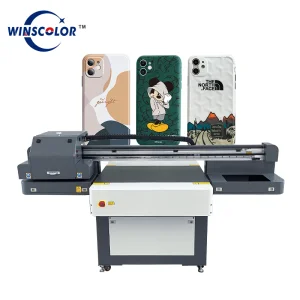
Direct imaging on TPU, polycarbonate, and tempered glass smartphone cases. High-viscosity white underbase yields vibrant color saturation on pitch-black cases, while selective high-gloss UV varnish creates tactile 3D relief effects resistant to skin oils.
Equipped with specialized synchronous servo rotary fixtures, small UV flatbeds print continuous 360-degree seamless art onto wine bottles, vacuum flasks, and perfume glass flacons without visible seam overlap or drop distortion.
Printing directly onto anodized aluminum nameplates, acrylic fascia, and stainless steel electrical instrument enclosures. Hard UV curable inks ensure chemical resistance against isopropyl alcohol, hydraulic fluids, and severe abrasive wear.
Compliant with international ADA (Americans with Disabilities Act) and European signage standards. Layered micro-drop white ink deposition builds raised, tactile Braille dots and directional relief maps with razor-sharp geometric perimeter edges.
Rigorous hardware specifications detailing print envelope, printhead architecture, droplet mechanics, and system positioning.
| Specification Parameter | YC6090 Industrial Flatbed | YC1610 Precision Production | YC2513L Flagship Platform |
|---|---|---|---|
| Nominal Print Bed Envelope | 600 mm × 900 mm (23.6" × 35.4") | 1600 mm × 1000 mm (63.0" × 39.3") | 2500 mm × 1300 mm (98.4" × 51.2") |
| Printhead Options | Epson i3200-U1 / Ricoh Gen5i | Ricoh Gen5 / Gen6 Industrial Piezo | Ricoh Gen6 (Dual / Triple / Quad array) |
| Droplet Volume Mechanics | Variable grayscale 3.5 pl – 12 pl | Binary / Grayscale 5.0 pl – 14 pl | Ultra-fine 2.5 pl – 7.0 pl (Gen6) |
| Ink Channel Topology | CMYK + W + V (6 Channels) | CMYK + Lc + Lm + White + Varnish | Double CMYK + Double White + Varnish |
| Z-Axis Media Clearance | Up to 150 mm (Optional 300 mm) | Standard 100 mm (Custom up to 250 mm) | Standard 100 mm (Automated height probe) |
| Bed Structure & Vacuum | Aviation Honeycomb, 2 Suction Zones | Hard-anodized Zoned Vacuum Bed | High-Power 4-Zone Reverse Blower Table |
| Motion Transmission | Dual Linear Guide + Ground Lead Screw | Dual THK Linear Guides + Metal Grating | High-torque Magnetic Scale / Dual Servos |
| Curing Subsystem | Dual Water-Cooled LED UV (395nm) | Adjustable Output Water-Cooled LED UV | High-Intensity 16W/cm² UV-LED System |
A rigorous financial and mechanical checklist for manufacturing directors, commercial print shop owners, and procurement committees.
Avoid evaluating printhead pricing in isolation. While desktop conversion engines utilizing commercial EPSON XP600 heads boast cheap replacement prices ($200–$300), their lifespan in industrial single-shift operations rarely exceeds 6–8 months due to corrosive UV chemistry and heat. Industrial piezo heads like Ricoh Gen6 feature all-metal internal fluid paths with native ink heating, delivering an MTBF exceeding 3–5 years under continuous duty cycles.
Titanium dioxide (TiO₂) pigments in white UV ink feature extreme mass density, leading to rapid settling, nozzle crusting, and deflection. Commercial-grade systems mandate a twin-tier defense: secondary ink sub-tank automatic timed stirring paired with continuous negative-pressure ink delivery directly through the printhead manifold. This prevents printhead starvation during ultra-high-speed bidirectional production.
Verify curing wavelength and peak irradiance. Sub-standard printers utilize cheap air-cooled LED units that generate excessive infrared heat, warping thin PET and acrylic substrates. Winscolor utilizes closed-loop water-chilled UV-LED arrays radiating focused 395nm wavelength at 12–16 W/cm². This guarantees immediate cross-linking without thermal expansion of heat-sensitive polymer materials.
How artificial intelligence, eco-friendly green chemistry, and robotic vision guidance converge on the digital factory floor.
The tedious manual jigging of hundreds of irregular items (such as flash drives, pens, and promotional medals) is being completely superseded. Next-generation systems integrate gantry-mounted industrial CCD cameras running edge-AI neural networks. The system captures the entire bed in one camera scan, automatically identifies substrate contours, rotations, and positions, and aligns print layers in milliseconds with zero mechanical fixtures.
By bridging the gap between flatbed step-and-repeat scanning and ultra-high-speed single-pass packaging presses, small industrial UV printers are evolving into inline conveyorized stations. Utilizing multi-axis robotic pick-and-place arms and automated gantry height profiling, single-piece personalized packaging can be printed, laminated, and quality-checked in under three seconds per unit.
As international environmental standards (such as EU REACH, RoHS, and UL GREENGUARD Gold) tighten, UV monomer formulations are transitioning away from heavy synthetic petrochemicals toward sustainable, bio-derived vegetable monomers. These next-generation inks feature zero volatile organic compounds (VOCs), virtually non-existent curing odor, and superior biological degradability for luxury eco-packaging.
Clear, engineering-driven answers to the most common questions raised by plant managers and international buyers.
Explore our extended industrial machinery portfolio for mid-format, super-wide, and dedicated roll-to-roll hybrid manufacturing lines.