Engineered with heavy cast-iron gantries, sub-micron linear encoders, and Ricoh Gen6 drop-on-demand piezo arrays for relentless 24/7 industrial production environments.
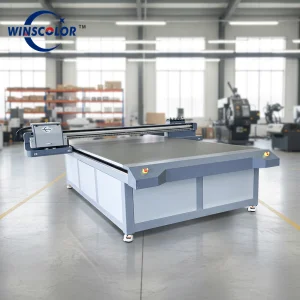
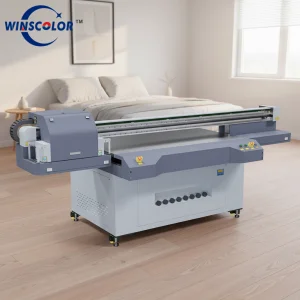
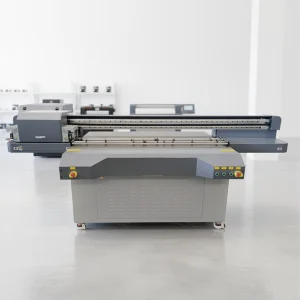
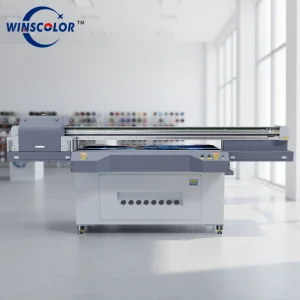
Evaluating commercial transition parameters across North America, the European Union, the Asia-Pacific region, and emerging manufacturing hubs.
The industrial wide-format print landscape has fundamentally evolved beyond traditional solvent, eco-solvent, and analog screen-printing modalities. Contemporary commercial directives require ultra-fast turnaround, zero ozone emissions, variable data serialization, and instantaneous polymerization on temperature-sensitive substrates. As an established famous large UV LED printer exporter, Winscolor provides enterprise printing plants with industrial gantry platforms capable of continuously delivering high optical densities at linear speeds exceeding 120 square meters per hour.
Across the European Union and North America, stringent environmental mandates—specifically the European Green Deal and regional VOC threshold compliances—have forced sign fabricators, automotive badge producers, and interior finish manufacturers to deprecate legacy thermal evaporation drying ovens. The low thermal output characteristic of narrow-band 395nm UV-LED arrays prevents substrate warping on expanded polystyrene, low-melting-point acrylics, corrugated twin-wall flutes, and thin synthetic foils, unlocking completely unprecedented media agility.
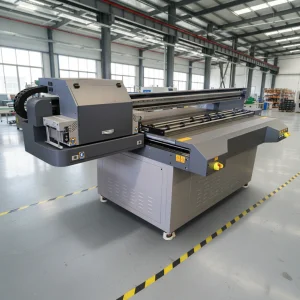
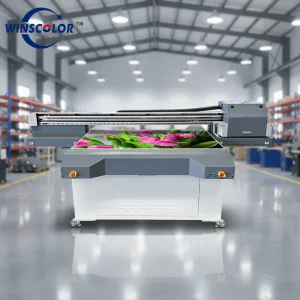
Fabrication plants require rapid adaptation for seasonal point-of-purchase (POP) campaigns. Demand centers on large-format 2500 × 1300 mm and 2000 × 3000 mm flatbed configurations running dual white channels and high-gloss varnish overlays for illuminated cosmetic display walls and aluminum composite sign structures.
Stringent REACH regulations and green building credentials necessitate solvent-free, heavy metal-free inks. Flatbed platforms deployed in Germany, Italy, and Scandinavia focus on architectural splashbacks, ceramic decorative cladding, engineered floorings, and acoustic partition panels requiring primer adhesion promoter integration.
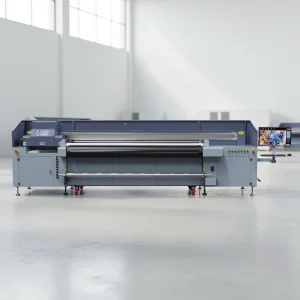
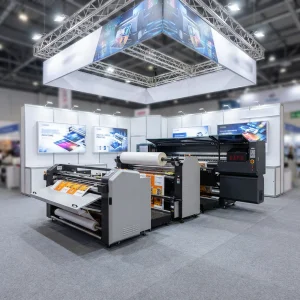
Regional infrastructure investments and retail hubs dictate 3.2m wide continuous hybrid systems running 50kg roll banners alongside heavy corrugated packaging flutes. Machines must withstand fluctuating factory ambient temperatures with zero viscosity loss or head starvation.
A granular deconstruction of why commercial print stability is dictated by frame metallurgy, piezo droplet dynamics, and optoelectronic cooling loops.
At the center of high-end UV reproduction is industrial drop-on-demand piezo printhead technology, predominantly the Ricoh Gen6 (MH5320/MH5340) and selected Kyocera arrays. Unlike consumer-derived printheads, an industrial steel-nozzle plate printhead operates under extreme acoustic firing frequencies up to 50 kHz. By applying multi-level voltage waveform pulses, each nozzle fires isolated micro-droplets ranging from 5pl to 18pl in greyscale gradation.
This allows photographic reproductions without visual dot grain on human skin tones and gradient backlits, while instantly switching to heavy 18pl drop volumes on solid color fills, vector lettering, and opaque white underbases. The outcome is a 40% reduction in pass count requirements without sacrificing edge crispness.
Carriage jitter ruins high-resolution imaging. Winscolor implements Japanese THK double linear mute guides matched with precision magnetic levitation drives or Panasonic AC servo motors, eliminating mechanical friction backlash at scanning velocities up to 1.5 m/s.
Micro-computerized dual negative pressure circuitry independently monitors the primary color and white/varnish channels. Pressure fluctuations are adjusted within milliseconds, completely preventing nozzle weeping or ink starvation during multi-pass cycles.
Titanium dioxide ($TiO_2$) particles in white UV ink are prone to gravitational sedimentation. Our systems feature continuous peristaltic looping through the main ink barrel, sub-tank, and internal printhead chambers, preventing nozzle clogging and head burnout.
Equipped with dual directional 395nm wavelength UV-LED lamps governed by closed-loop industrial chillers. Diode junction temperatures are stabilized below 45°C, ensuring a stable radiation output of 14 W/cm² for instant polymerization across thermosensitive films.
| Architecture Feature | Legacy Mercury Vapor Systems | Standard Entry-Level UV-LED | Winscolor Industrial UV-LED Platform |
|---|---|---|---|
| Curing Light Source | Medium-pressure mercury vapor arc lamps (broadband 200–450nm) | Single-zone uncooled air-cooled LED diode assembly | Dual variable-intensity water-chilled UV-LED arrays (395nm narrow band) |
| Substrate Heat Transfer | High IR radiation (Surface heat > 85°C; warps PVC/PP) | Moderate localized heating (> 55°C) | Negligible cold cure emission (< 32°C; safe for heat-shrink films) |
| Gantry Construction | Standard welded steel tubing subject to harmonic vibrations | Folded sheet metal gantry with single guide bearing | Milled aviation aluminum beam, stress-relieved bed, dual THK linear guides |
| Drop Volume Control | Fixed droplet volume (typically binary 14–35pl) | Basic two-stage greyscale drop modulation | Multi-pulse piezo waveform greyscale (5pl, 10pl, 15pl, 18pl dynamic) |
| Specialty FX Capabilities | Color only; white ink requires frequent mechanical flushes | White flood coat; varnish prone to yellowing/streaking | Simultaneous multi-layer W+CMYK+Varnish, embossed 3D Braille, cold foiling |
Detailed process parameters for manufacturing custom components, structural architectural glass, industrial switchgear, and fast-turnaround luxury packaging.
Direct printing on non-porous silica and polished ceramics requires surface energy alteration. Using automated corona pre-treatment or motorized wiped liquid silane primers, Winscolor printers deposit specialized ceramic-grade pigments with chemical crosslinking.
Brand owners demand rapid micro-batch SKU variations without cylinder charges. Our flatbed and hybrid units feature high-vacuum segmented beds to hold down warped kraft boards, test-liners, and heavy B/E-flute corrugated sheets perfectly flat.
For electronic user interfaces, automotive instrument panels, and stainless steel identification tags, the ink must tolerate deep draw thermoforming and aggressive solvents. Flexible UV inks bond permanently to Polycarbonate (PC), PET, and anodized aluminum.
Why Tier-1 Chinese mechatronic engineering in Jinan provides global sign and industrial printing companies with unbeatable return-on-investment parameters.
Jinan, Shandong, is the world's most concentrated manufacturing cluster for heavy precision CNC machinery, fiber laser cutters, and large-format UV printing equipment. This geographic integration creates immense supply chain resilience. Gantry annealing, five-axis CNC milling of 4-meter crossbeams, surface grinding, sheet-metal powder-coating, harness fabrication, and assembly occur within an ultra-tight logistics perimeter.
While European or North American branded equipment commands a 200% to 300% capital premium—largely attributed to legacy brand equity and domestic distributor overhead—Winscolor operates as a direct factory source. We implement identical tier-1 core components: Japanese Ricoh printheads, THK linear rails, German IGUS drag chains, Italian Megadyne belts, and Schneider electrics. The capital depreciation savings enable our overseas printing clients to reach equipment payback within 6 to 9 months of full production.
Proprietary cartridge chips lock end users into exorbitant fluid costs ($180–$240/Liter). Winscolor provides an open, certified bulk ink delivery architecture costing roughly $35–$55/Liter, reducing operating costs by over 70% and drastically slashing per-square-meter expenditures.
Every printer bed undergoes 48 hours of high-temperature annealing followed by high-frequency vibration to eliminate internal stresses within the welded gantry steel, completely preventing structural micro-warping over years of constant multi-shift usage.
We maintain an uninterrupted component inventory of mainboards, head boards, optical encoder strips, peristaltic ink pumps, and float sensors. Replacement modules are dispatched via DHL/FedEx Express within 24 hours of notification, minimizing costly downtime.
Bridging international procurement boundaries through certified engineering standards, telemetry-driven remote diagnostics, and dedicated local field engineers.
Our complete machinery line adheres strictly to European CE directives (Machinery Directive 2006/42/EC, Low Voltage Directive 2014/35/EU, and EMC Directive 2014/30/EU). Every electrical cabinet is organized with UL94-V0 flammability wiring and shielded against industrial electromagnetic interference.
Equipped with onboard remote diagnostic interfaces, our senior field engineers connect directly to the printer's Linux or Windows RIP workstations via encrypted secure tunnels to inspect firing voltage calibrations, waveform setups, motion error logs, and color ICC curves in real time.
Through our dedicated authorized agent network across North America, Europe, Turkey, Brazil, and Southeast Asia, clients obtain localized installation, certified operator training, preventative maintenance servicing, and localized currency invoicing.
In-depth insights gathered by Winscolor technical directors addressing production capabilities, maintenance protocols, and media compatibility.
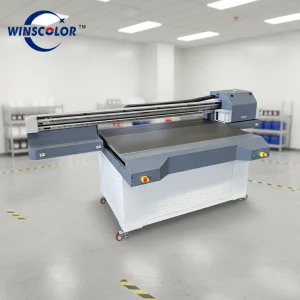
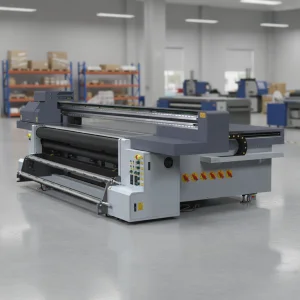
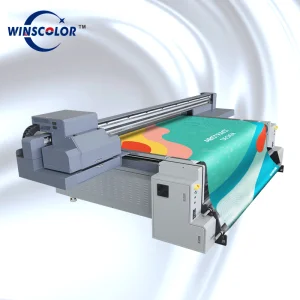
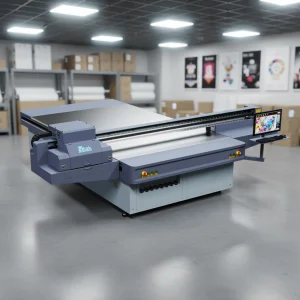
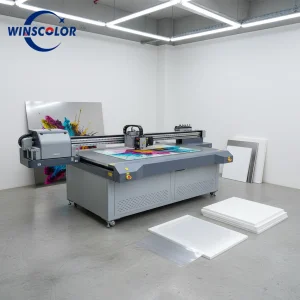
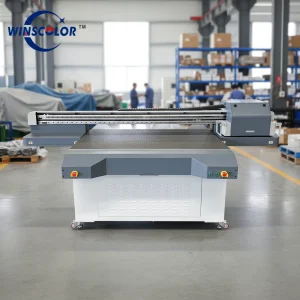
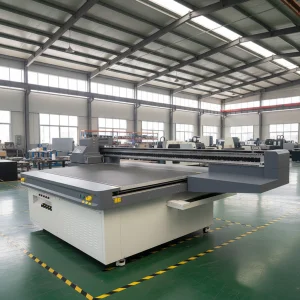
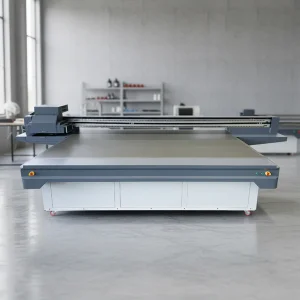
Explore our complete heavy-duty machine configurations certified for export across worldwide industrial markets.
A strategic preview into artificial intelligence vision alignment, electron beam curing crossovers, and high-speed aqueous single-pass packaging technology.
Next-gen Winscolor systems feature high-speed overhead CCD cameras coupled with machine learning algorithms. Irregularly positioned objects, pre-cut acrylic shapes, or rotated wood blocks are identified automatically, calculating exact coordinate offsets within 50ms without physical jigs.
Collaborating with tier-1 chemical laboratories, our technical roadmap targets novel bio-monomers derived from renewable resins cured at low-energy 365nm/385nm wavelengths. These deliver zero unreacted photoinitiators, ensuring suitability for food contact and pharmaceutical secondary packaging.
Bridging scanning flatbeds with industrial production lines, our R&D engineering hub is perfecting stationary print-bar single-pass architecture running at 60 meters per linear minute on corrugated boxes, metal coil coatings, and continuous extrusion plastics.
