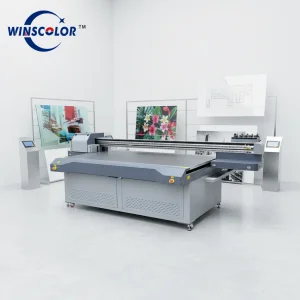
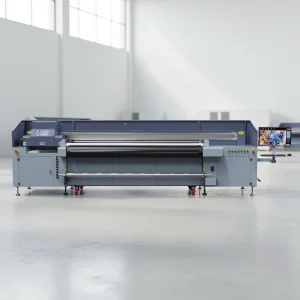
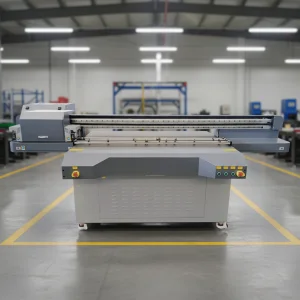
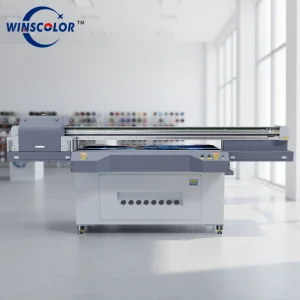
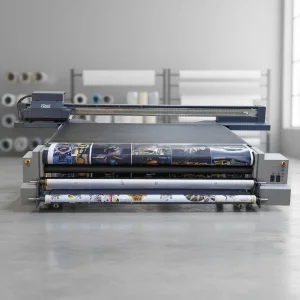
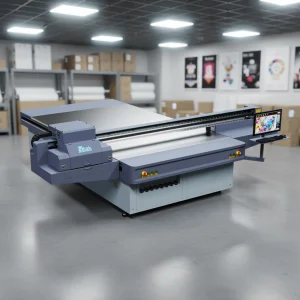
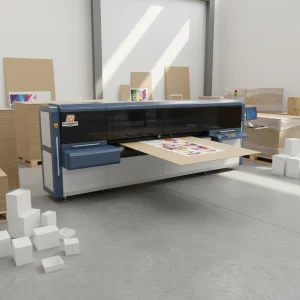
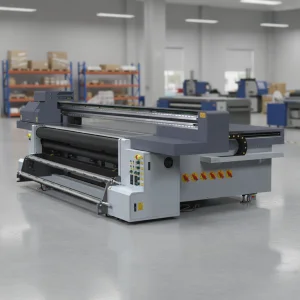
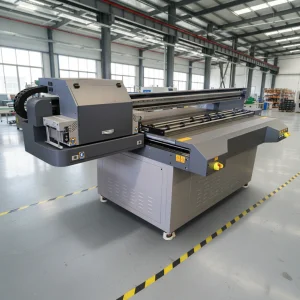
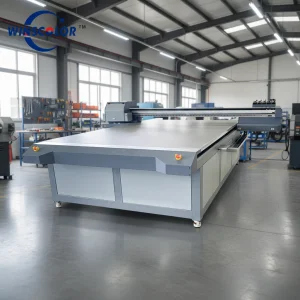
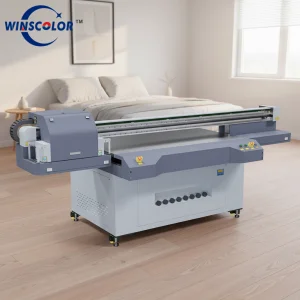
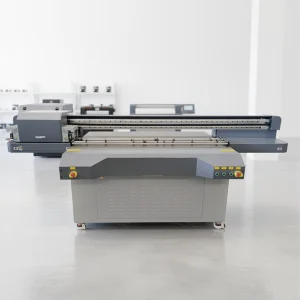
Explore our foundational lineup of high-precision UV printers, from small-format custom setups to multi-pass hybrid engines designed for zero downtime.
Strategic transformation from analog screen/pad printing to digital on-demand manufacturing across global markets.
Global supply chains are migrating from static, high-volume production to ultra-responsive, dynamic runs. Digital UV printing removes expensive physical plates, driving turnaround times down from weeks to hours.
With tightening international emission rules (RoHS, REACH), zero-VOC LED-curable ink chemistries are replacing solvent inks, reducing electrical thermal footprint by over 65% compared to mercury vapor lamps.
Modern drop-on-demand industrial piezoelectric printheads deliver variable droplet sizes down to 5 picoliters, achieving photorealistic 1440+ dpi graphics without grain or color drift.
Manufacturing is reshoring close to regional consumer clusters. Businesses demand modular UV printing engines capable of direct substrate printing across composite metals, plastics, and dense timber.
Configured specifically to solve structural bottlenecks in modern surface finishing and print-on-demand processing.
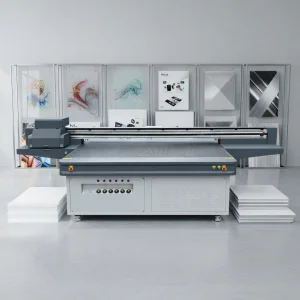
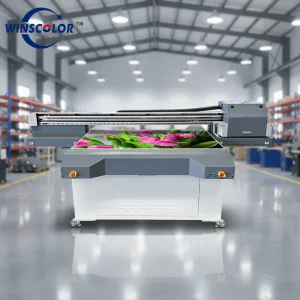
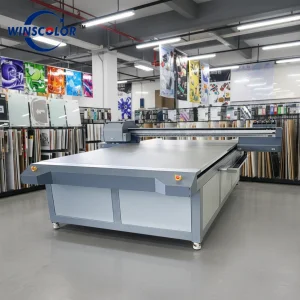
Engineered on a stress-relieved, all-steel honeycomb gantry with dual THK silent linear rails and magnetic linear encoders. This guarantees physical rigidity and suppresses mechanical resonance under high carriage acceleration.
Equipped with dual negative pressure circulation for color channels, white ink, and varnish. Includes independent constant-temperature heating chambers to maintain viscosity across seasonal temperature fluctuations.
Segmented vacuum zones allow precision hold-down for light foils and heavy rigid panels alike. Dual blow-back air floatation functionality eases loading and offloading of dense substrates like marble and float glass.
Dual-side water-cooled UV-LED curing assemblies allow multi-step light level adjustments. Pin-cure mechanisms trap ink droplets instantaneously, eliminating inter-color bleed and micro-dot splatter.
Verified drop-on-demand adhesion and chemical resistance profiles across specialized commercial production lines.
Direct printing on float and tempered glass without peeling. Applied silane bonding primers and high-temp curing produce ceramic-grade decorative panels, kitchen splashbacks, and shower cubicles.
UV inks yield high abrasion tolerance on anodized, brushed, or coated surfaces. Ideal for industrial instrumentation fascias, durable control panels, and outdoor architectural wayfinding.
Direct single-pass and multi-pass digital conversion on unbleached Kraft, bleached boards, and flute liners without crushed flutes, saving die setup and make-ready costs.
Prints photorealistic marble, grain textures, or tactile patterns directly onto MDF, plywood, solid hardwood, and SPC flooring with rich layered white ink and matte/gloss spot varnish.
Built for multi-shift plant deployment with international safety and electromagnetic compatibility compliance.
Our platforms strictly meet EU Machinery Directive 2006/42/EC and EN 60204-1 electrical rules. Features include dual safety optical curtains, carriage anti-crash bumpers, and hardware emergency interlocks.
Shielded cable track assemblies, isolated power channels, and industrial servo grounding circuits eliminate EMI-induced nozzle misfiring, data corruption, and optical encoder errors.
A worldwide logistics and field network delivers direct machine commissioning, complete operator training, remote telemetry diagnostics, and guaranteed original spare part supply lines.
How our ongoing hardware, chemistry, and motion developments future-proof your capital investment.
Expanding the throw-distance capability to 15-20 mm, allowing photorealistic imaging on deeply textured or irregular corrugated and molded materials without aerosol misting.
Integrating high-resolution carriage line-scan cameras for real-time drop trajectory analysis and automatic dead-nozzle compensation, preventing mid-run panel rejection.
Standardizing open OPC-UA and PLC communication protocols across platforms to connect with automated production lines, AMR feeding systems, and factory execution software.
Formulating monomer-reduced inks derived from renewable plant resins that cure fast at low light energies while maintaining cross-cut tape adhesion on smooth polyolefins.
In-depth engineering answers covering ink behavior, maintenance standards, and equipment selection.
Traditional gravity or siphon feed systems struggle with pressure swings caused by carriage acceleration and temperature changes, which can lead to nozzle starvation or ink dripping. Our industrial dual negative pressure system uses a precision PID micro-controller to maintain head vacuum (typically -3.2 to -4.5 kPa) across high and low jetting demands. White ink and color lines are managed through separate vacuum channels, keeping ink supply stable during 24/7 continuous runs.
Conventional mercury arc lamps run at very high temperatures (up to 800°C), produce ozone, and require warmup and cool-down cycles while consuming massive electricity. In contrast, solid-state LED-UV units emit a narrow, targeted wavelength band (usually 395nm), generate almost no infrared heat, and turn on and off instantly. This eliminates thermal substrate distortion on heat-sensitive materials like PVC and acrylic while slashing power consumption by over 60%.
Non-porous media like glass and metal have low surface energies and naturally repel UV monomers. We address this through flame treatment, plasma surface treatment, or chemical adhesion promoters (silane primers). These functionalize the substrate by creating covalent bonds between the inorganic base and the cross-linked polymer network, delivering an adhesion level up to Class 0 (ISO 2409 / ASTM D3359 cross-hatch tape test).
Daily upkeep involves automated positive pressure purging, micro-suction cleaning, and wiping the nozzle plate with lint-free polyester swabs dampened with dedicated flushing agent. Because UV ink hardens when exposed to light, printers feature auto-capping stations that seal the carriage in a completely light-tight, humidified housing whenever the machine is idle, preventing ink drying and nozzle crusting.
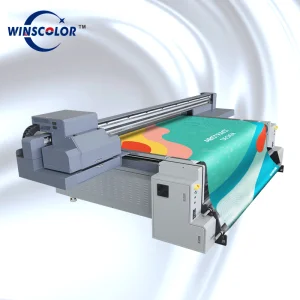
Heavy-duty, high-volume models engineered for industrial signage, packaging, and commercial interior decoration.