
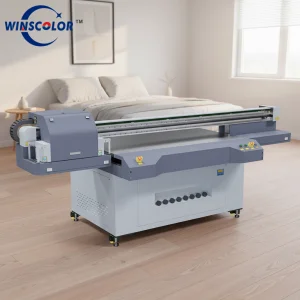
Engineered for high-yield throughput across rigid substrates, multi-layer varnish profiling, and industrial packaging workflows.
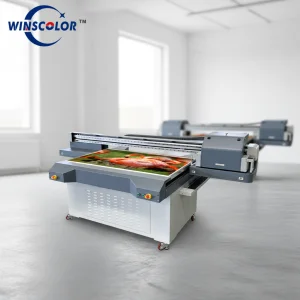
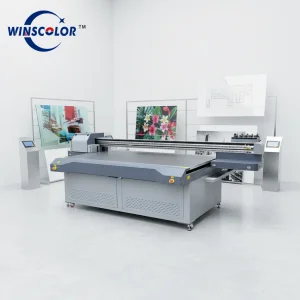

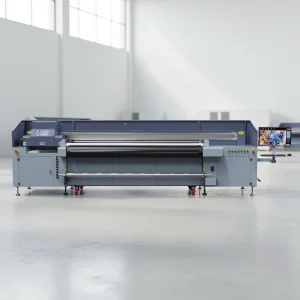
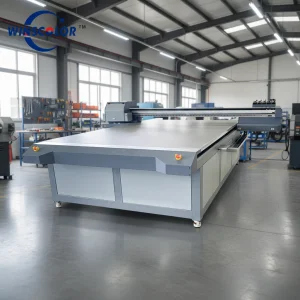
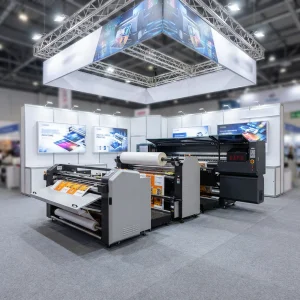
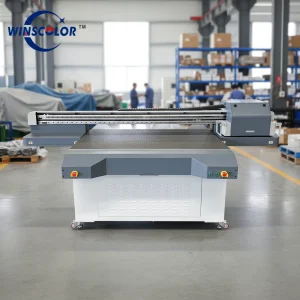
A rigorous examination of fluid dynamics, piezoelectric drop-on-demand (DoD) advancements, and supply-chain globalization driving the large-format sector.
The cross-border export market for industrial micro-deposition and wide-format flatbed machinery has entered a critical consolidation cycle. Global supply chain requirements demand that a high-resolution printer exporter provides more than assembly capabilities; exporters must deliver integrated end-to-end fluidic ecosystems. Rising environmental mandates across European and North American industrial hubs have rendered legacy mercury-vapor curing platforms obsolete, transitioning the default baseline toward cold-curing solid-state UV-LED systems with high-frequency grey-scale modulation.
Modern high-resolution deposition rests entirely on the mechanical response curves of shear-mode piezoelectric crystals. By precisely actuating PZT ceramic walls within printhead sub-chambers, variable droplet sizes ranging from 2.5 to 7 picoliters are discharged consistently across varying standoff distances. This variable drop architecture eliminates the classic trade-off between tonal rendition and dense solid-fill deposition, giving operators the latitude to execute delicate transitions, smooth skin tones, and ultra-crisp micro-text down to 2-point typography without satellite spatter.
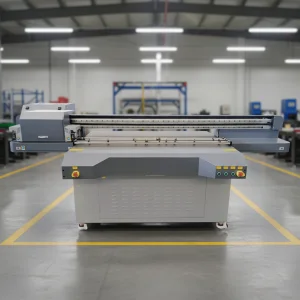
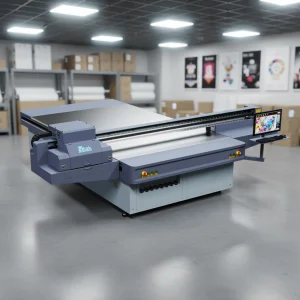
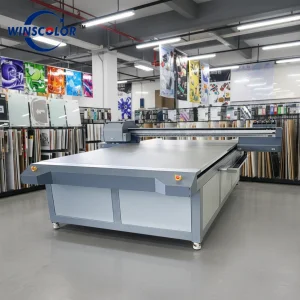
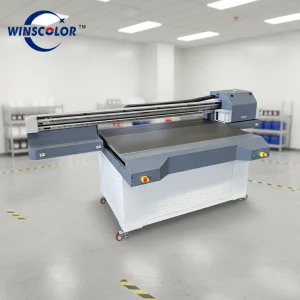
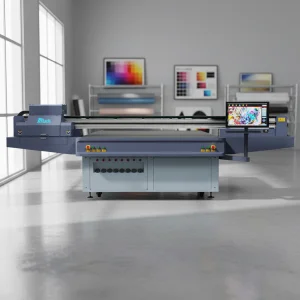
High accuracy requires strict control over the print environment. Our equipment incorporates multi-zone high-torque vacuum beds balanced by high-flow regenerative turbine systems, preventing substrate deflection across thick acrylics, natural woods, and heavy glass plates. Combined with aircraft-grade milled dual linear guideways and magnetic linear motor drives, car-chassis vibrations are minimized to ensure exact drop placement down to the single-digit micron range, even during peak multi-pass acceleration cycles.
Engineered print frameworks matching target industry performance specs, chemical resistances, and high-volume cycles.
Direct-to-glass and ceramic tile jetting demands targeted adhesion science. By integrating specialized nano-silane primers alongside high-opacity white bases, systems prevent delamination under extreme moisture and thermal cycles. High-resolution varnish layering provides raised 3D textures that mimic natural slate, marble veining, or architectural tactile finishes for high-end interior spaces.
Short-run custom packaging workflows bypass standard flexographic plate tooling entirely. Rapid-curing ink chemistry binds directly to untreated kraft paper, coated card stock, and corrugated cardboard flute profiles. This allows industrial packaging converters to handle rapid on-demand prototyping, variable serialization, and seasonal runs without make-ready waste.
Our automated rotational clamp systems expand flatbed capability into 360-degree cylindrical jetting. Drinkware, vacuum bottles, and industrial conduits receive seamless cylindrical imagery alongside precision registration. Flatbed setups handle aluminum composite panels (Dibond) and acrylic fascia, delivering chemical, scratch, and solvent resistance that passes strict ASTM rub testing.
Strategic directions defining our hardware platforms, intelligent drop analytics, and closed-loop manufacturing.
Next-generation units feature integrated high-speed linear optical arrays that scan test fields dynamically. AI vision architectures identify sub-micron nozzle deflections and out-of-spec droplet patterns, automatically applying waveform adjustments to compensate without human intervention.
To address international sustainability standards, ink chemistry pipelines are transitioning toward monomer formulations derived from post-consumer recycled bases and rapidly renewable bio-resins, reducing VOC emissions to negligible levels while maintaining fast cross-linking cure rates under low UV-LED wattage.
The divide between pure flatbed and roll-to-roll operations continues to close. Our hybrid architectures use smart conveyor beds with real-time pneumatic tension adjustments, transitioning between rigid structural materials and ultralight backlit fabrics in under five minutes.
Enterprise platforms engineered for 24/7 continuous operation, specialized substrates, and rapid deployment worldwide.
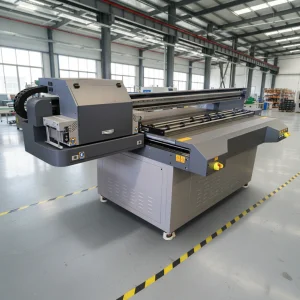

Addressing critical engineering questions from enterprise procurement teams and print plant operators.