Heavy-duty flatbed, rotary, and roll-to-roll UV inkjet systems configured with Ricoh Gen6/Gen5 and high-intensity LED-UV curing arrays for high-duty continuous operation.
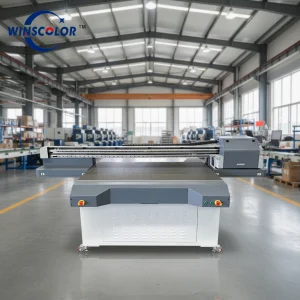
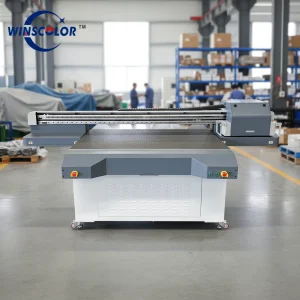
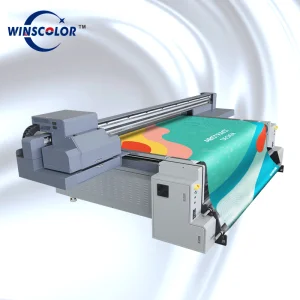
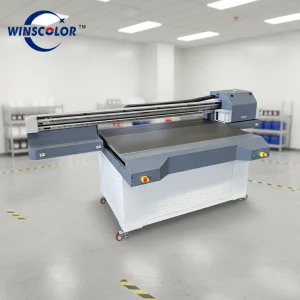
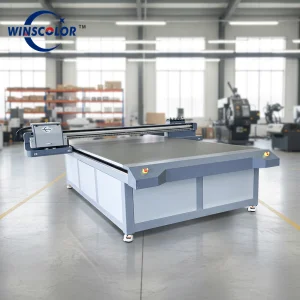
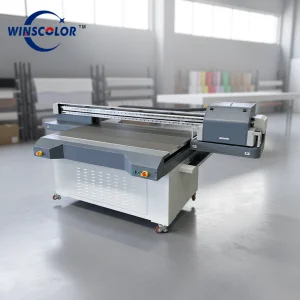
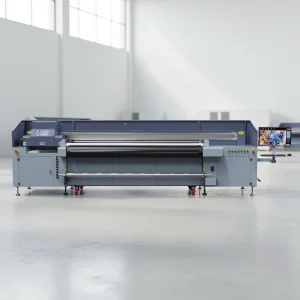

Analyzing total cost of ownership (TCO), variable data agility, and green manufacturing compliance across international print production sectors.
Traditional silkscreen processes require photochemical stencils, screen stretching, manual color registration, and significant chemical solvent washes. In contemporary print manufacturing, runs under 1,500 units become economically unviable due to plate-making costs. Digital UV platforms eliminate make-ready overhead entirely, allowing instantaneous proof-to-production transitions with zero physical tooling.
Global demand exhibits clear technological stratification: Western Europe prioritizes zero-VOC compliance, GREENGUARD Gold certifications, and tactile architectural wallcoverings; North America demands high-speed wide-format corrugated packaging prototypes and point-of-purchase (POP) Dibond displays; whereas Middle Eastern and Southeast Asian hubs invest heavily in rigid outdoor highway signage and customized architectural glass embellishments.
Unlike aqueous or solvent-based ink chemistries that depend on substrate absorption and convective heat evaporation, ultraviolet curing systems instantly polymerize liquid reactive monomers and oligomers under controlled photon bursts (385–395nm wavelength). This enables chemical adhesion across completely non-porous media including borosilicate glass, anodized aluminum, cast acrylic, and polished ceramic tiles without surface distortion.
In-depth technical breakdown of waveform tuning, drop-on-demand drop kinematics, and thermal-stabilized recirculating ink loops.
Our industrial print engines utilize advanced bipolar excitation pulses to manipulate piezo actuators with nanosecond response precision. By modulating the electrical waveform, printheads fire variable drop sizes (5pl, 7pl, 14pl, and 21pl) within a single pass. Small 5pl droplets delineate hair-line typography and subtle skin tones, while large droplets saturate solid backdrops, ensuring photographic gradation without ink splattering.
Titanium dioxide (white pigment) possesses higher mass density, causing rapid sedimentation in conventional static reservoirs. Winscolor platforms integrate closed-loop continuous ink recirculation directly through the printhead manifold, coupled with membrane degassers. This prevents micro-air bubble cavitations, eliminates nozzle dropouts, and guarantees dense, opaque white underbases on optically dark substrates.
Mechanical gantry travel leverages frictionless magnetic levitation linear drives paired with Renishaw metal optical scales (1 µm resolution). By superseding mechanical pulleys and rubber timing belts, the drive assembly eliminates back-lash resonance, micro-vibrations, and thermal expansion errors, maintaining continuous drop placement accuracy within ±0.015mm over a 3.2-meter span.
| R&D Horizon | Core Engineering Focus | Technological Breakthrough | Industrial Output Impact |
|---|---|---|---|
| Current Generation (Gen6) | Silicon MEMS & Multi-Channel Pin-Curing | Sub-drop piezo firing, 1200x1200dpi true resolution with synchronized LED arrays. | Production speeds up to 55 m²/h with photographic photorealistic dot fidelity. |
| Next Horizon (2025–2026) | AI Optical Vision & Direct Shape Compensation | Real-time laser contour scanning for warped, concave, or stepped irregular objects. | Automated height compensation across 25mm elevation variations without nozzle strikes. |
| Sustainable Future (2027+) | Bio-Based UV Inks & Dual Electron-Beam Curing | Elimination of synthetic photoinitiators; instant molecular crosslinking without thermal emission. | Direct food-contact certification for thin folding cartons and biodegradable films. |
Engineered surface interactions, adhesion chemistry, and operational blueprints across key industrial verticals.
Glass and glazed ceramics exhibit exceptionally high surface energy and extreme polar smoothness, causing untreated UV ink layers to delaminate under humidity cycles. Winscolor utilizes automated silane-coupling wipe-on or jet-applied primers. This chemical bridge links hydroxyl groups on silica glass with polyacrylate ink chains, passing the 4H pencil hardness and cross-hatch tape adhesion tests (ISO 2409 Class 0).
Road traffic signs, directional pylons, and exterior ACM cladding boards demand high UV-fading resistance and thermal-cycling resilience between -30°C and +70°C. Our rigid UV formulation maintains high elastic elongation to prevent hairline cracking when sheet metal undergoes subsequent CNC router routing, V-grooving, or mechanical bending processes.
Addressing the booming on-demand e-commerce sector, Winscolor's hybrid and plate-free flatbeds process single-wall and double-wall corrugated sheets with instant ink drying. Zero post-press drying racks are needed, cutting inventory footprint by 80%. High dot gain on porous kraft paper is controlled through high-frequency initial pin-curing pinning the droplet prior to absorption.
How the Jinan mechatronics ecosystem enables exceptional machine rigidity, aggressive ROI, and unmatched delivery lead times.
Located in Jinan, Shandong Province, Winscolor (Jinan Yingcai Digital Technology Co., Ltd) benefits from an unbroken industrial supply chain cluster. From integrated iron foundries for gantry beam stress-relief annealing to precision 5-axis CNC machining centers, our factory manufactures chassis structures with internal web stiffening. This structural integrity prevents chassis warping, assuring geometric stability over decades of high-speed print passes.
By blending world-class core components (Japanese Ricoh Gen6 printheads, German IGUS drag chains, Italian Megadyne timing belts) with indigenous Chinese gantry fabrication and proprietary embedded motherboard software, Winscolor provides industrial performance at 40% to 60% lower initial capital expenditure compared to European or American legacy brands. Print shops amortize equipment investments within 8 to 14 months.
Operating six dedicated assembly lines, Winscolor maintains end-to-end quality control spanning circuit board assembly, vacuum suction chamber laser cutting, carriage plate alignment, and 72-hour non-stop stress test printing before international crating. This vertical capability shields global buyers from intermediary markups and supply chain shortages.
Ensuring frictionless installation, operational safety, and continuous up-time across international print houses.
Every Winscolor/NTEK system is certified under the strict CE Machinery Directive (2006/42/EC) and Low Voltage Directive (2014/35/EU). Features include dual emergency break interlocks, certified light-curtain carriage crash prevention, shielded UV-LED illumination to eliminate operator retinal glare, and EMC-shielded low-noise power routing.
Factory-trained service engineers provide real-time diagnostic support via cloud-connected embedded telemetry. Our technicians can remotely inspect motherboard voltages, piezo waveform stability, and ink delivery pressure sensors, solving 92% of software and profiling inquiries within hours. In-country partner hubs ensure mechanical spare parts dispatch within 48 hours.
Hardware excellence yields photographic accuracy only when paired with calibrated ICC color profiling. Our applications team supplies customized RIP curves (Caldera, Onyx, PhotoPrint) tailored specifically to customer media, balancing maximum color gamut coverage with optimized ink deposition volume to save up to 25% on ink cost.
Authoritative technical answers to common queries regarding printhead lifespans, substrate priming, power integration, and international shipping.
Under continuous industrial operation with certified UV inks, rigorous filtration, and proper capping-station hygiene, Ricoh Gen6 (MH5320) industrial piezo printheads typically achieve an operational lifespan of 3 to 5 years (exceeding 100 billion actuations per nozzle). Routine negative-pressure maintenance and daily wiping cycles are essential to prevent pigment crusting and actuator burnout.
Traditional metal halide or mercury vapor lamps emit substantial infrared (IR) heat energy, elevating table bed temperatures past 80°C and causing lightweight plastics to curl, warp, or ignite. LED-UV curing diodes emit narrowband UV light (395nm) without infrared radiation, keeping the bed near ambient temperature (<32°C). This allows reliable processing of heat-sensitive roll films and thin foam boards.
Titanium dioxide, the principal pigment in opaque white UV ink, is significantly denser than colored pigments and settles when idle, which can cause nozzle blockages. Our platforms utilize an automated dual-circulation system: white ink continuously circulates between the main reservoir, sub-tank, and internal printhead manifold, complemented by scheduled micro-agitation to maintain uniform pigment dispersion.
Printers require a stable 220V (±10%) single-phase or 380V three-phase supply (depending on vacuum pump specs) with dedicated earthing (<4 Ohms resistance). Operating conditions should be maintained at 20°C–28°C with 40%–60% non-condensing relative humidity. Stable air quality with a clean compressed air line (6–8 bar) is required for pneumatic registration pins and vacuum switching.
Glass and polished ceramics possess inert, non-porous surfaces with high surface tension, which can impede mechanical keying of UV polymers. While ink will solidify on contact, a specialized adhesion primer (polyurethane or organosilane based) is required to pass tape-snap adhesion tests (ASTM D3359) and prevent scratch delamination. Winscolor offers both manual pre-wipe formulations and on-the-fly jetting options.
Printers undergo full ink flushing with neutral conditioning solvent to avoid head drying. The print carriage and gantry are mechanically locked with rigid structural brackets, wrapped in vacuum-sealed vapor barrier foil with desiccant packs, and enclosed inside heavy-duty IPPC-certified fumigated plywood crates with shock sensors to safeguard electronics and linear rails during maritime transport.
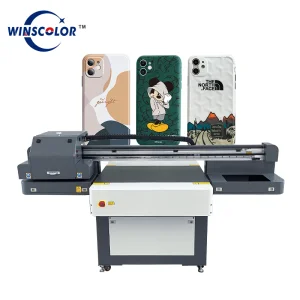
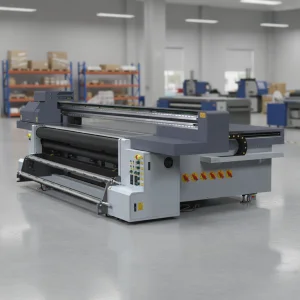
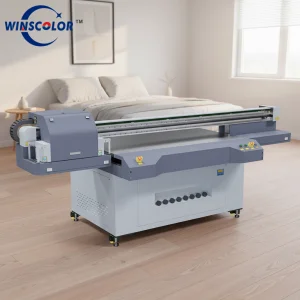
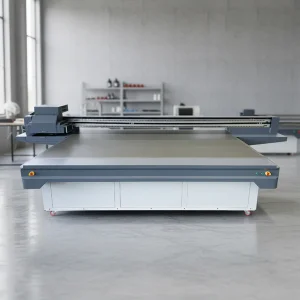
Explore specialized format configurations engineered for phone cases, promotional gifts, cylindrical glassware, and high-impact tactile 3D relief printing.
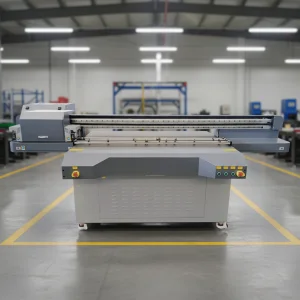

Send your substrate specifications, expected monthly volume, and finishing requirements. Our engineering team will review your application, suggest optimal printhead configurations, and provide customized sample prints along with an end-to-end ROI analysis.
