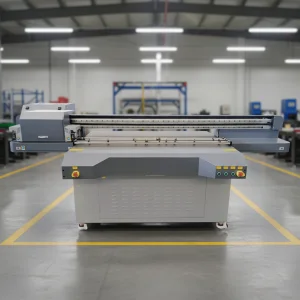
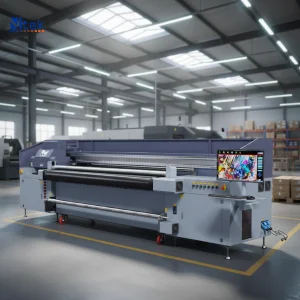
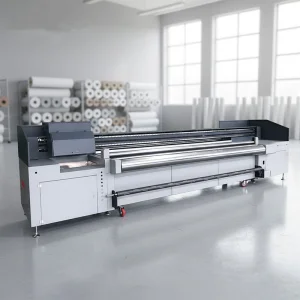
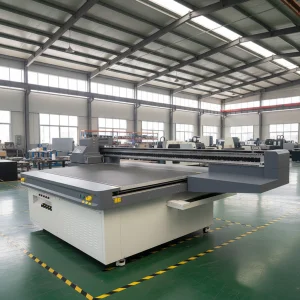
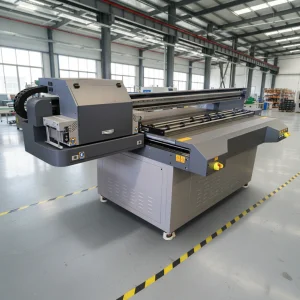
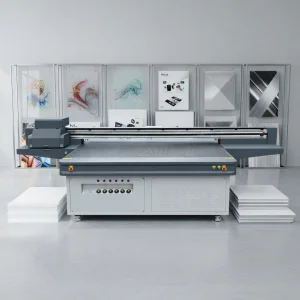
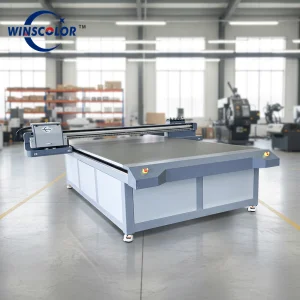
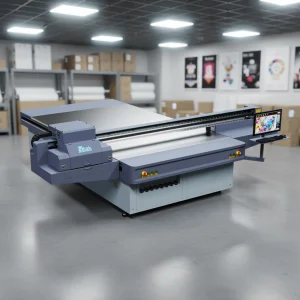
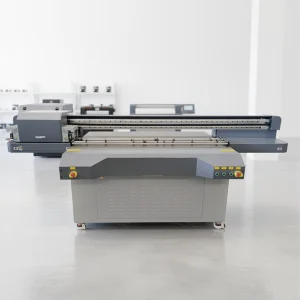
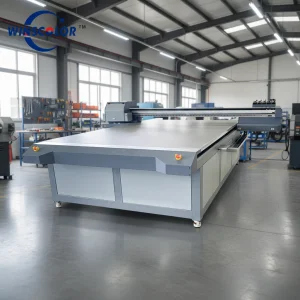
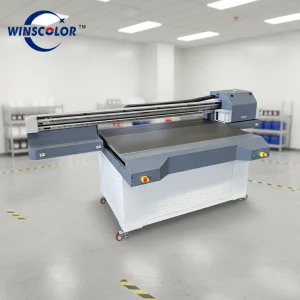
Factory-direct large-format flatbeds engineered with piezoelectric micro-piezo printheads, UV-curable polymeric inks, and zoned high-suction vacuum tables.
From traditional rotogravure and silk-screen stencils to non-contact digital drop-on-demand (DOD) inkjet printing: unlocking rapid iteration, hyper-realistic relief textures, and zero water wastage.
Traditional rollers fracture under warped or textured green ceramic tiles. Modern UV ceramic flatbed printers employ intelligent height-sensing laser rangefinders, maintaining a precise 1.5mm to 3mm standoff distance across irregular ceramic, vitrified porcelain, and terracotta surfaces.
Equipped with industrial Ricoh Gen6 and high-frequency piezo printheads, our systems deliver variable grayscale droplet jetting from 5pl to 15pl. This eliminates pixelation and delivers fluid gradients replicating Calacatta marble, Brazilian granite, and natural wood grain.
Overcoming the non-porous vitreous surface of glazed ceramics requires high-adhesion nanosilane primers coupled with UV-curable polymeric pigmented inks. Built-in gloss varnish channels build structural tactile 3D reliefs and anti-slip surface finishes resistant to MOHS-scale abrasion.
| Performance Dimension | Traditional Screen/Rotary Printing | Industrial Winscolor UV Flatbed Solutions | Economic & Operational Advantage |
|---|---|---|---|
| Pre-Press Setup Time | 12–48 hours (Screens, film plates, color mixing) | Instant RIP Processing (< 2 minutes) | Zero plate-making expense; on-demand small batches |
| Relief / 3D Embossing | Requires secondary pressing mold tooling | Digital high-build UV clear gloss varnish layering | Dynamic tactile patterns custom-generated per unit |
| Media Adaptability | Flat, rigid tiles only; prone to cracking | Warpage tolerance with multi-zone vacuum fixation | Handles sintered stone, glazed tiles, slab ceramics |
| Environmental Impact | High water clean-up, volatile wash-offs | Zero water consumption, instant UV-LED curing | VOC-compliant; meets strict European RoHS standard |
Combining heavy gantry metallurgy, localized optical encoder sourcing, and streamlined assembly lines to deliver European-grade ceramic printing fidelity at scalable capital costs.
Our structural machine beds undergo high-temperature heat annealing to relieve internal mechanical stress, followed by 5-axis CNC portal milling. This eliminates gantry distortion even under multi-ton ceramic slab loads.
Integrating dual Japanese THK ultra-silent guide rails, dual metallic lead screws, and integrated magnetic linear motor drives ensure silky-smooth carriage translation without micro-vibrations or print stepping.
We engineer bespoke vacuum bed divisions, customized ink delivery configurations (CMYK + Lc + Lm + White + Varnish + Primer), and tailored control software interfaces for major brand distributors worldwide.
How global manufacturers leverage Winscolor UV digital printing technology to penetrate premium architectural, residential, and corporate interior markets.
Interior design studios use YC2030 and YC2513 flatbeds to produce continuous ceramic backsplashes and feature walls with seamless pattern matching across 24x24 and 48x48-inch tiles.
Direct printing on sintered stone and porcelain kitchen slabs replicating exotic Italian marble veins, sealed with multi-layer UV curable varnish for thermal and grease resistance.
Deposition of high-viscosity clear UV varnish creates synchronized textures following stone grains and wood knots, achieving certified R10 slip resistance ratings for high-traffic environments.
Digitally resurrecting historical motifs, Spanish terracotta designs, and antique Portuguese azulejos with color fidelity that mimics historical mineral glazes without kilns.
A technical blueprint for plant managers, procurement directors, and print specialists selecting industrial UV ceramic production assets.
Assess daily output (m²/hr in production mode, not draft mode), printhead redundancy, continuous negative pressure ink degassing, and integrated static eliminators essential for ceramic dry-dust handling.
Look beyond the machine purchase price. Calculate costs per square meter factoring in primer application, UV ink consumption (approx. 10-12 ml/m²), lamp life (LED rated for 20,000+ hours), and factory parts supply chains.
The industry is gravitating towards single-pass digital inline systems for large slabs (1200x2400mm and 1600x3200mm) combining water-based digital glazes with high-speed curing for automated factories.
Real-world operational engineering guidance for industrial ceramic tile printing operations.
Explore our full line of multi-material UV flatbed, hybrid roller, and specialized substrate systems engineered in our Jinan manufacturing facility.