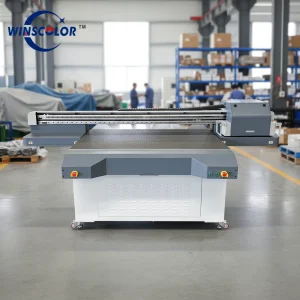
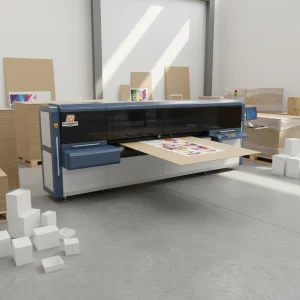
Direct OEM factory engineering deployed for regional sign makers, industrial suppliers, and export manufacturers in Greater Porto, Lisbon, and Aveiro.
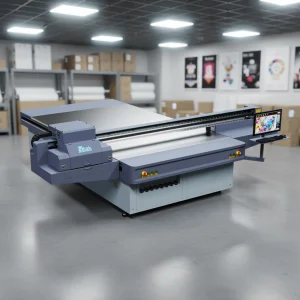
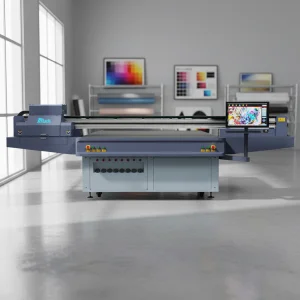
Understanding how direct digital curing platforms drive operational yield, eliminate screen processing waste, and meet EU Eco-design mandates.
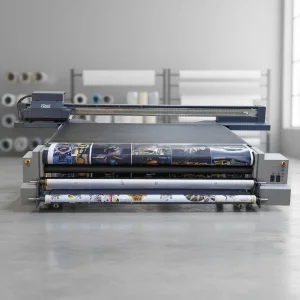
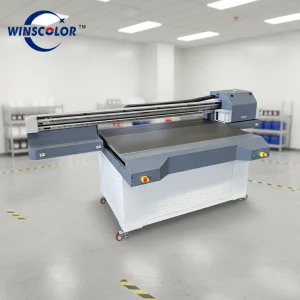
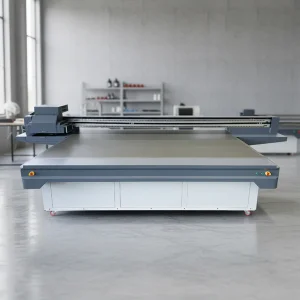
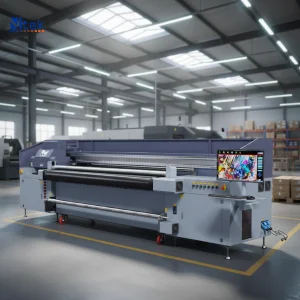
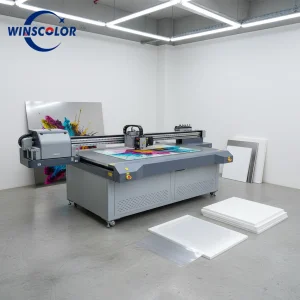
From the historic ceramic corridors of Aveiro and Coimbra to modern furniture fabrication in Porto and Braga, industrial manufacturers face rising demands for bespoke architectural installations. The NTEK YC2030L answers this call by bypassing traditional screen runs, delivering instant ink polymerization directly across cast tiles, vitrified surfaces, and composite wood sheeting without tooling down-time.
Lisbon's premium commercial sectors demand high-margin visual displays. Wide-format composite boards (Dibond, Alupanel), clear acrylics, and thermoformable polymers rely on cold-curing LED UV lamps to eliminate heat-induced warping. Variable greyscale drop sizing (5 to 15 picoliters) produces razor-sharp typefaces and smooth visual fades required by leading global retail brands.
Operating under rigorous European Union chemical frameworks, Portuguese printing plants are migrating rapidly away from solvent-heavy chemistries. The YC2030L utilizes low-energy LED UV curable formulations that comply fully with REACH annexes, generate near-zero VOC emissions, and support corporate environmental audits aligned with Portugal’s Plano Nacional de Energia e Clima (PNEC 2030).
Precision calibration matches Portugal's industrial raw material suppliers, including Amorim cork composites, domestic ceramic biscuit boards, and structural aluminum sheeting.
Portugal leads global cork production, and contemporary designers increasingly deploy direct-printed agglomerated cork boards for interior acoustic cladding and commercial design. The YC2030L features non-contact piezo jetting alongside an intelligent multi-zone vacuum hold-down table. This maintains micro-flatness across fibrous, porous surfaces, applying flexible white ink underbases that seal cellular topographies without flaking or ink bleed.
Modern restoration projects across Lisbon, Sintra, and Porto frequently require exact replicas of historical azulejo motifs where original kiln firing is uneconomical. Utilizing high-density industrial UV inks combined with specialized silane coupling primers, the YC2030L reproduces rich cobalt blues and earth pigments directly on glazed ceramics. High-build gloss varnish channels recreate classical glassy glazes with exceptional abrasion resistance.
Near ports such as Sines, Leixões, and Setúbal, marine environment equipment markings must endure harsh UV radiation and continuous salt-spray exposure. The heavy-duty steel structure and dual linear guide rails of the YC2030L support 100mm thick aluminum and stainless sheets. Printed outputs demonstrate superior chemical resistance and adhesion ratings up to ISO Class 0 across cross-hatch mechanical testing.
The wood manufacturing belt across northern Portugal demands fast turnaround on melamine-faced MDF, raw pine panels, and natural veneers. By offering automated substrate height detection and dual anti-static ionic ionizing bars, the machine mitigates electrostatic dust interference, laying down haptic 3D embossed textures and matte/gloss contrast layers without plate costs or clean-up overhead.
A look inside the mechanical, motion control, and ink-supply sub-assemblies built for 24/7 industrial production cycles.
The foundation of the YC2030L consists of an all-steel, high-temperature heat-treated structural frame. Annealing relieves internal metal tension, preventing micro-torsion over decades of use. Dual dual-rail Japanese THK/Hiwin linear guides ensure sub-micron carriage stability across the full 3000mm X-axis span.
Equipped with high-frequency Ricoh industrial printheads, the system outputs variable droplets down to 5pl. Native hardware internal heating keeps ink viscosities uniform regardless of morning-to-afternoon ambient factory temperature shifts, avoiding nozzle deflection and banding.
Industrial white ink settle-out is eliminated through an active constant-pressure closed-loop white recirculation channel. Dual negative pressure gauges monitor real-time meniscus pressure at the nozzle plate, preserving ready-to-fire conditions during long overnight standbys.
Winscolor engineers are executing strategic updates to ensure YC2030L owners remain technologically insulated against obsolescence. The 2026–2028 deployment schedule includes:
Direct factory sourcing combines cutting-edge mechanical manufacturing with global supply chain efficiency, yielding superior capital ROI for European enterprises.
From our centralized manufacturing hub in Jinan, China, Winscolor controls all aspects of CNC gantry milling, surface planarization, electronic harness construction, and final print optimization. By eliminating third-party sub-assembly markups, capital is reinvested into superior motion rails, motors, and printhead arrays.
Every machine off our six production lines undergoes a rigorous 72-hour continuous burn-in and calibration test. From power driver circuits to micro-valves, all key parts are barcoded and tracked. This ensures European field engineers and Portuguese operators receive exact replacement components with full interchangeability.
European print shops frequently pay steep brand markups for localized equipment that uses identical core components. Working direct with the Chinese manufacturing source provides high-end machinery alongside accessible consumables, open ink options, and cost-effective printhead sourcing, cutting production costs per square meter in half.
Evaluating international growth drivers, regional supply chain recalibrations, and competitive technology adoption.
Worldwide digital printing analytics consistently highlight the migration away from intermediate vinyl film printing mounted onto rigid structures. The extra steps—printing, laminating, and physical mounting—add substantial labor, increase scrap rates from bubbles or misalignments, and complicate single-material plastic recycling. Direct UV flatbed printing on boards like the YC2030L consolidates three processing steps into one pass, delivering clear speed and profitability advantages across worldwide markets.
Rising sea freight costs and supply chain fluctuations have accelerated near-shoring of custom decorative components within the European Union. Portuguese converters who previously imported pre-printed panels from distant sources are investing in agile flatbed systems. With the YC2030L, local producers can execute localized, short-run runs for architects, shopfitters, and furniture builders within hours, capturing regional, high-margin projects.
Seamless commissioning across Continental Portugal, Madeira, and the Azores backed by standardized international safety certifications.
Every YC2030L unit carries full CE certification conforming to European Machinery Directive 2006/42/EC and Electromagnetic Compatibility (EMC) standards. Standard safety systems include dual optical safety light curtains that immediately halt carriage travel if operators approach the bed during high-speed runs.
Configured with standard European single-phase or three-phase 400V/230V 50Hz electrical topologies, incorporating industrial Schneider breakers and Igus drag chains. Electronics are fully shielded to eliminate RF noise, ensuring stable operation alongside CNC routers and automated factory machinery.
Portuguese buyers benefit from comprehensive technical service. This includes live video-assisted installation, full English and Portuguese documentation, remote diagnostic software access, and expedited regional air courier delivery for critical spare parts (ink pumps, mainboards, solenoid valves).
Technical, operational, and procurement queries answered directly by our factory application engineers.
Explore our complete lineup of roll-to-roll banner systems, compact flatbed units, and high-speed packaging machinery available for export to Portugal.