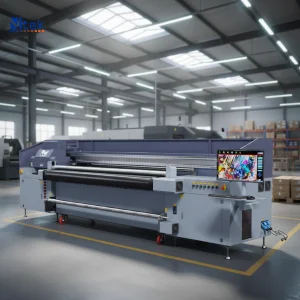
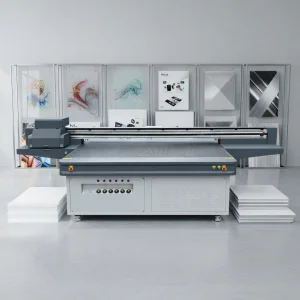
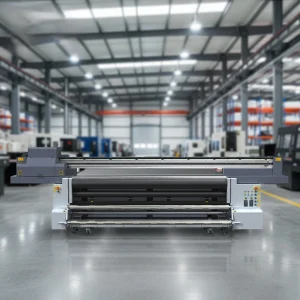
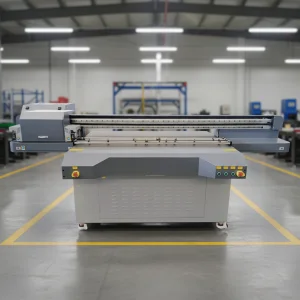
Direct manufacturer supply for industrial flatbed UV platforms, high-speed rotary printing, and commercial prototyping setups.


An authoritative analysis of on-demand micro-manufacturing, localized supply chain reshoring, and the economics of digital UV curing platforms.
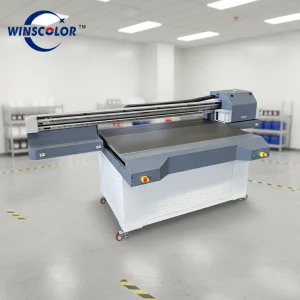
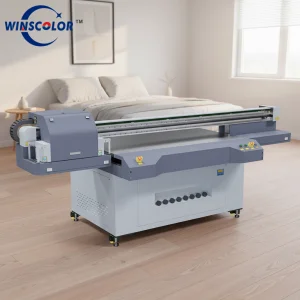
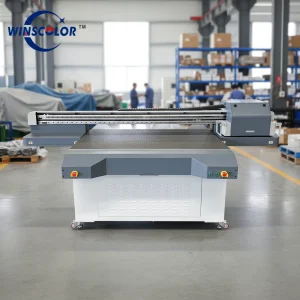
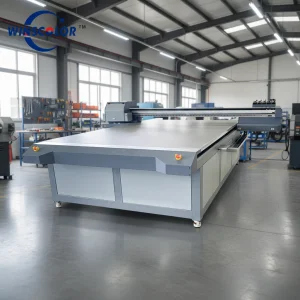
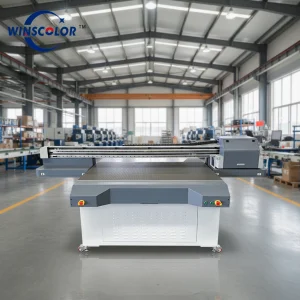
Global procurement directors are increasingly mitigating risk by moving away from centralized offset and pad printing vendors. Small format flatbed UV systems (typically ranging from 600×900mm up to 1600×1000mm) allow enterprises to establish localized digital print hubs.
Commercial margins for flat graphic reproduction continue to face downward price pressure. Industrial UV curing engines allow simultaneous jetting of opaque white inks and clear coats to formulate structural finishes.
Modern manufacturing demands strict adherence to workplace air quality regulations. LED cold-curing photochemical polymerization eliminates the dangerous Volatile Organic Compounds typical of traditional screen wash and solvent systems.
A rigorous examination of core engineering choices: gantry stability, drop-on-demand piezo actuators, and ink recirculation hydraulics.
| Subsystem | Technical Implementation | Operational Consequence | Industrial Advantage |
|---|---|---|---|
| Piezo Printhead Core | Ricoh Gen5/Gen6 or Epson i3200-U1 Industrial Micro-Piezo | Variable droplet formation (3.5pl to 12pl greyscale firing) | Photographic skin tones without graininess; durable continuous run lifetime |
| Gantry & Drive Mechanics | Integrated double THK linear quiet guides with magnetic encoder strips | Carriage flight deviations constrained below ±0.015mm over entire traverse | Total elimination of high-speed directional banding and edge feathering |
| Hydraulic Ink Loop | Positive/Negative dual-pressure chamber with continuous white circulation | Constant pigment agitation preventing titanium dioxide precipitation | Elimination of nozzle dropout after overnight standby; reduced purge consumption |
| Bed Clamping Engine | Multi-zone honeycomb aluminum vacuum table with high-flow blower | Uniform differential air pressure securing warped plastics and wood composite | Prevents substrate uplift, eliminating destructive printhead crash events |
| Thermal Curing Stage | Dual water-chilled UV-LED arrays (395nm wavelength emission) | Instant cross-linking of radical polymers without thermal bed warping | Immediate downstream cutting, fabrication, or shipping straight off the printer |
Electrostatically charged materials like cast acrylic attract airborne satellite ink mists and debris. Our units integrate dynamic anti-static ionizer bars and automatic collision prevention systems.
Viscosity stability is critical when jetting micro-droplets. Sub-carriage heating manifolds maintain ink chambers at uniform operational temperatures regardless of ambient workshop changes.
Small format flatbed versatility increases exponentially with synchronized multi-roller mechanical jigs designed for seamless cylindrical UV printing without seam artifacts.
Real-world workflow protocols for engineering thermoplastics, metals, clear polymers, and custom packaging products.
Custom graphic overlays on polycarbonate (Lexan) and polyester films. Printers produce dense, scratch-resistant reverse-print surfaces capable of withstanding millions of actuations without flexural cracking.
Direct printing on injection-molded ABS, PC-ABS blends, and anodized aluminum bezels. Yields scratch-resistant branding, serialized QR identity markers, and fine regulatory iconography.
Rapid prototyping and production of custom boutique cosmetic boxes, wood gift presentations, and prototype corrugated assemblies without requiring pre-press dies or silkscreens.
Chemical-resistant marking on specialized medical diagnostics equipment. Formulations resist hospital-grade disinfectants, alcohol wipes, and abrasive mechanical cleaning chemicals.
Precision output on brass, stainless steel, glass, and ceramic surfaces. Utilizes specialized silane coupling primers to ensure long-term exterior adhesion and UV weathering resistance.
High-speed printing on writing instruments, power banks, and drinkware. Magnetic jig registration allows rapid switching of mixed geometries with instant turnaround times.
Forward-looking engineering investments transforming industrial printheads, ink chemistry, and software automation.
Next-generation carriage arrays integrate CMOS macro-cameras directly onto the printhead housing. Optical artificial intelligence recognizes the edges and angles of randomly placed parts across the bed, automatically matching CAD vectors to parts without manual jigs.
Current industrial piezo limitations typically cap drop projection at 3mm to 5mm before aerodynamic drift degrades dot acuity. Advanced waveform drive profiles are extending accurate droplet delivery to 15mm+, facilitating effortless direct printing on irregular surfaces.
As global regulations tighten around photoinitiators and petrochemical acrylates, R&D labs are finalizing renewable plant-derived UV curable chemistries. These sustainable fluids dramatically reduce the carbon footprint of digital manufacturing while matching synthetic adhesion profiles.
A rigorous manufacturing and logistics infrastructure engineered to deliver dependable equipment worldwide.
Every piece of hardware exported from our facility complies strictly with international regulatory standards, verified through rigorous independent third-party audits.
Before crate sealing, every platform undergoes continuous 72-hour stress-testing simulating maximum speed bi-directional output on demanding substrates.
Procuring capital machinery internationally requires continuous operational support. We bridge global distance through modern digital telemetry and certified local distributors.
Engineering-backed responses to technical, logistical, and operational procurement inquiries.
Epson i3200-U1 heads offer an attractive balance of cost-efficiency with a dense nozzle configuration yielding high resolution at native 3.5pl droplet volume, making them ideal for fine text and intricate artwork. Ricoh Gen6 printheads represent heavy-duty industrial platforms built with all-steel bodies; they accept higher drive frequencies, resist harsh organic solvents, and are designed for continuous multi-shift operation over several years.
Untreated glass, metals, and polished ceramics possess high surface energy combined with non-porous characteristics, which can challenge ink adhesion over time. We recommend applying dedicated silane or polyorganosiloxane chemical wipe-on primers. Alternatively, small format printers can be ordered with automated digital primer channels that jet primer selectively under artwork, saving significant manual labor.
Unlike simple gravity-fed siphon architectures, an active dual negative-pressure system continuously monitors atmospheric pressure and adjusts the meniscus vacuum at the nozzle plate via closed-loop electronic sensors. This prevents ink leaking during carriage deceleration while simultaneously ensuring immediate fluid replenishment during high-frequency jetting passes.
Daily routines require automated or manual wiping of the nozzle faceplate with lint-free polyester swabs and specialized cleaning solutions, followed by carriage capping to exclude ambient light. Weekly maintenance includes flushing the vacuum capping pads, inspecting LED lamp optical lenses for curing spray mist, and cleaning the linear optical encoder strip with pure isopropyl alcohol.
As a source manufacturer, our engineering team manages custom chassis modifications, specialized gantry elevations (accommodating parts up to 200mm–400mm thick), external PLC input/output integration for robotics, and specialized color channel configurations. Inquire with our design team with your manufacturing line requirements for a comprehensive review.
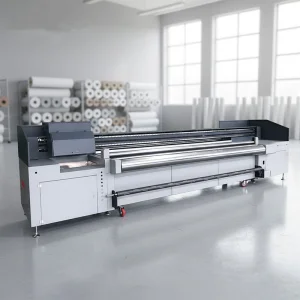
Expanded configurations for large-format flatbed output, roll-to-roll continuous graphics, and specialized industrial finishing.