Explore our foundational range of precision flatbed platforms engineered for high-adhesion ceramic substrates, vitreous tiles, and technical porcelain panels.
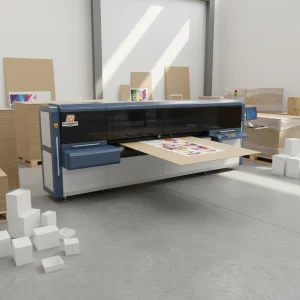
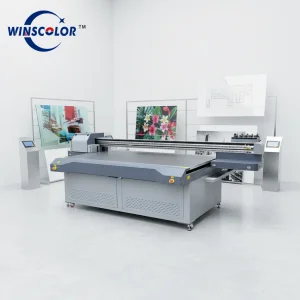

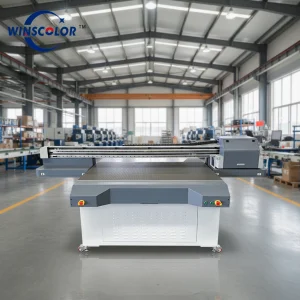
Analyzing technical, economic, and operational drivers transitioning architectural décor from mass rotary presses to agile, high-precision flatbeds.
In contemporary decorative manufacturing, the demand for monolithic ceramic runs has experienced systematic disruption. Industrial ceramic surfaces—traditionally decorated through rotary screen setups, rotogravure rollers, or massive continuous-pass kilns—are increasingly subjected to extreme market fragmentation. Architects, interior designers, commercial specifiers, and bespoke hospitality developers now mandate micro-batch manufacturing, near-zero inventory footprints, localized fast-fulfillment cycles, and complex custom tactile finishes.
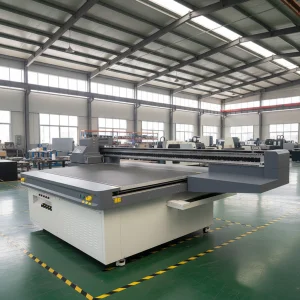
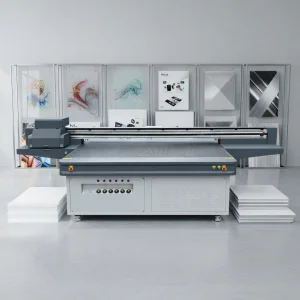
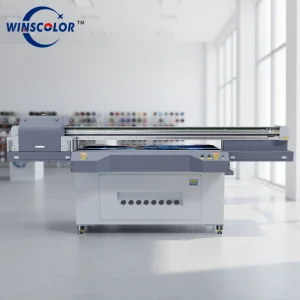
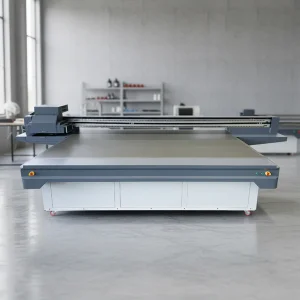
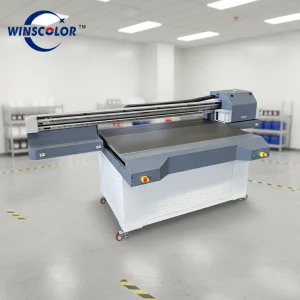
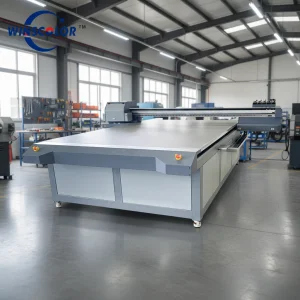
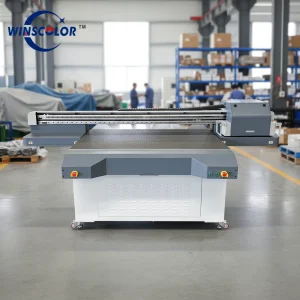
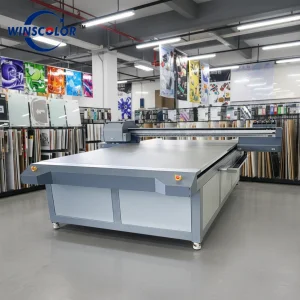
An OEM Small Format Ceramic Printer Factory operates directly at this critical intersection of digital micro-precision and heavy industrial surface endurance. While wide-format flatbeds excel at architectural wall slabs and massive panels, small-to-mid format digital systems (ranging from 600×900 mm up to 1600×1000 mm) solve the operational bottlenecks of boutique tile decoration, technical ceramic marking, laboratory prototype development, and high-margin artistic restoration.
Core Semantic Finding: Modern ceramic tile decoration no longer competes purely on square meters per hour. The defining competitive metric has transitioned to Surface Adhesion Tenacity (ASTM D3359 5B), Variable-Droplet Optical Fidelity, and Zero Make-Ready Cost per short-run variant.
By eliminating physical screen prepress costs, chemical etching washouts, and dedicated plate storage, our OEM ceramic printing platforms empower converters to achieve profitability on single-piece prototypes while seamlessly scaling into uninterrupted batch production runs. With the integration of high-viscosity ceramic primers, sub-micron white ink circulation, and physical 3D tactile varnish builds, small format flatbeds transform flat, cold vitreous substrates into tactile architectural masterpieces.
Engineering chemical bonding on impervious vitreous glazes, non-porous sintered stone, and glazed terracotta.
Ceramic glazes possess high surface energy combined with chemical non-reactivity. Our machines integrate automated inline or chemical pre-wipe silane coupling agents that establish molecular bridges between inorganic silicates and organic UV-curable polymer matrices, preventing post-cure delamination under high humidity.
Due to the substantial specific gravity of Titanium Dioxide (TiO₂) particles required for dense opacity on dark porcelain, our OEM carriage assemblies incorporate continuous secondary ink circulation, pressurized meniscus vacuum reservoirs, and ultrasonic degassing to guarantee uninterrupted nozzle firing without sedimentation.
Achieving realistic tactile relief requires precision droplet pinning before droplet coalesce. Our systems feature dual-zone liquid-cooled UV-LED curing units operating at 395nm wavelength with variable irradiance (0–100%), allowing instantaneous gelation followed by thorough through-cure polymerization without thermal distortion.
Where OEM small format ceramic printers deliver superior unit economics and competitive manufacturing differentiation.
Local tile studios and bespoke kitchen remodelers utilize small format printers to create photorealistic marble veins, Moroccan geometric motifs, and personalized murals directly on off-the-shelf subway tiles, creating bespoke value premiums exceeding 400% above base ceramic stock.
Preservation agencies in European and Middle Eastern historic quarters deploy small flatbeds to clone damaged hand-painted terracotta tiles, matching antiqued patinas and craquelure textures with microscopic color-layer accuracy that manual hand-glazing cannot consistently replicate.
Industrial components factories apply permanent serial numbers, metric scale gauges, bar codes, and brand insignia onto glazed bathroom fixtures, laboratory ceramic valves, and heat-resistant kiln crucibles requiring high chemical and abrasion tolerance.
Crafting custom sintered stone tabletops, personalized stoneware coasters, ceramic room keys, and tactile souvenir plaques allows regional commercial print service providers (PSPs) to broaden service portfolios into rigid corporate gift sectors.
How Jinan’s industrial machinery ecosystem enables high-specification OEM manufacturing without hyper-inflated capital expenditure.
Headquartered in Jinan, Shandong Province—one of China’s most prestigious industrial machining epicenters—our OEM manufacturing infrastructure leverages deep territorial integration. Unlike assembled brand resellers, our company maintains in-house gantry milling facilities, precision robotic welding lines, and rigorous metrology calibration cells. This high concentration of precision mechanical suppliers guarantees unbroken component availability and swift structural customizability.
Our heavy-duty frames are constructed utilizing aged, stress-relieved welded tubular steel and solid aircraft-grade extruded aluminum beams, completely eliminating vibration harmonics during high-speed raster travel. By pairing globally sourced industrial cores—such as Japanese THK silent linear guide rails, Panasonic or Leadshine AC servo drives, and German IGUS drag chains—with our agile Chinese mechatronic engineering teams, we deliver world-class printer builds at substantial capital cost advantages.
OEM/ODM Customization Capabilities: From bespoke exterior industrial housing paint to custom firmware raster imaging processors (RIP), customized vacuum bed zones, and multi-printhead arrays (Ricoh Gen6, Epson i3200-U1, Toshiba CE4), our engineering department delivers complete private-label manufacturing programs tailored to distributor specifications.
Strategic technological evolutions emerging within digital ceramic surface modification.
Simultaneous 365nm and 395nm emission bars that activate hybrid initiators to enhance bottom-layer chemical cross-linking against ceramic glazes while keeping gloss surface layers tack-free.
Optical high-speed cameras reading non-planar tile relief height maps dynamically in real-time, adjusting piezo drive voltages to correct droplet aerodynamic drift across curved subway tiles.
Formulating micro-dispersed ceramic frits and metallic oxide nano-pigments within low-viscosity UV carriers, permitting decorative UV positioning followed by 800°C–1200°C kiln firing for permanent glass-fused glazes.
Fully autonomous modular flatbed cells equipped with 3D vision robotic arms that load unprinted bisques, align tile edges, perform automated primer misting, and offload cured panels to packaging bins.
Rigorous test protocols assuring architectural durability under abrasive, thermal, and chemical exposure.
Finished ceramic tile samples undergo standardized wet-sand rotary abrasive cycling to confirm pattern resilience against foot traffic wear, rating our cured UV-LED inks suitable for commercial floor and decorative wall installations.
Rigorous exposure tests against household detergents, cleaning solvents (bleach, citric acid, ammonia), and methyl ethyl ketone (MEK) rubs verify that printed vitreous surfaces maintain optical density and color stability without softening.
Every OEM machine leaves our factory carrying complete CE machinery directive documentation (2006/42/EC), Low Voltage Directive compliance, and UL/CSA compatible electrical component layout, backed by environmentally certified RoHS-compliant UV ink families.
Detailed technical responses addressing the most critical equipment integration queries from distributors and print directors.
Broaden your industrial production capabilities with versatile flatbed, roll-to-roll, and multi-axis rotary ceramic printing solutions.
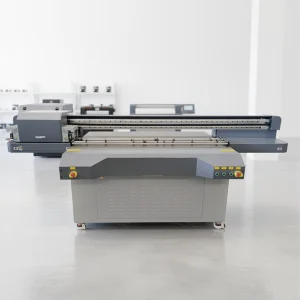
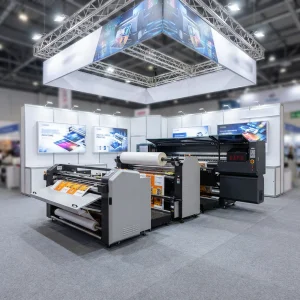
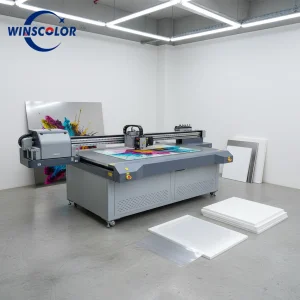
Accelerate your localized printing capability with bespoke bed dimensions, multi-channel spot varnish, and dedicated technical training.
Whether you require a single private-labeled sample printer or container-volume manufacturing runs for regional distribution networks, Jinan Yingcai Digital Technology delivers certified quality, complete spare parts continuity, and direct engineer-to-engineer technical support.
