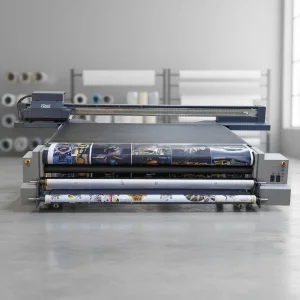
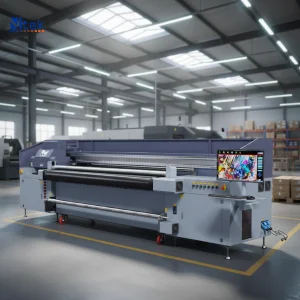
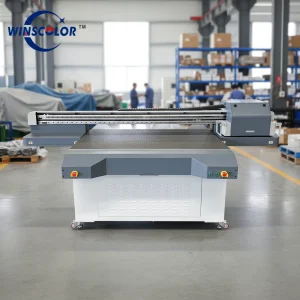
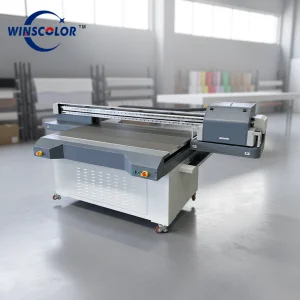
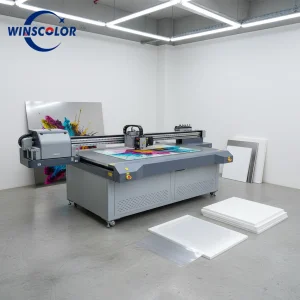
Engineered for high-volume ceramic tiles, sintered porcelain slabs, architectural glass, and rigid industrial panels. Direct factory-calibrated Ricoh Gen6 / Gen5 drop-on-demand architectures.
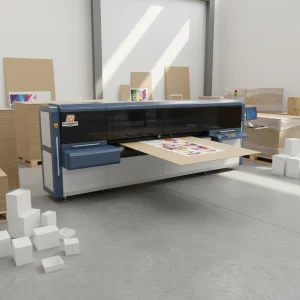
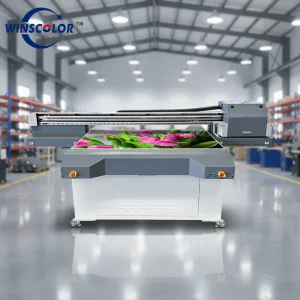
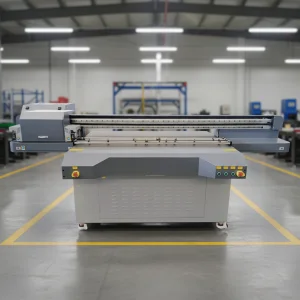
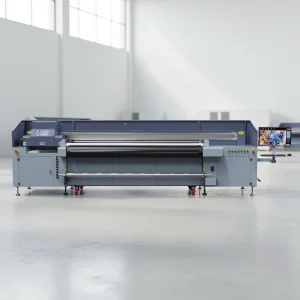
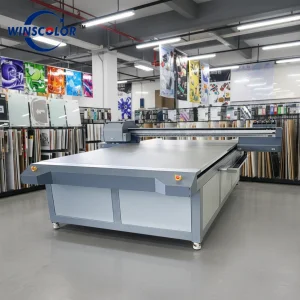

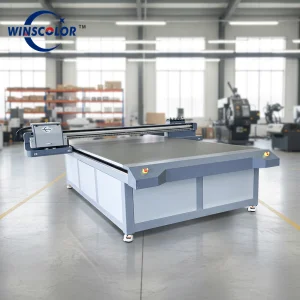
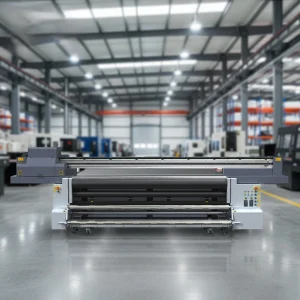
A comprehensive examination of drop-on-demand piezo physics, specialized silane pre-coatings, and structural gantry dampening for non-porous vitreous ceramic surfaces.
Ceramic, porcelain tiles, and sintered stone slabs represent some of the most unforgiving substrates in industrial digital imaging. Unlike paper or open-cell polymers, ceramic tiles possess an ultra-dense, non-absorptive surface profile with extremely low surface energy (often dropping below 30 dynes/cm). When conventional inks strike raw fired glaze, droplet retraction, pinholing, and mechanical delamination occur almost instantaneously.
Our OEM ceramic UV flatbed printer engineering tackles this boundary condition through a multi-tier approach: dual-zone integrated atmospheric plasma or automated liquid silane primer pre-treatment, matched with high-viscosity monomer ink formulations. This engineering whitepaper outlines the exact mechanical, chemical, and software synchronization required to achieve architectural scratch resistance (Class 4/5 wet abrasive durability) and photo-realistic resolution on heavy format stoneware.
Standard sign-making printers deflect under the load of 40mm thick sintered stone slabs. Our OEM frames incorporate heavy-gauge square steel crossbeams tempered via thermal stress relief, annealed at 600°C, and surface-milled on 12-meter 5-axis CNC gantries. Dual Japanese THK 25mm silent linear guide rails and double Panasonic AC servo-driven lead screws eliminate micro-vibrations across speeds of up to 1.8 m/s.
Ceramic environments generate high particulate dust. Our closed-loop dual-channel negative pressure manifold prevents nozzle drop-outs, keeping heavy white pigment in continuous suspension.
Ceramic tiles vary from 300×300mm mosaics to massive 3200×1600mm sintered slabs. Our hard-anodized vacuum table delivers up to 12.5 kW of high-static suction pressure across 8 selectable zones.
Instantaneous polymerization prevents ink spread on non-absorbent glazes. High-intensity 395nm UV LED arrays deliver controllable curing power from 2 W/cm² to 16 W/cm² without overheating substrates.
In-depth supply-chain cluster dynamics, high-precision structural fabrication, and proprietary motion firmware establish Chinese OEM facilities as the epicenter of global UV hardware development.
| Evaluation Dimension | Direct Chinese OEM Plant (Winscolor/NTEK Cluster) | European / North American Integrators | Standard Trading Agent / Assembler |
|---|---|---|---|
| Frame Fabrication | In-house 5-axis CNC heavy gantry milling; thermal annealing ovens | High precision, but heavy assembly outsourced to third parties | Cold-rolled sheet metal; prone to structural warp over 24 months |
| Printhead Integration | Direct factory calibration: Ricoh Gen5/Gen6, Konica Minolta 1024i | Proprietary locked firmware; expensive encrypted consumables | Generic driver boards; lack of custom waveform development |
| Bespoke Customization (OEM) | Complete hardware & software tailoring (bed dimensions, PLC, robotics) | Rigid catalog configurations; multi-month engineering review fees | Cosmetic labeling only; zero structural redesign capabilities |
| Total Cost of Ownership | Unbeatable price-performance ratio; factory direct spare parts depot | 2.5× to 4× premium for equivalent mechanical throughput | Moderate machine cost, high long-term downtime and component markup |
| Spare Parts Availability | Same-day component dispatch (lead screws, boards, solenoid valves) | 3 to 6-week turnaround for specialized replacement modules | Dependent on third-party broker supplies; inconsistent stock |
Our Jinan R&D lab creates native voltage drive waveforms matched specifically to the acoustic resonance of Japanese industrial piezo elements when jetting ceramic primer and high-density UV pigments. This reduces micro-satellite misting at elevated carriage speeds (exceeding 1.2 m/s), maintaining razor-sharp edges even across beveled subway tile contours.
Situated in Shandong's heavy industrial and CNC precision manufacturing corridor, our facility leverages an integrated ecosystem: high-tensile steel mills, laser sheet-cutting fabrication hubs, precision drive-gear makers, and advanced surface anodizing labs are located within a 50-kilometer radius. This industrial clustering drastically compresses the R&D iteration cycle from initial conceptual design to beta mechanical testing.
For international OEM brand owners, this means custom print widths (e.g., matching regional tile sizes such as 1200×2400mm or 1600×3200mm European formats), automated height-lifting gantries up to 400mm, and integrated continuous-roll accessories can be customized and shipped with exceptional velocity and structural reliability.
From low-efficiency analog screen-printing carousels to autonomous digital drop-on-demand systems: analyzing the shift toward tactile 3D finishes, high-drop jetting, and sustainable manufacturing.
Market demand has shifted dramatically from flat, 2D decorative graphics to tactile realism mimicking natural Italian marble veins, chiseled slate textures, and carved wood patterns.
Traditional inkjet drops deteriorate into turbulent spray when the printhead distance exceeds 2-3mm. Modern architectural ceramics feature fluted surfaces, dimensional reliefs, and undulating contours.
Escalating environmental regulations across the EU, North America, and APAC are phasing out mercury vapor lamps and solvent-based ceramic glazes that require kiln re-firing.
Beyond basic sign-making: how multinational manufacturers deploy our UV flatbed systems across high-wear architectural, luxury interior, and commercial environments.
Large-format porcelain and sintered stone (gauges from 6mm to 20mm) are rapidly replacing granite and quartz in modern construction. Our wide-format flatbeds print high-fidelity book-matched marble textures directly onto engineered slabs measuring 1600×3200mm, aligning vein lines seamlessly across multiple adjoining panels for kitchen islands, vanity tops, and luxury building facades.
Metropolitan transit infrastructure requires fire-retardant, anti-graffiti, and chemical-resistant decorative surfaces. Digital ceramic UV printing with cross-linking topcoats withstands rigorous daily industrial cleaning solvents, alkaline detergents, and heavy commuter abrasion. Custom tile murals retain vibrant chromas under high-intensity fluorescent tunnel lighting for decades.
Interior design studios demand short-run on-demand production without minimum order quantities. Winscolor UV flatbeds facilitate batch-of-one custom tile backsplashes, replicating vintage Moroccan encaustic designs or intricate botanical illustrations with spot varnish gloss textures that resist cooking oil splatter, boiling water vapor, and mold development.
Equipped with our dynamic rotary indexing fixtures and extended Z-axis gantry clearances (customized up to 400mm), specialized manufacturers print brand logotypes, luxury filigree borders, and geometric designs directly onto curved vitreous porcelain sinks, ceramic vessel basins, and custom commercial hotel sanitaryware.
Connecting standalone digital printing equipment into continuous, highly automated factory workcells: robotics, inline priming, and smart SCADA integration.
Modern ceramic manufacturing facilities cannot rely on manual labor to lift and position 100kg sintered slabs. Our engineering team develops turnkey automated workcells that combine our heavy-duty UV flatbed printers with robotic vacuum transfer gantries, inline atmospheric plasma flame treaters, and automated post-print UV/thermal topcoat coaters.
Using industrial Modbus TCP / OPC-UA protocols, Winscolor printers communicate directly with central MES (Manufacturing Execution Systems). QR codes printed on the underside of greenware or bisque automatically trigger the correct RIP design file, configure printhead carriage height, set UV curing dosage, and adjust color ICC profiles without human intervention.
For high-throughput continuous manufacturing, we engineer dual auxiliary spray stations or an extra carriage dedicated exclusively to jetting nano-molecular silane primers. This deposits a microscopic cross-linking film precisely where ink will land, eliminating chemical waste, reducing drying wait times, and elevating peel adhesion to standard ASTM D3359 5B metrics.
A rigorous checklist for distributors, global importers, and enterprise brand managers seeking direct factory OEM/ODM partnerships in China.
All export-tier models are manufactured under strict ISO9001 certified quality controls and hold full European Conformity (CE) and UL electrical certification.
We empower overseas distributors to establish distinct domestic brand equity through comprehensive private-label engineering and cosmetic adaptations.
We ensure zero operational disruption through rigorous containerization standards and accessible overseas technical support networks.
In-depth technical answers addressing ink formulations, mechanical longevity, adhesion engineering, and maintenance cycles.
Versatile large-format UV hardware for multi-substrate converters: capable of handling corrugated boxboards, flexible leather, and rigid composite substrates with single-pass and multi-drop precision.