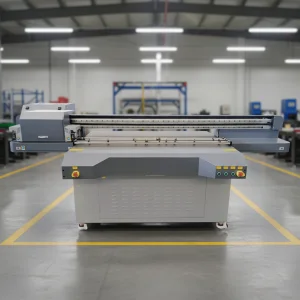
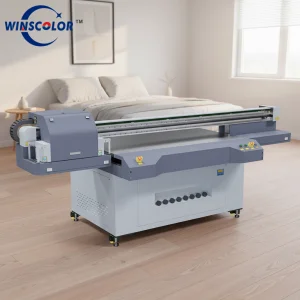
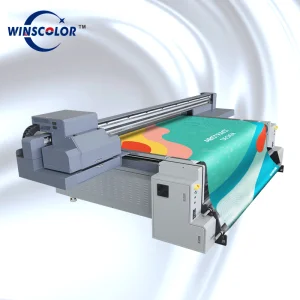
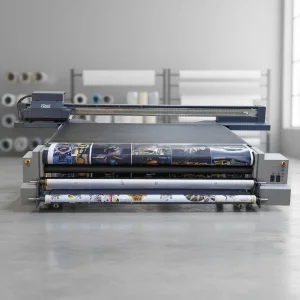
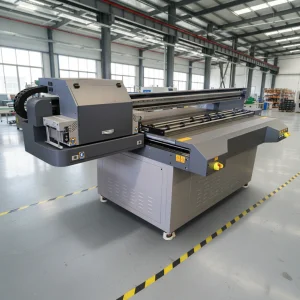
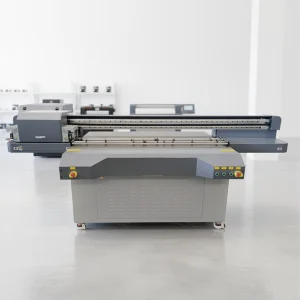
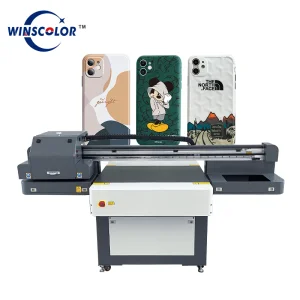
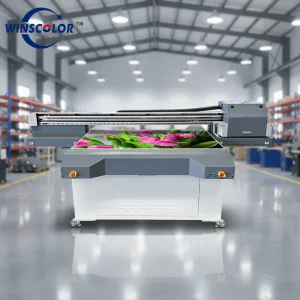
Explore our high-performance Ricoh Gen6 and LED-curing digital UV printing machinery calibrated for rigid plastic sheets, promotional items, and industrial components.
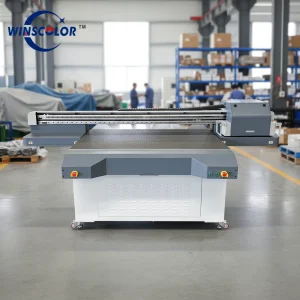
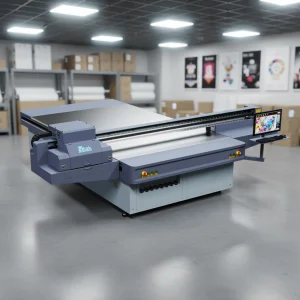
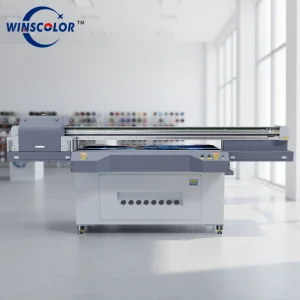
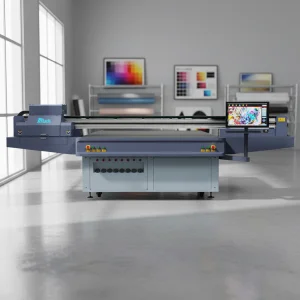
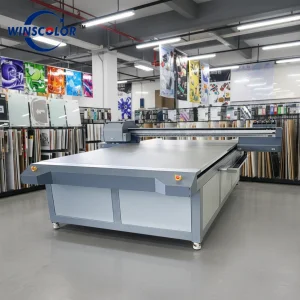

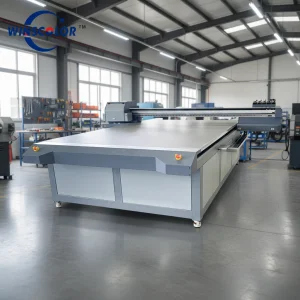
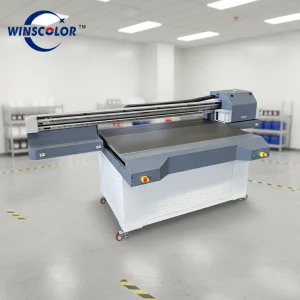
A rigorous examination of polymer surface energy dynamics, curing kinematics, and the transition from analog pad printing to digital UV inkjet manufacturing.
Polyolefins like Polypropylene (PP) and Polyethylene (PE) possess low surface critical tension (often < 32 dynes/cm), making direct wetting difficult. NTEK systems integrate advanced inline corona treatment, plasma discharge, and specialized chemical adhesion promoters to elevate surface tension beyond 42 dynes/cm, ensuring cross-hatch adhesion reaching ISO Class 0.
Traditional mercury arc vapor lamps discharge immense infrared radiant heat (> 80°C), resulting in deformation, thermal buckling, and internal stress cracks across delicate plastics such as thin PVC films, PETG sheets, and polystyrene. NTEK's proprietary dual air- and water-cooled UV LED modules operate under 45°C, preserving structural integrity.
Our formulation engineering team validates ink-substrate matrixes for Acrylic (PMMA), Polycarbonate (PC), ABS structural frames, high-density polyethylene (HDPE), and composite PVC foam sheets. Formulations are tuned for optical purity, elongation during post-forming thermoforming, and resistance to environmental yellowing.
How NTEK leverages Jinan's industrial mechatronics cluster to deliver superior machine precision, rapid lead times, and unmatched total cost of ownership (TCO).
Every NTEK bed is constructed from heat-tempered structural tubular steel, stress-relieved via high-temperature annealing furnaces, and milled on large-scale 5-axis CNC machining centers. This eliminates micron-level resonance and frame warp across 10+ years of high-speed 24/7 shifting.
We deploy industrial stainless-steel Ricoh Gen5/Gen6 piezo printheads with isolated ink circulation systems. Delivering multi-drop grayscale (5pl, 10pl, 15pl) at firing frequencies up to 50 kHz, our motion controllers achieve sub-millimeter edge registration on thermoformed plastic housings.
Operating six dedicated robotic assembly lines across 20,000 square meters allows NTEK to deliver custom chassis configurations, specialized rotary attachments, customized vacuum zone divisions, and private-label firmware within 15 to 25 business days from order signoff.
By producing mechanical frames, negative-pressure ink delivery circuits, and LED curing chillers in-house, NTEK offers equipment and consumable running costs roughly 40% to 55% lower than European or Japanese competitors, without sacrificing repeatability or color gamut.
Real-world manufacturing use cases demonstrating high-adhesion printing across diverse polymeric resins.
Substrate: Polycarbonate (PC) & ABS Blends.
Automotive interior suppliers utilize NTEK flatbeds for backlit instrument clusters, EV center control bezels, and tactile buttons. High-opacity white ink ensures zero light leakage, while selective gloss varnish withstands automotive scratch and abrasion tests (FLTM BN 108-13).
Substrate: Rigid TPU, Polycarbonate, and Acrylic.
Consumer electronics manufacturers leverage YC1610H and YC6090 models for high-speed continuous production of smartphone cases, smart meter faces, and power tool housings. Multilayer tactile 3D embossed text and textures add high commercial value without tooling costs.
Substrate: PETG, Polypropylene, and Polystyrene.
Equipped with synchronous rotary mandrels, NTEK printers achieve seamless 360-degree cylindrical direct printing on luxury lotion bottles, jars, and lipstick tubes. Spot varnish recreates hot-stamping and Braille finishes that withstand alcohol rub resistance assays.
Substrate: Medical-Grade PVC & Autoclavable Polyester.
Diagnostic laboratory instrumentation and patient monitor overlays necessitate biological inertness and resistance to aggressive hospital-grade chemical disinfectants (isopropyl alcohol, sodium hypochlorite). NTEK inks offer resilient molecular crosslinking that passes ISO 10993 cytotoxicity guidelines.
Substrate: Cast and Extruded Polymethyl Methacrylate (PMMA).
Wide-format models such as YC2513L and YC2030H excel at five-layer "Color-White-Black-White-Color" sandwich printing on crystal acrylic slabs, creating illuminated day/night signage for airports, transit hubs, and architectural partition panels with zero lamination bubbling.
Substrate: High-Impact Polystyrene (HIPS) & ABS.
For refrigeration liners, luggage shells, and heavy equipment guards, NTEK supplies high-elongation stretchable UV inks capable of undergoing severe vacuum thermoforming and deep-drawing (> 250% elongation ratio) without micro-fissuring, flaking, or chromatic dilution.
Empirical reference data compiled by NTEK's application testing center for enterprise procurement evaluation.
| Polymer Substrate | Surface Energy (Dynes/cm) | Pre-Treatment Required | Recommended NTEK Machine Platform | Standard Ink Elasticity | Adhesion Rating (ASTM D3359) |
|---|---|---|---|---|---|
| Cast / Extruded Acrylic (PMMA) | 38 – 42 dynes/cm | Alcohol wipe / Anti-static bar | YC2513L / YC2030H Flatbed | Rigid Formulation (Low stretch) | Class 5B (Zero peeling) |
| Polycarbonate (PC) | 42 – 46 dynes/cm | Direct printing ready | YC1610H / YC2513L Flatbed | Semi-Flexible Formulation | Class 5B (Zero peeling) |
| Polypropylene (PP) / Polyethylene (PE) | 29 – 32 dynes/cm | Corona / Plasma / Primer Wipe | YC6090 / YC1610H with Plasma Kit | Flexible Elastomeric Ink | Class 4B – 5B (With primer) |
| Acrylonitrile Butadiene Styrene (ABS) | 38 – 42 dynes/cm | Direct printing ready | YC1610H / YC2500HR Hybrid | Semi-Flexible Formulation | Class 5B (Zero peeling) |
| Expanded PVC Foam Board (Forex) | 36 – 40 dynes/cm | Anti-static de-ionizing blast | YC2513L / YC3200HR Hybrid | Standard Graphic Ink | Class 5B (Zero peeling) |
| PETG Sheets (Thermoforming Grade) | 40 – 44 dynes/cm | Clean-room dust removal | YC2513L Thermoform System | Super-Elastic UV Ink (>250%) | Class 4B – 5B (Post-formed) |
Key technical indicators global supply chain managers and technical plant operators prioritize when selecting industrial UV flatbed systems.
Traditional inkjet drops experience turbulence and satellite drop deviation if printhead distance exceeds 2.5 mm. NTEK’s modern high-throw jetting algorithms maintain razor-sharp dot placement at nozzle-to-substrate distances up to 8–12 mm, facilitating direct digital printing on curved, bevelled, and embossed molded plastics.
Stringent corporate environmental mandates require elimination of solvent wash and air pollutant hazards. NTEK inks achieve full photochemical polymerization in milliseconds under 395nm wavelength light emitting diodes, yielding zero fugitive VOC emissions and meeting European RoHS, REACH, and toy safety EN71-3 certifications.
Modern production facilities require machine integration into automated material handling cells. NTEK equips its hardware with industrial PLC interfaces, TCP/IP communication protocols, and custom REST API endpoints for seamless line-integration with robotic arm pick-and-place conveyors and vision calibration cameras.
Technical solutions addressing material surface pre-treatment, ink mechanical adhesion, curing profiles, and after-sales support.
Explore our specialized rotary, flatbed, and continuous hybrid models engineered for diverse industrial plastic substrates.