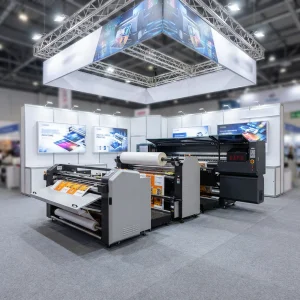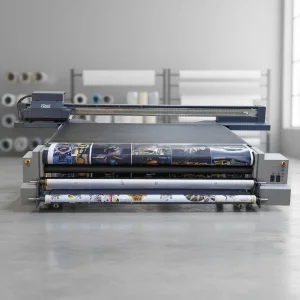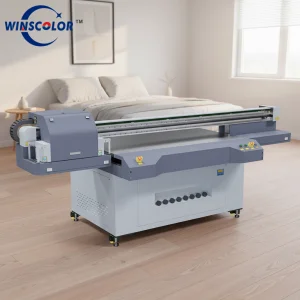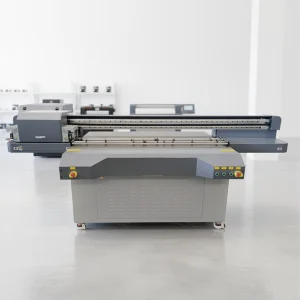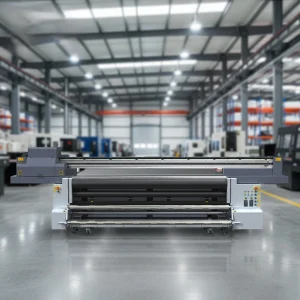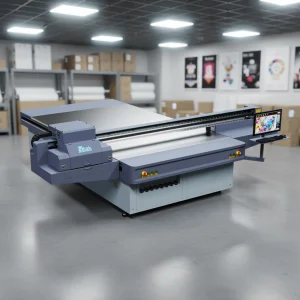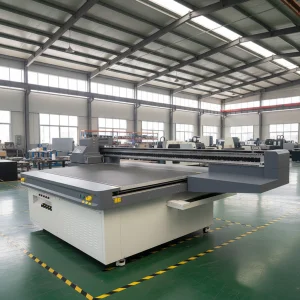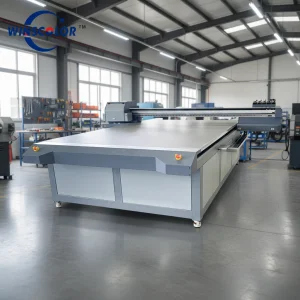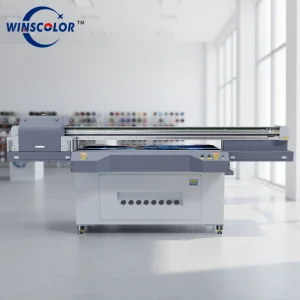
Engineered for high-duty cycles, substrate-agnostic pigment adhesion, and micrometric droplet positioning.
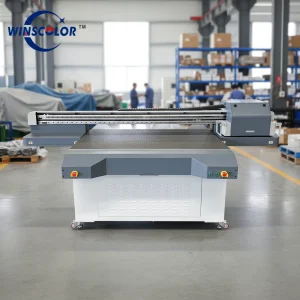
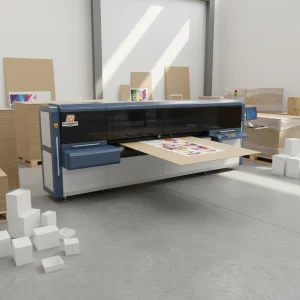
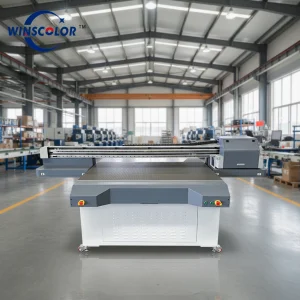
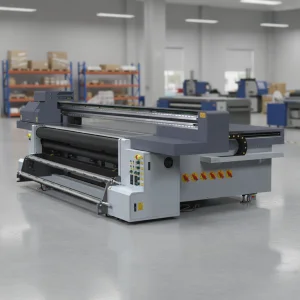

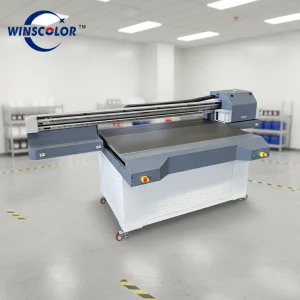
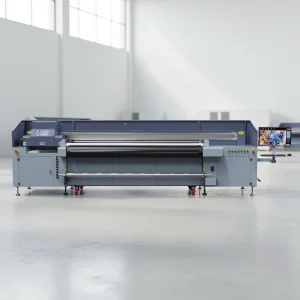
The industrial inkjet landscape is transitioning from legacy mercury-arc discharge setups to ultra-narrow wavelength solid-state UV LED diodes. This paradigm pivot is driven by energy mandates, precision dot gain control, and the surge in heat-sensitive substrates.
Traditional metal-halide lamps radiate massive infrared thermal spikes, deforming thin polyolefins, PVC foams, and cast acrylics. Modern 395nm UV LED matrices emit radiant energy directly aligned with modern photoinitiators, mitigating substrate thermal stress while cutting energy consumption by over 65%.
Piezoelectric printheads (such as the industrial Ricoh Gen6 / Kyocera KJ4A lines) fire microscopic drops via customized drive waveforms. Drop volumes scale down to 5 picoliters, enabling razor-sharp micro-text, flawless halftones, and smooth gradient rendering without visible raster lines.
Global regulatory oversight (including REACH, RoHS, and California Proposition 65) is driving suppliers toward green monomer formulations. Modern UV inkjet inks contain zero volatile organic compounds, polymerizing in fractions of a second into durable, scratch-resistant cross-linked plastic matrices.
Industrial printing performance depends on the balance between advanced digital electronics and heavy-gauge mechanical foundations. NTEK integrates aerospace-grade manufacturing tolerances with an agile global logistics network.
Annealed structural steel chassis stress-relieved via industrial thermal tempering to permanently eliminate micro-deflections over decades of use.
Japanese THK high-precision dual mute linear guideways paired with magnetic linear encoders deliver ultra-smooth carriage positioning without micro-stepping vibration.
High-torque multi-chamber vortex blowers clamp down irregular corrugated surfaces, warping wood planks, or ultra-thin films with uniform hold-down force.
Automated continuous circulation of dense titanium white ink prevents sedimentation and nozzle dropouts, ensuring consistent output across multi-day jobs.
B2B procurement teams prioritize Total Cost of Ownership (TCO), substrate versatility, and reliable technical field service over nominal purchase price.
Converting screen printing to digital eliminates screen burn-in, emulsifiers, washouts, and extensive make-ready scrap. Run lengths from a single prototype to 5,000 pieces achieve predictable square-meter fluid costs under $0.45/m² for typical CMYK coverage.
Global distributors require platform versatility: custom chassis footprints, tailored RIP integration (Onyx, Caldera, Photoprint), and custom carriage channel mapping (CMYK + LC + LM + White + High-Gloss Varnish) for turnkey integration.
High-volume manufacturing lines cannot tolerate unplanned downtime. NTEK provides direct cloud diagnostic support, real-time board-level firmware debugging, and global DHL air-express dispatch for mission-critical parts.
From flexible non-planar materials to high-surface-energy metals and non-porous glass, learn how specialized surface pre-treatments and drop control yield production-grade adhesion.
Printing directly on architectural splashbacks, commercial curtain glass, and textured porcelain tiles requires targeted silane wipe-down primers. UV clear coats create an impenetrable, chemically inert barrier against environmental moisture and UV fading.
Replacing high-cost flexographic stereo plates, single-pass inline printing allows rapid graphics turnaround on kraft paper, bleached corrugated linerboard, and structural honeycomb displays without crushing internal fluting.
Direct imaging onto powder-coated aluminum, polycarbonate control plates, and ABS housings. Precise white ink backing layers preserve true color fidelity and complete opacity over dark surfaces.
Direct answers from senior ink formulation chemists and field technicians to optimize your production setup.
Factory-direct engineering for specialized manufacturing, roll-to-roll operations, and large-format digital production.