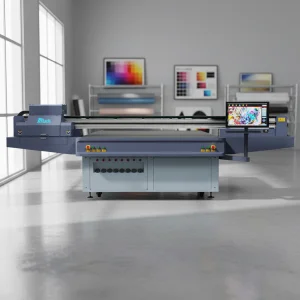
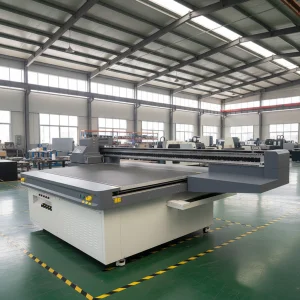
Direct-from-factory rotary-adapted and flatbed UV printing systems engineered for industrial yield, tight-tolerance registration, and seamless continuous 360° output.
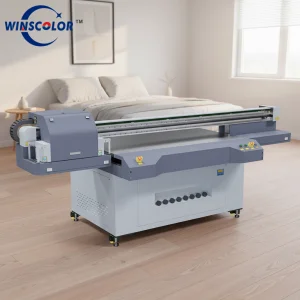
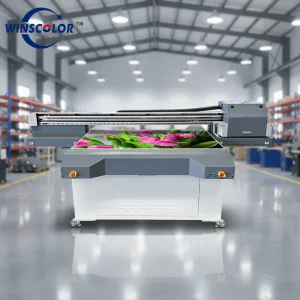
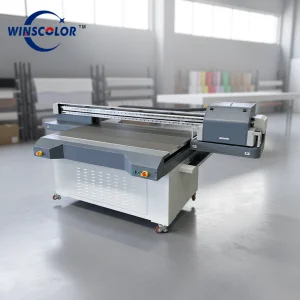
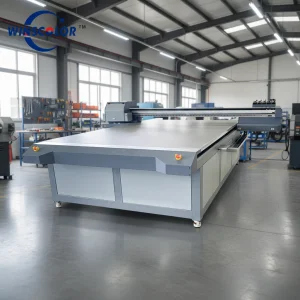
The commercial drinkware, drink container, and specialized cylinder decorating sectors are undergoing a transformative evolution. Traditional decorating methodologies—specifically screen printing, pad printing, and heat sublimation transfers—suffer from substantial physical limitations: extensive setup times, exorbitant pre-press plate and chemical cliché costs, restricted color gamuts, severe mechanical deformation across conical geometries, and an incapacity to execute economically viable short runs or variable data personalization. Global brand owners, promotional product distributors, and original equipment manufacturers (OEMs) increasingly mandate immediate switchover agility, zero plate overheads, photorealistic photographic fidelity, and durable tactile finishes.
In response to this demand, Direct-to-Shape (D2S) and Cylindrical UV Digital Printing Machines have become the definitive industrial manufacturing standard. By uniting advanced piezoelectric Drop-on-Demand (DoD) inkjet printheads, dynamic multi-axis servo rotary chucks, algorithmic raster image processor (RIP) conical unwrapping engines, and instant cold UV-LED pinning curing arrays, NTEK engineered solutions surpass the boundaries of classical decoration. Whether depositing CMYK plus light inks for smooth skin tones, high-opacity circulating white for dark substrates, or high-build textured gloss varnish for embossed haptic tactile feedback, modern digital cup printing bridges the gap between mass industrial throughput and single-unit on-demand personalization.
Eliminates rotary screens, exposure processes, squeegees, and stencil washing. Print run quantities from 1 unit to 100,000 units commence instantly directly from native vector or raster RIP workflows.
Micro-stepped servo drives synchronized with optical linear scales ensure flawless pattern overlap without visible seams, banding, or overlap lines across round, cylindrical, and tapered contours.
Specialized UV-curable polymer formulations resist commercial dishwasher cycles, intense thermal shocks, condensation, abrasion, solvent cleaners, and intense mechanical cross-hatch adhesion tests.
Inside Jinan Yingcai Digital Technology Co., Ltd (Winscolor / NTEK): Vertical integration, precision metalworking, and direct Tier-1 industrial partnerships.
Evaluating industrial machinery procurement requires an exhaustive audit of manufacturing infrastructure and supply chain resilience. Headquartered in the national CNC and machine-tool cluster of Jinan, Shandong Province, our 20,000 square meter integrated facility houses six specialized production lines. Unlike trading integrators who outsource chassis welding and sub-assemblies, NTEK controls core structural mechanics, stress-relieved bed annealing, gantry milling, surface treatments, electrical harness loom assembly, and optical alignment in-house.
| Manufacturing Dimension | NTEK Factory Direct (Jinan Manufacturing Base) | Western OEM Aggregators | Secondary Re-branders / Traders |
|---|---|---|---|
| Structural Frame Construction | All-steel welded gantry, stress-relieved via 600°C thermal annealing; five-axis CNC precision milled surfaces. | Cast aluminum or fabricated steel; high-precision milling but substantially higher unit cost structure. | Lightweight folded sheet-metal extrusions; prone to structural warp and vibration resonances over continuous cycles. |
| Rotary Drive Componentry | Dual Panasonic/Yaskawa high-torque AC digital servos, zero-backlash harmonic drive gearboxes, and THK guides. | Proprietary servo integrations, high repair component premium, regional parts delays. | Open-loop stepper motors, friction belts; subject to step-skipping and mechanical drift over time. |
| Printhead Core Architecture | Authorized direct integration of Ricoh Gen5/Gen6 and Epson i3200 industrial micro-piezo assemblies. | Identical industrial head options; markup factors ranging between 2.5× to 4.0× above component baseline. | Repurposed consumer or low-tier desktop heads without continuous industrial negative pressure controls. |
| Total Cost of Acquisition | Direct ex-factory pricing, transparent component list, modular spare parts supply directly from Jinan. | Excessive dealer margins, mandatory proprietary service agreements, expensive proprietary ink dongles. | Inconsistent build consistency, missing safety interlocks, absent overseas service logistics. |
Our supply chain advantage extends into strategic co-development with industrial chemical formulators. Inks and primers are subjected to spectral characterization matching our solid-state UV-LED curing arrays (operating at 395nm wavelength with programmable irradiance levels up to 16 W/cm²). This end-to-end synergy between structural mechanical rigidity, digital motion control firmware, and photochemical curing ensures that NTEK equipment maintains 24/7 industrial uptime across three daily production shifts.
Rigorous quantitative analysis of equipment payback periods, ink consumption per cylinder, and Overall Equipment Effectiveness (OEE).
Average ink consumption across 360° full-wrap cylindrical prints averages 0.12ml to 0.28ml per 500ml container, resulting in a direct fluid cost of $0.008 to $0.024 per cup.
Solid-state UV-LED lamps draw 75% less electrical power than mercury vapor units, eliminating pre-heating delays and excessive heat transfer onto thin-wall plastics.
Single-operator handling supported by pneumatic cup clamping jigs enables 120 to 600 pieces per hour on single-spindle and up to 1,200 pieces on multi-axis rotary arrays.
Compared to legacy pad or screen lines requiring chemical plate prep, an NTEK rotary production cell achieves full capital expenditure payback within 4.2 to 7.8 months.
For enterprise contract decorators and multinational drinkware brands, enterprise procurement criteria hinge on Overall Equipment Effectiveness (OEE), defined as Availability × Performance × Quality. NTEK engineering maintains an average OEE exceeding 88.5% in verified factory audits. Industrial features such as auto-height substrate detection, active anti-static ionizer bars, dual negative-pressure degassing ink loops, and automated nozzle purging/capping stations prevent jetting drop-outs and carriage collisions, drastically lowering planned and unplanned downtime.
Overcoming physical flight trajectory deviations, taper geometric distortion, and tactile varnish deposition challenges.
Advanced waveform pulse control permits droplet flight throw distances up to 15mm-18mm without satellite misting, enabling crisp imagery inside tumbler handle recesses and fluted contours.
Real-time dynamic scaling algorithms adjust droplet ejection frequency along the taper axis, compensating for diameter variances from rim to base to eliminate trapezoidal distortion.
Micro-layering of UV varnish channels builds structural bas-relief textures, selective braille lettering, custom grip ridges, and simulated cut-crystal patterns directly onto the substrate.
Another breakthrough engineering vector is the synchronization of variable grayscale droplets (6 to 35 picoliters). By ejecting fine droplets on continuous highlights and transitions while firing larger droplets across saturated background fills, NTEK cup printing engines achieve photographic density with smooth color gradation, while conserving ink volume by up to 22% compared to fixed-droplet binary architectures.
Engineering surface energy matching, primer jetting chemistry, and cured film durability across diverse material families.
Direct printing over bare metal, brushed steel, or powder-coated surfaces. Formulated primers withstand extreme dishwasher heat cycles, detergent chemical attack, and drop impact tests.
Printing on beer pint glasses, wine flutes, and spirits bottles. In-line or wipe-on silane coupling primers build permanent molecular bonds that prevent moisture peeling from ice-bucket condensation.
Corona discharge or pyrosil flame pre-treatment options activate low-surface-energy polyolefins, ensuring cross-hatch tape tests score a perfect 5B (ASTM D3359 standard).
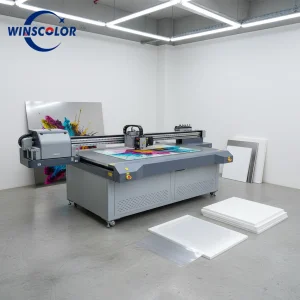
Beyond drinkware, NTEK rotary and hybrid flatbed machines seamlessly process industrial aluminum containers, aerosol canisters, candle jars, luxury cosmetic jars, and promotional writing instruments. Rapid-interchange pneumatic mandrels enable retooling between 45mm diameter cosmetic tubes and 180mm wide growlers in under five minutes, eliminating idle production line capacity.
International certification frameworks and worldwide remote-plus-local technical commissioning architectures.
Fully compliant with 2006/42/EC, Low Voltage Directive 2014/35/EU, and EMC 2014/30/EU. Integrated dual-channel safety relays, e-stops, and UV-shielding interlocks.
Non-contact external decoration compliant with FDA 21 CFR 175.300 and Swiss Ordinance SR 817.023.21 standards, ensuring no volatile photoinitiator migration into interior contents.
Pre-commissioned export crating with moisture-barrier barrier foil, nitrogen-shock monitoring, and sea-freight reinforced anchoring to guarantee calibration integrity upon arrival.
Cloud-based diagnostic links enable NTEK factory engineers in Jinan to analyze motion control logs, waveform timing, and optical sensors in real-time, backed by local hub spare parts inventory.
To ensure smooth installation for international buyers, every machine ships with calibrated color profiles (ICC profiles) customized for various drinkware substrates and white/varnish curing intensities. In-depth operator video curricula, factory FAT (Factory Acceptance Test) video validation protocols, and comprehensive English documentation facilitate fast training of floor operators in under three shifts.
Comprehensive engineering responses addressing common procurement, technical, and operational questions.
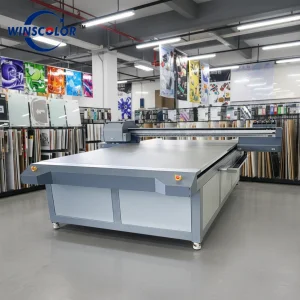
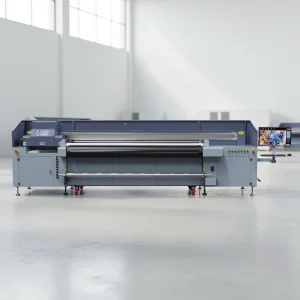
Expand production capability with wide-format flatbeds, multi-function packaging printers, and hybrid web/rigid platforms.