Engineered for high-yield industrial fabrication across rigid packaging, decorative components, acrylics, and structural media.
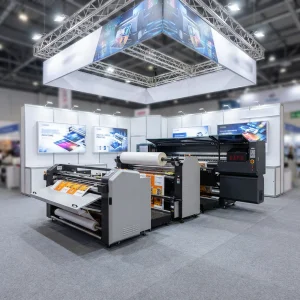
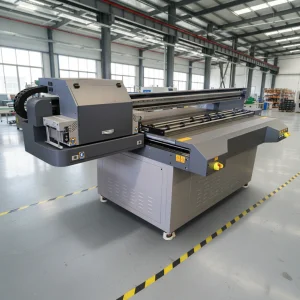
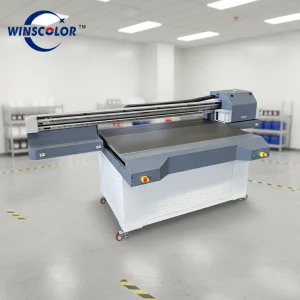
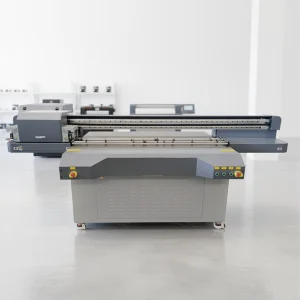
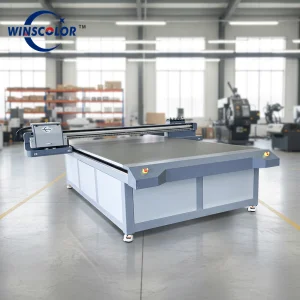
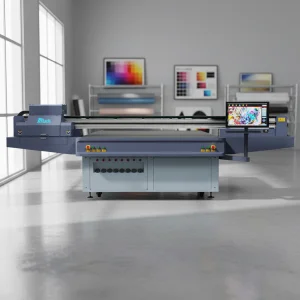
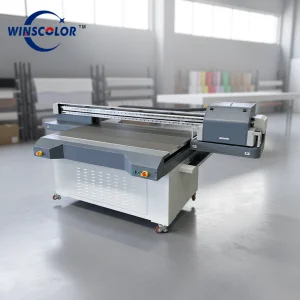
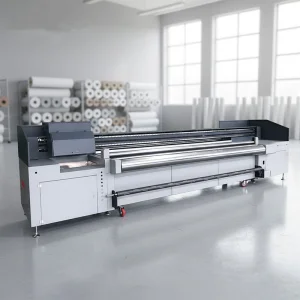
The transition from analog screen systems to intelligent micro-format digital printers is transforming supply chains worldwide.
Global supply chain volatility has accelerated near-shore and decentralized localized production. Small flatbed UV units (such as 600×900mm and 1600×1000mm platforms) allow contract manufacturers and commercial printers to execute ultra-short runs without tooling costs, plate fabrication, or setup-induced material loss.
Strict volatile organic compound (VOC) limitations across the European Union (RoHS/REACH) and North America have effectively marginalized traditional solvent-based printing systems. Contemporary small flatbed printers harness low-temperature UV-LED curing engines, slashing power consumption by up to 65% compared to mercury lamps.
Market expectation has migrated beyond planar color reproduction toward haptic differentiation. Multilayer deposition architectures allow micro-piezo assemblies to print selective primer, dense opaque white barriers, structural matte patterns, and glossy embossed 3D finishes in a synchronized single-pass workflow.
A rigorous examination of core engineering parameters defining true industrial small-format flatbed printers.
Equipped with industrial drop-on-demand printheads (such as Ricoh Gen6 and precision Epson i3200 channels), our assemblies fire dynamic droplets ranging from 2.5 to 12 picoliters. Multi-level grayscale firing delivers micro-text legibility and continuous-tone transitions across complex imagery.
Built upon a milled, double-beam aircraft-grade aluminum gantry and dual THK/Hiwin linear guideways. Combined with closed-loop AC servo drivers, this kinematic arrangement mitigates lateral deflection and micro-chatter, securing micron-level drop placement across the entire bed envelope.
Industrial secondary ink reservoirs monitored by automated digital negative pressure systems. This fluidic architecture eliminates nozzle drops, air entrapment, and cavitation during high-speed printing, paired with constant white ink agitation to stop TiO2 pigment sedimentation.
Calibrated physical pre-treatments, ink chemistry, and curing protocols across disparate industrial media.
| Substrate Group | Recommended Model | Pre-Treatment / Ink System | Curing & Process Metrics | Typical Industrial End-Use |
|---|---|---|---|---|
| Rigid Glass & Vitrified Tile | YC1610H / YC2030H | Silane coupling primer + UV-curable rigid ink | Dual UV-LED 8–14 W/cm², surface tension 38–44 dyn/cm | Architectural splashbacks, art glass, sanitary surfaces |
| Anodized Aluminum & Dibond | YC1610 / YC2513L | Direct drop adhesion, optional solvent wipe | Immediate pin cure + high-dose post cure | Industrial rating plates, control panels, instrumentation |
| Polycarbonate & Acrylic | YC6090 / 1610 Series | Standard multi-layer white underbase | Low-temperature LED curing (avoids heat deformation) | HMI overlays, luxury cosmetics, illuminated signage |
| Corrugated & Honeycomb Board | RS1900-E16 / Single-Pass | High-permeability water-based or UV flex ink | High-speed belt transport with suction hold-down | Custom structural packaging, rapid-turnaround displays |
| Cylindrical Drinkware & Bottles | 1610 Rotary Unit | Rotational multi-axis synchronizer + flame primer | 360-degree seamless helical or stepped printing | Personalized drinkware, cosmetic bottles, metal cans |
Discover our dedicated export series covering dual-mode roll-to-roll, hybrid roll conveyances, and wide-bed units.
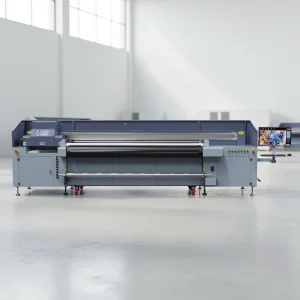
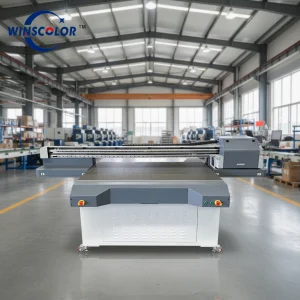
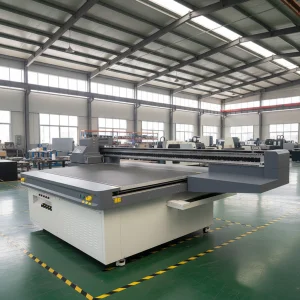
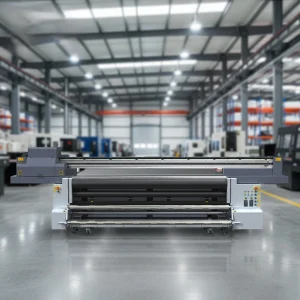

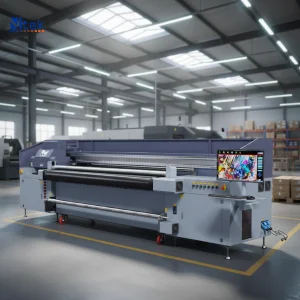
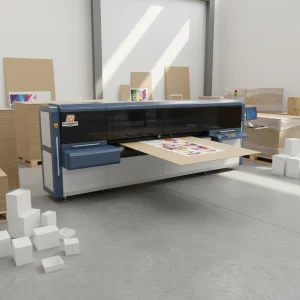
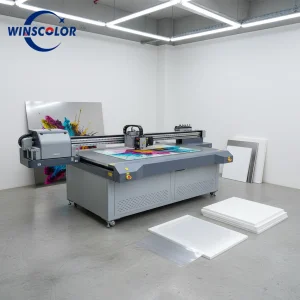
Stringent factory verification processes ensure stable industrial performance upon delivery.
Prior to export crating, every small and mid-format flatbed runs non-stop mechanical stress routines, continuous negative pressure monitoring, and full-bed test pattern verification to prevent dead nozzles or optical banding.
Precision electronics, linear scales, and glass printhead arrays are sealed in vacuum barrier foil with desiccant systems, protected by heavy-duty steel-braced plywood crating designed to withstand long ocean transits.
All machinery conforms to CE Machinery Directives (2006/42/EC), Low Voltage Directives, and EMC compatibility tests. Electrical architectures leverage UL-certified wiring, safety lockouts, and emergency-stop interlocks.
Critical engineering considerations compiled for OEM buyers, plant supervisors, and production managers.
