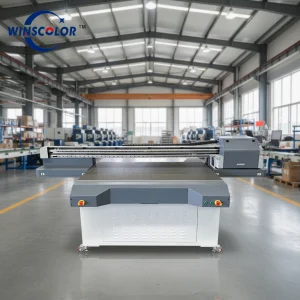
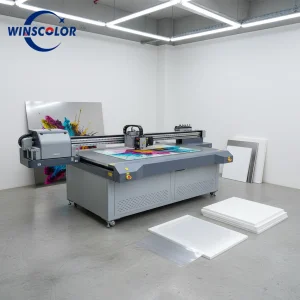
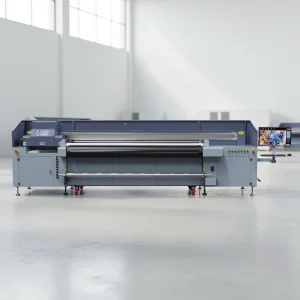
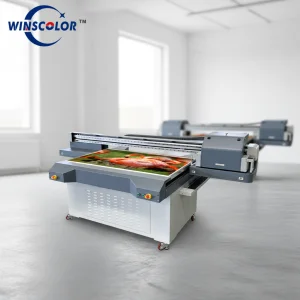
Engineered for continuous industrial cycles across structural woods, architectural ceramics, composite acrylics, and metal sheets.
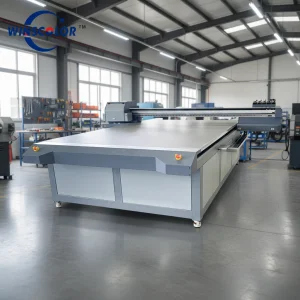
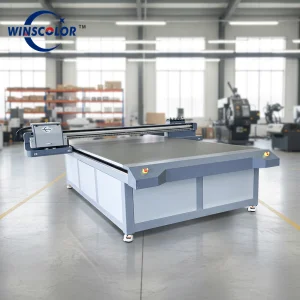
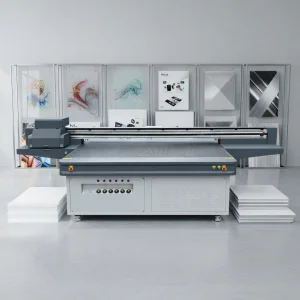
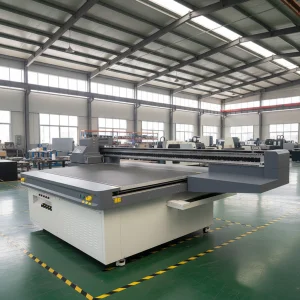
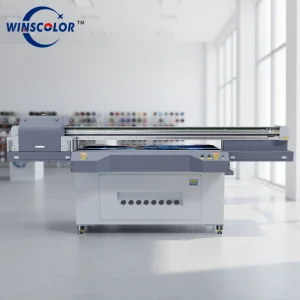
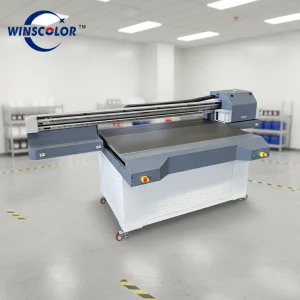
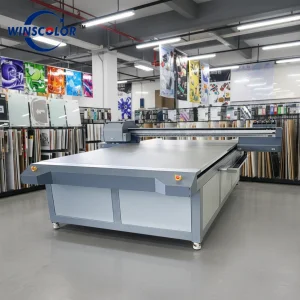
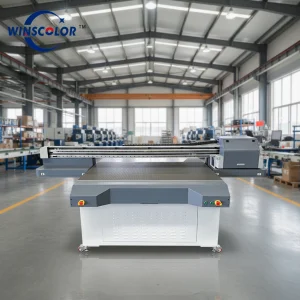
Analyzing the mechanical synchronization, fluid dynamics, and motion control kinematics behind modern dual-capability printing engines.
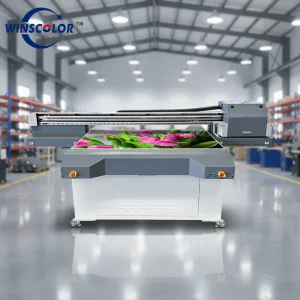
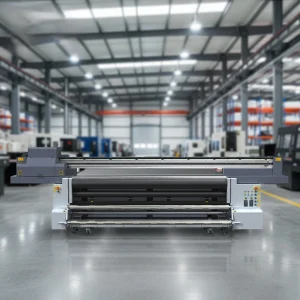
In the evolving industrial wide-format landscape, hybrid UV printing machines represent the convergence of rigid flatbed engineering and dynamic web-fed roll-to-roll mechanics. Unlike dedicated flatbed systems constrained strictly to stationary sheet vacuum beds, or dedicated roll systems limited to flexible roll tensioning, a true industrial hybrid leverages an integrated conveyor vacuum belt synchronized with micro-stepper or magnetic linear feed drives. This mechanical cohesion enables automated transition between high-thickness rigid sheets (up to 50 mm acrylics, composite metals, honeycomb wood) and continuous flexible media (corrugated stock, roll vinyl, backlit textiles) without gantry misalignment.
At the center of high-performance hybrid output is the droplet-on-demand piezo printhead assembly, featuring Ricoh Gen6 or Kyocera KJ4A industrial printhead arrays. Firing native droplets as fine as 5 picoliters across grayscale ranges up to 18 picoliters, these multi-channel carriage systems utilize dual negative-pressure ink delivery circuits. White ink channels benefit from autonomous continuous mechanical recirculation spanning the sub-tank down through the nozzle manifold, eliminating titanium dioxide settling, micro-channel sedimentation, and subsequent nozzle deflections during multi-hour high-speed production shifts.
Equipped with dual precision optical linear encoders and Japanese THK dual-rail linear guides, ensuring microscopic stepping fidelity along the X and Y axes under full payload capacities.
Variable output water-cooled LED UV curing lamps allow independent energy modulation (395nm wavelength) to control ink dot gain, prevent substrate heat warping, and cross-link oligomers instantly.
Segmented multi-chamber vacuum zoning dynamically channels downforce along the media width, preventing cockling of lightweight films and securing heavy acrylic plates.
How Jinan’s advanced precision engineering cluster delivers unprecedented structural rigidity, modular customization, and cost performance.
The manufacturing epicenters of Jinan and Shandong province have evolved into a vertically integrated global hub for industrial digital printing systems. Chinese hybrid printing machine builders do not merely act as assembly houses; they command an extensive ecosystem encompassing heavy-machining foundry operations, robotic gantry stress-annealing, high-frequency electrical harness fabrication, and direct-tie partnerships with global component suppliers (including Japanese piezo head manufacturers, German IGUS cable track systems, and Schneider industrial power switchgear).
Because the fundamental structural foundation of any wide-format printer dictates registration stability across years of vibration, leading Chinese manufacturers utilize 80mm heavy-duty whole-steel welded frames that undergo precision heat treatment and five-axis CNC bridge milling in a single setup. This internal tooling infrastructure eliminates gantry sagging and parallel deviation, allowing industrial print shops in North America, Western Europe, and Latin America to access equipment that achieves identical micron tolerances to legacy European manufacturers at a competitive capital acquisition expenditure.
| Evaluation Parameter | Tier-1 China Factory Hybrid (e.g., Winscolor / NTEK) | Legacy Western Brand Alternative |
|---|---|---|
| Frame Fabrication | Integrated CNC milled tubular steel; dual 200°C stress relief annealing | Modular extruded aluminium chassis or cast sub-frames |
| Print Engine Architecture | Ricoh Gen6 / Gen5 / Kyocera Piezo; variable drop 5–18 pl | Proprietary closed-firmware printhead cartridges |
| Ink Chemistry Openness | Open RFID-free architecture; wide OEM viscosity latitude | Strict RFID cartridge lockout; 3x consumable price markup |
| Maintenance & Spares Lead Time | Global express dispatch (3-5 days); non-proprietary electronic boards | Localized distributor dependent; long back-order delays |
| Total Cost of Ownership (5-Year) | Low amortization; predictable consumable & head replacement costs | High recurring license, service contract, and vendor lock-in costs |
Navigating global electrical safety directives, emission protocols, and rapid local technical service integration.
Engineered to meet 2006/42/EC Machinery Directives and 2014/35/EU Low Voltage safety mandates, incorporating redundant dual-channel safety loops, CE-certified optoelectronic guards, and automatic carriage anti-collision sensors.
For installations throughout the United States and Canada, power distribution cabinets are configured with UL-listed circuit breakers, NFPA 79 industrial machinery electrical safety standards, and ground isolation filters.
Supplied UV inks and machine coatings undergo strict third-party lab testing verifying non-detectable levels of heavy metals, phthalates, and restricted chemical compounds in accordance with EU Directive 2015/863.
A critical consideration for multinational enterprise procurement departments is localized service delivery. Leading printing machinery manufacturers implement a tier-based support model combining factory-direct video telemetry diagnostics, local third-party mechanical integration partners, and centralized regional spare parts hubs located in the EU, North America, and the GCC region. Remote engineering teams can interface directly with the machine’s PLC control layer via encrypted VPN connections to adjust servo motor gain values, calibrate printhead voltage waveforms, and diagnose optical encoder feedback anomalies in real time.
From architectural cladding to plate-free packaging, discover how hybrid machinery drives bottom-line profitability.
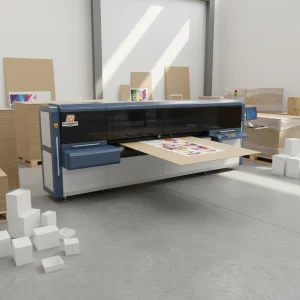
Plate-free printing on micro-flute, double-wall corrugated, and honeycomb display board. Eliminates expensive flexo platemaking for on-demand e-commerce packaging, customized shipping cartons, and retail POP dump bins.
Direct jetting onto architectural partitions, ceramic backsplashes, and wall tiles. Utilizing dedicated chemical adhesion promoters and high-gloss 3D tactile varnish passes, prints achieve Class 0 cross-hatch adhesion and scratch resistance.
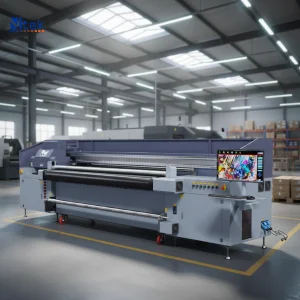
Transition seamlessly from rigid sheet production to continuous roll printing of backlit vinyl, blockout PVC banners, synthetic leather upholstery, and acoustic fabrics using motorized tension unwinding and pneumatic dancer rollers.
Key evolutionary leaps defining print efficiency, artificial intelligence integration, and sustainability through 2030.
Integration of high-speed line scan cameras over the output belt. On-the-fly optical inspection algorithms detect missing nozzles or substrate skew, automatically applying adjacent nozzle substitution without human operator intervention.
Advancements in photoinitiator sensitivity allow full polymer cross-linking at reduced irradiance levels (down to 1.8 W/cm²). This dramatically cuts facility electrical consumption while enabling distortion-free printing on ultra-thin 0.2mm thermal films.
Bridging traditional multi-pass scanning carriages with fixed-head single-pass printing arrays. Hybrid conveyors equipped with static full-width print bars reach linear processing speeds exceeding 50 meters per minute for high-volume carton box production.
In-depth responses authored by application engineers regarding machine lifecycle, priming chemistry, and operating expenditures.
Discover high-capacity continuous web engines, road-sign platforms, and plate-free automated carton box printing machinery.