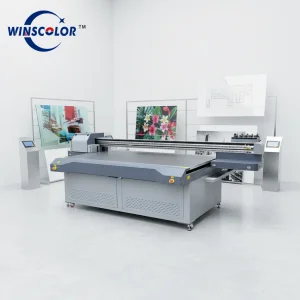
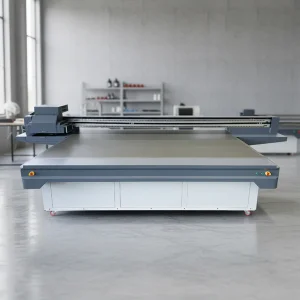
Explore our flagship printing machinery built for glass bottles, rigid holloware, promotional cylindrical items, and large format architectural glass processing.
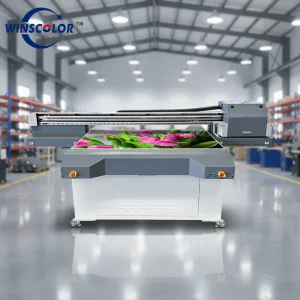
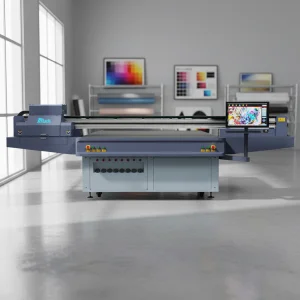
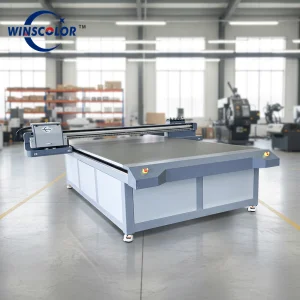
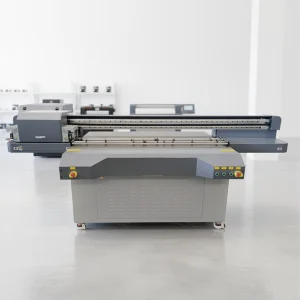
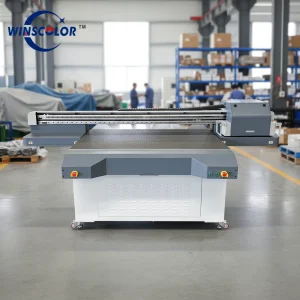

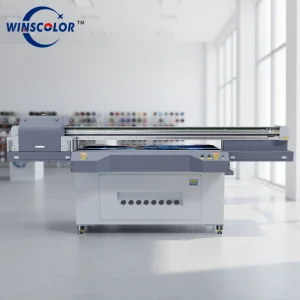
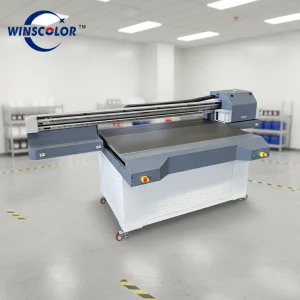
Analyzing the worldwide transition from analog ceramic screen printing and pressure-sensitive labeling to agile, non-contact Direct-to-Shape (DTS) digital UV inkjet automation.
Conventional glass bottle decoration has historically depended on rotary silk screen printing and applied ceramic decals requiring high-energy firing kilns exceeding 600°C. In the contemporary manufacturing context, high setup expenses, prolonged tooling turnaround times (often 10–14 days for color separation screens), and toxic solvent emissions have rendered analog methodology economically unviable for customized, medium, and short production runs.
Digital UV inkjet printing on hollow glass bodies enables native multi-layer printing—including micro-adhesion primers, high-opacity blocking white ink, rich full-gamut CMYK + LcLm process colors, and tactile haptic gloss varnish—in a unified single-station pass. Glass packaging decorators achieve immediate production turnaround, producing zero-waste proofs and on-demand batches without minimum order constraints (MOQs).
Escalating geopolitical regulatory frameworks—including EU Packaging and Packaging Waste Directives (PPWD) and US FDA sustainable packaging mandates—penalize non-recyclable multi-material adhesive labels and composite plastic shrink sleeves. Direct digital printing applies inert, ultra-thin polymer films (less than 25 microns) directly to glass containers, facilitating effortless closed-loop optical cullet sorting and glass cullet remelting.
Engineered in our 20,000 m² Jinan intelligent manufacturing plant, Winscolor (Yingcai / NTEK) printers integrate industrial-grade motion controllers and specialized fluidics to conquer non-porous glass dynamics.
Equipped with genuine Ricoh Gen6 and precision industrial micro-piezo printheads operating at firing frequencies up to 50 kHz. Utilizing multi-level grayscale drop-on-demand (DoD) waveform modulation (5pl to 15pl), our print engines maintain precise drop trajectory across variable flight distances up to 8mm, neutralizing optical distortion caused by standard draft angles and glass surface variations.
Equipped with proprietary zero-backlash harmonic drive reducers and high-torque AC servo synchronization, our rotary chuck fixtures rotate bottles seamlessly. Real-time encoder feedback compensates dynamically for cylindrical eccentricity, conical tapers, oval cross-sections, and raised mould seams, eliminating banding artifacts and seam overlap defects.
Inorganic glass lacks surface porosity, demanding precise chemical interaction. Our hardware features an active negative pressure recirculation circuit preventing titanium dioxide pigment precipitation in white ink channels. Dual narrow-band (395nm / 365nm) UV-LED irradiation units deliver progressive pin-curing followed by complete bulk polymerization without thermal glass stress.
Where industrial packaging decoration is heading over the next decade: The convergence of automated vision tracking, ultra-high-build 3D tactile finishes, and circular-compliant ink chemistry.
Spurred by anti-counterfeiting compliance and hyper-localized marketing campaigns, beverage brands demand unique alphanumeric serialization, individualized QR codes, and variable graphic elements printed directly onto every bottle. Digital glass printing achieves this with zero latency, reading dynamic database feeds in real time during continuous in-line rotation.
Luxury packaging increasingly relies on tactile consumer engagement. Advanced digital inkjet systems apply selective high-build UV varnish channels to mimic heavy glass embossing, custom fluting, braille lettering, and frosted matte-against-gloss contrasts without investing $15,000+ into bespoke steel glass-blowing moulds.
The future of glass bottle printing lies in autonomous production cells. Integrating 6-axis SCARA or articulated robotic loading arms, optical orientation sensors detecting glass bottle mould seams, and AI-driven automated optical inspection (AOI) guarantees 24/7 unmanned operation with real-time nozzle drop defect detection.
Engineered to accommodate diverse bottle geometries, surface coatings, and thermal stress tolerances across mission-critical packaging sectors.
Direct printing across complex heavy-base bottles, tapered neck structures, and dark glass flint surfaces. Eliminates paper label bubbling during refrigeration and ice-bucket immersion tests.
Micro-droplet photographic precision for ultra-fine cosmetic branding. Directly jets high-density gradient opacities onto frosted, mirrored, lacquered, or transparent perfume flacons.
Tailored for agile regional microbreweries demanding high-speed seasonal SKU changes, customized promotional batches, and rapid turnaround for returnable crown-cork bottles.
Permanent variable printing of GS1 DataMatrix barcodes, expiration timestamps, and graduated milliliter scales onto borosilicate glass tubes, medicine vials, and laboratory glassware.
Full 360-degree seamless wraps around large-diameter scented candle containers, crystal diffusers, and luxury homeware glassware featuring thermal and heat-radiant resilience.
Glass has high surface energy and extreme hydrophilicity. Achieving industrial-grade cross-hatch bonding requires a chemically coherent, end-to-end processing ecosystem.
Freshly formed glass containers carry lubricants, silicone mould release greases, and atmospheric water films. Our pre-treatment stations incorporate robotic gas flame burners or Pyrosil silicate chemical flame deposition, elevating glass surface wettability past 52 dynes/cm for spontaneous droplet wetting.
Winscolor digital printing systems provide automated wiping or digital jetting of organofunctional silane primers. The chemical mechanism forms covalent silicon-oxygen-silicon (Si-O-Si) bonds directly to the silicon dioxide lattice of the glass, creating an unyielding chemical bridge to the cured organic acrylate polymers.
Standard LED UV exposure instantly pins inks into place. For severe industrial environments—such as pasteurization, perfume immersion, or chemical caustic washing—our turnkey installations provide optional infrared (IR) or convective thermal tunnel post-baking (140°C–160°C) to maximize cross-linking polymer density.
In-depth technical answers addressing ink adhesion chemistry, mechanical conical compensation, washability standards, and operational economics.
Broaden your production floor capabilities with our complete portfolio of hybrid, single-pass, packaging carton, and flatbed rotary UV equipment.