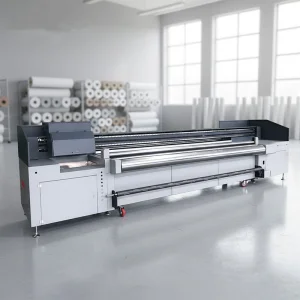
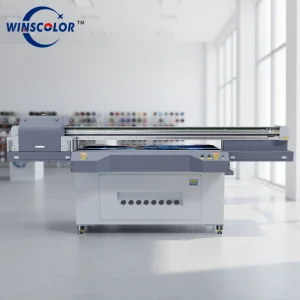
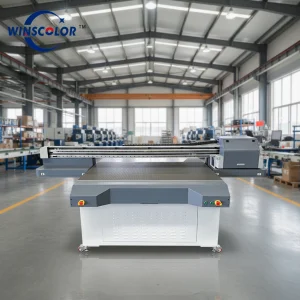
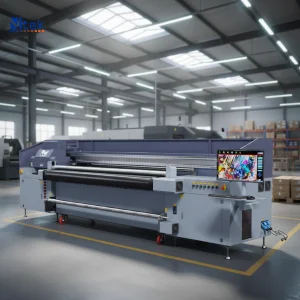
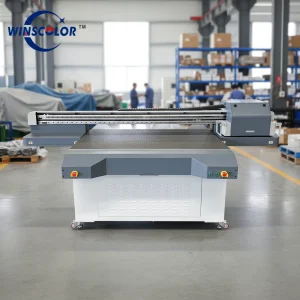
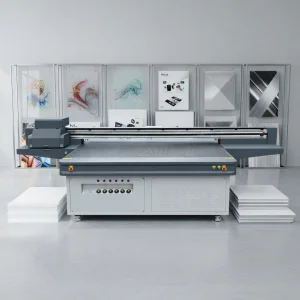
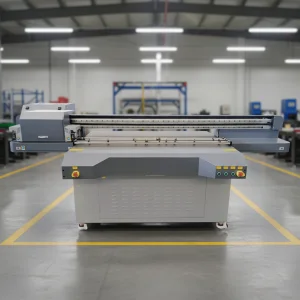
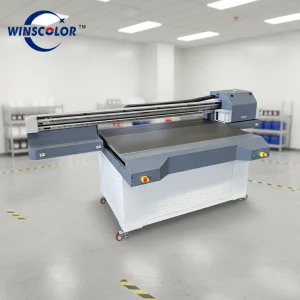
Explore our flagship configurations engineered for high throughput, micron-level dot placement, and diverse substrate adhesion across rigid and specialized cylinder matrices.
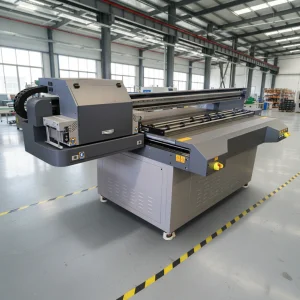
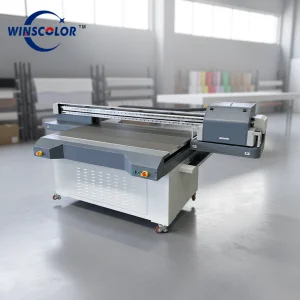

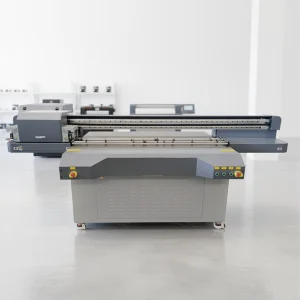
Strategic analysis of macroeconomic factors, unit-cost curves, and technology-readiness frameworks governing UV inkjet machinery investment across North America, EMEA, and APAC.
Global original equipment purchasers are systematically abandoning thermal and solvent equipment. Market demands prioritize instant photochemical polymerization, allowing zero outgassing periods, instant secondary mechanical processing (routing, folding, cutting), and ultra-low VOC ratings complying with strict environmental mandates.
Modern capital expenditure decisions emphasize lifecycle costs rather than pure nominal machinery purchase rates. UV LED systems drastically decrease electric consumption compared to mercury vapor lamps, reducing power draws by up to 65% while operating cold enough to preserve heat-sensitive media.
The global shift toward high-mix low-volume (HMLV) batches dictates that equipment must handle frequent artwork adjustments without physical setup downtime. Digital UV machines bridge industrial packaging needs with customized single-unit luxury output effortlessly.
Addressing chemical surface tension challenges, micro-crack prevention, and thermodynamic stabilization across diverse engineering media.
Direct jetting on non-porous vitreous surfaces requires rigorous surface tension control. Integrated nanometer-scale silane coupling agent primers, applied either via automated print channels or corona treatment, generate stable molecular covalent bonds between inorganic glass matrices and organic UV pigments.
Prevents flaking during harsh environmental exposures, freeze-thaw cycles, and high-humidity interior installations like bathroom splashbacks.
High-speed synchronized rotary axis mechanisms overcome peripheral velocity differential issues. Tailored algorithms maintain constant circumferential droplet targeting on tapered tumblers, aluminum cans, and cosmetic bottles without oblong distortion or satellite misting.
Equipped with 360-degree seamless seam blending software algorithms for photorealistic continuous visuals and spot white underbase opacity.
Eliminating plate setup expenditures empowers converters to execute small-to-medium runs on corrugated kraft, bleached carton, and honeycomb board profitably. Multi-zone variable vacuum tables keep irregular boards perfectly flattened, preventing carriage collisions.
Fast-drying LED formulations enable immediate folding, slitting, and structural assembly without cracking at high-stress score lines.
Strategic technological milestones advancing high-frequency drop ejection, automated optical monitoring, and dynamic photon density controls.
Transitioning from mechanical timing belts to ironless linear magnetic motors, cutting gantry micro-vibrations to guarantee positional accuracy within ±0.002 mm across super-wide formats.
Direct through-the-nozzle redeposition prevents heavy white titanium dioxide (TiO₂) particles from sedimenting, eradicating nozzle blockage during long industrial standby periods.
Sub-millisecond localized LED dosage modulation allows precise control over droplet dot gain before complete downstream curing, perfecting high-gloss versus textured matte micro-finishes.
High-resolution in-line machine vision scanners analyze target test patches real-time, automatically mapping adjacent healthy nozzles to cover deflection or clogging anomalies without user delay.
Eliminating international procurement risk with rigorous factory acceptance testing, worldwide electrical certifications, and tier-1 SLA uptime guarantees.
All industrial equipment builds adhere stringently to European CE Machinery Directives (MD 2006/42/EC) and Low Voltage Directives (LVD 2014/35/EU). Control cabinets integrate certified UL508A-compliant safety interlocks and emergency loop relays suitable for North American markets.
Our UV inks meet RoHS 2.0 restrictions and REACH SVHC criteria, verifying heavy-metal-free operation for consumer-facing goods.
To eliminate expensive factory downtime, we maintain an established network of certified service technicians alongside responsive direct-factory technical groups. Using cloud-connected PLC telemetry, our technicians diagnose sub-system voltage, head temperature, and negative pressure drift remotely within minutes.
Express overseas supply channels guarantee core critical spare delivery—such as pumps, boards, and encoders—within rapid 72-hour windows.
Prior to crating in vacuum-sealed anti-corrosion barrier packaging, each chassis completes an unbroken 72-hour stress-test printing cycle. Customers receive custom media test documentation certifying delta-E color consistency, adhesion tape cross-hatch scores, and micrometer-checked bed level tolerances.
Includes complete high-resolution video documentation verifying machine precision on client-supplied unique materials.
In-depth insights addressing primary technical, workflow, and chemistry questions posed by facility procurement teams.
Ricoh Gen6 (MH5320) printheads feature a reduced minimum drop size of 5 pL (down from Gen5's 7 pL), and an increased jetting frequency of up to 50 kHz compared to 30 kHz. This enables up to 35% higher linear print speeds while achieving noticeably cleaner edge definitions, reduced graininess in flesh tones, and tighter micro-text precision.
Polypropylene (PP) and high-density polyethylene (HDPE) typically feature low dyne levels (<32 dynes/cm), making direct wetting difficult. We utilize specialized UV LED ink sets combined with in-line pyrosil flaming, atmospheric plasma treatment, or dedicated chemical adhesion promoters to elevate surface energy above 44 dynes/cm, preventing peeling.
White ink utilizes titanium dioxide pigments which are significantly denser than standard organic colored pigments. Dual negative pressure systems decouple the white and varnish vacuum channels from the CMYK lines, allowing dedicated pressure calibration that prevents white nozzle droop or color starvation during high-speed multi-layer deposition.
Industrial UV flatbeds operate optimally within temperatures of 20°C to 28°C (68°F to 82°F) and a non-condensing relative humidity between 40% and 60%. Fluctuations beyond these thresholds shift ink viscosity, triggering nozzle deflection, meniscus disruption, or electrostatic charge buildup that leads to ink spray defects.
Heavy-duty, high-volume production machines spanning wide-format dual-mode configurations, roll-to-roll continuous hybrid belts, and heavy substrate tables.