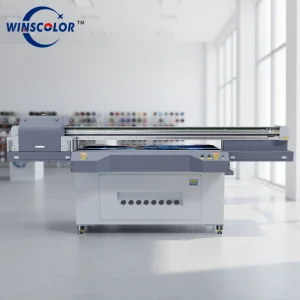
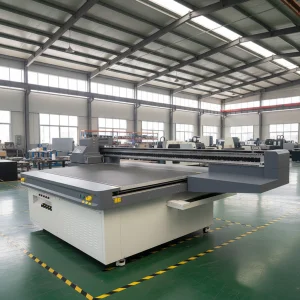
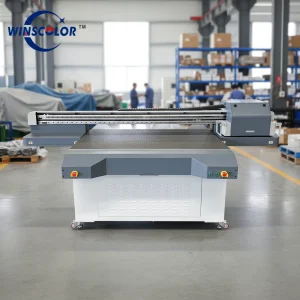
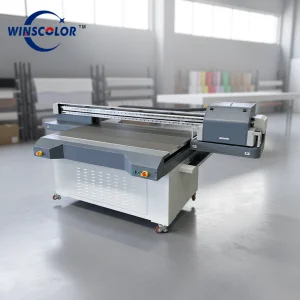
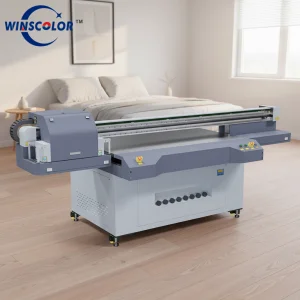
Direct from certified manufacturing facilities: heavy-duty industrial vacuum beds, linear motor gantries, and variable drop-on-demand Ricoh piezoelectric print engines configured for dense non-porous glass substrates.
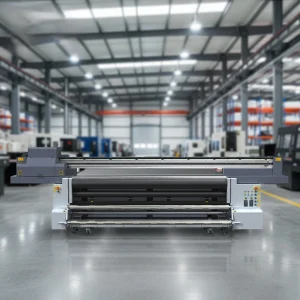
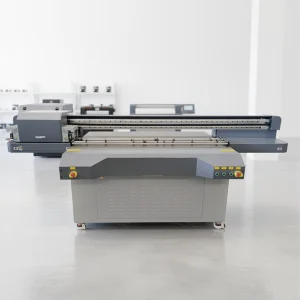
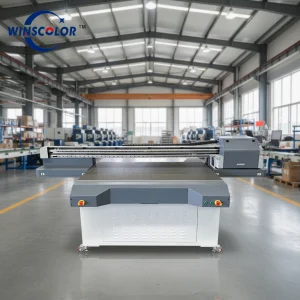

Analyzing the worldwide shift from screen printing setups to high-definition digital UV flatbeds across architectural glass fabrication, automotive glazing, and appliance touch panels.
The global flat glass and specialized glass processing industry is undergoing a structural transformation. For decades, traditional screen printing dominated industrial glass processing. While screen printing provides dense layer coverage, its prohibitive setup costs, high plate-making labor, inventory overhead for screens, and chemical effluent challenges make short-to-medium runs economically unviable. Modern architectural requirements, on-demand interior decor customization, and localized smart appliance glass manufacturing demand agile digital inkjet production.
A specialized UV glass printing machine operates as a drop-on-demand (DOD) piezo system specifically designed to overcome the intrinsic physics of glass substrates: high surface energy variation, microscopic non-porosity, extreme mechanical weight, and thermal dimensional stability. Top-tier exporters and equipment companies are recognized not merely for assembling inkjet components, but for mastering mechanical rigidity, sub-micron droplet placement, and integrated surface chemical tension handling.
Glass is notoriously challenging for standard digital printers due to its ultra-smooth, non-absorbent, and chemically inert surface. Leading UV glass printing equipment manufacturers solve this through three tightly coupled engineering layers:
How Chinese industrial equipment manufacturing clusters deliver unmatched price-to-performance ratios, rapid lead times, and rigorous industrial quality assurance for global importers.
Industrial UV machines engineered in manufacturing epicenters like Jinan utilize multi-axis CNC gantry milling centers to machine 5-meter aircraft-grade aluminum beams in a single pass. This eliminates micro-twisting and structural deflection, ensuring repeatable registration across decades of service life.
Chinese OEM/ODM manufacturing leaders do not compromise on key motion components. Systems incorporate Japanese THK silent linear guide rails, German Igus energy chains, Japanese Omron optical sensors, and Panasonic or Yaskawa AC servo drives, delivering Western European precision at competitive capital expenditure.
China's centralized industrial supply clusters facilitate immediate sourcing of UV-curable inks, specialty adhesion primers, customized vacuum pumps, RIP software algorithms (such as Onyx, Caldera, and Photoprint), and spare parts, slashing international delivery lead times from months down to 10–18 business days.
| Evaluation Parameter | Leading Chinese UV Exporters | Traditional Screen Printing Lines | European Competitors (Direct Equivalent) |
|---|---|---|---|
| Initial Capital Outlay (CAPEX) | Highly Competitive (Fast ROI in 6-12 Months) | Moderate Machine Cost, High Screen Tooling | 2.5× to 4× Higher Capital Investment |
| Setup Time per Glass Run | < 3 Minutes (Direct Digital File RIP) | 2 to 5 Hours (Mesh Prep, Inking, Burn-in) | < 3 Minutes (Direct Digital File RIP) |
| Printhead Technology | Ricoh Gen6 / Gen5i / Konica Minolta 1024i | Mesh Squeegee Blade (Physical Contact) | Ricoh Gen6 / Kyocera KJ4A Series |
| Adhesion Reliability | 5B (ASTM D3359) with In-line Nano-Primer | High (Ceramic Frit Requires Kiln Baking) | 5B (ASTM D3359) with Specialized Primer |
| Spare Parts Availability | Express Global Courier (3 to 7 Days Delivery) | Local Tooling / Custom Fabrication | Standard Global Logistics (Often High Markup) |
From architectural curtain walls to high-end home appliance touch control panels, explore where commercial-grade digital flatbed printers generate maximum value.
Printing UV-stable exterior inorganic pigments and ceramic frit substitutes on architectural laminated glass. Provides solar shading dots, privacy gradients, and monumental architectural art.
High-opacity multi-pass white printing for induction cooktop surrounds, tempered refrigerator door panels, smart microwave fascias, and kitchen splashbacks resilient to steam and grease.
Textured frosted glass aesthetics and double-sided visual effects (Color + White + Color sandwich printing). Allows translucent partition designs without expensive acid-etching baths.
Replicating oil paintings, stained glass restorations, and tactile reliefs using spot clear varnish built up in successive passes to create tangible 3D textures on tempered float glass.
Strategic guidance for plant managers, procurement directors, and industrial engineers evaluating high-precision digital glass printing equipment from global exporters.
As industrial automation deepens, UV glass printer manufacturers are rapidly transitioning from standalone manual flatbed machines toward fully integrated lights-out robotic lines. Sourcing teams should monitor three pivotal engineering evolutions:
When selecting a factory supplier or exporter, calculating the true Total Cost of Ownership involves more than the initial FOB machine price. A sound procurement equation balances:
TCO = Machine Acquisition + [Ink Consumption per m² × Total Output] + [Printhead Replacement Lifecycle Depreciation] + Maintenance SLA Downtime Cost
Industrial Ricoh Gen6 stainless steel printheads provide exceptional longevity (2.5 to 3.5 years when maintained with certified low-viscosity UV glass inks). Coupled with automated positive and negative pressure self-purging systems, scrap ink loss during daily startup is reduced by over 65% compared to entry-level piezo architectures.
Engineering clarity addressing operational durability, chemical adhesion, maintenance overhead, and international logistics standards.
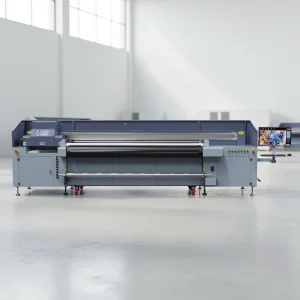
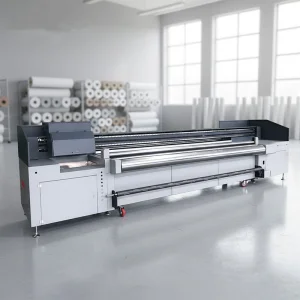
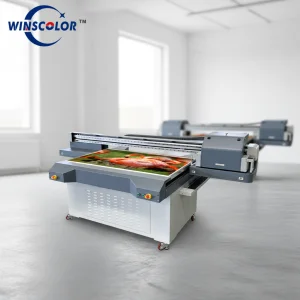
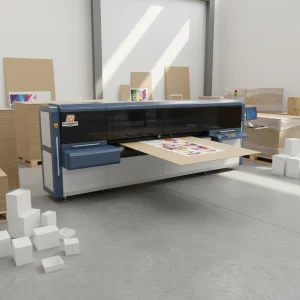
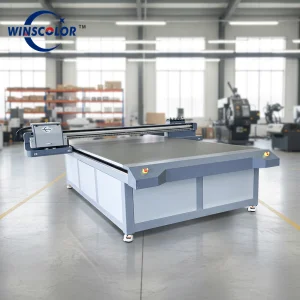
Complete factory lineup including high-speed digital single-pass carton systems, large-format hybrid rollers, and multi-functional flatbed printers exported worldwide.
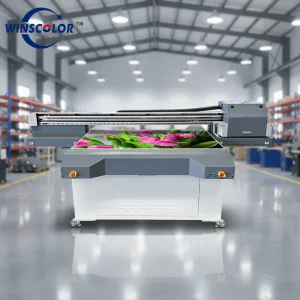

Connect with Senior Applications Engineers to calculate hourly output per square meter, verify customized vacuum bed configurations, or request glass sample testing with in-line silane priming protocols.
