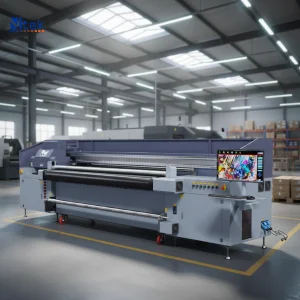
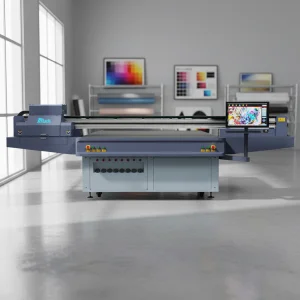
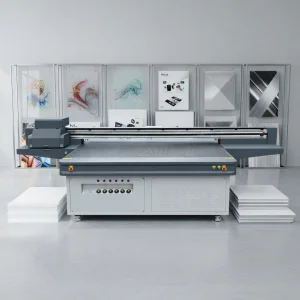
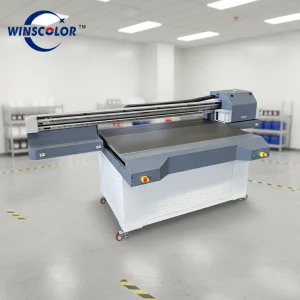
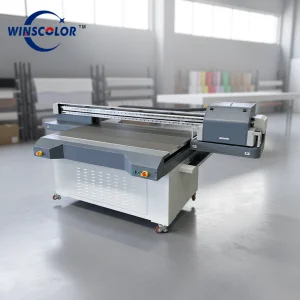
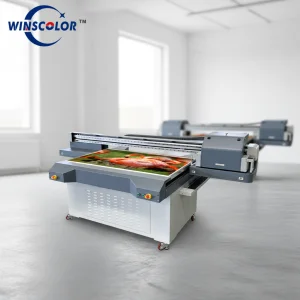
Engineered for high-volume float glass, laminated panels, and ceramic glazing. Verified configurations direct from Jinan Yingcai Digital Technology (Winscolor/NTEK).
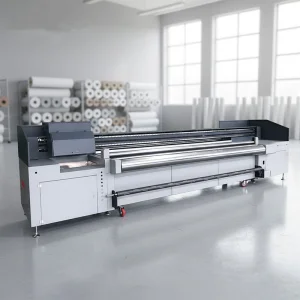
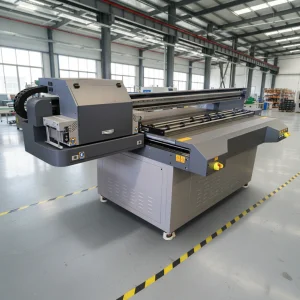

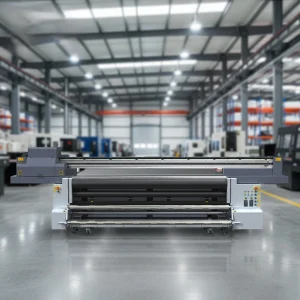
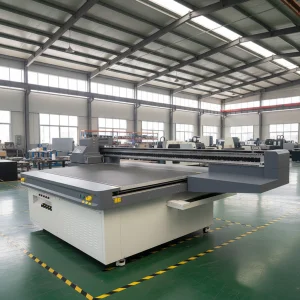
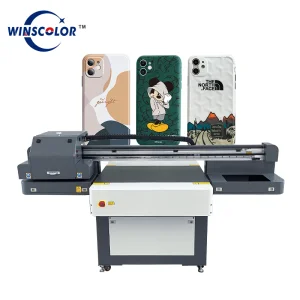
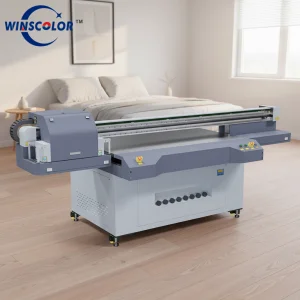

Analyzing the irreversible structural transition from analog screen printing frames to Drop-on-Demand (DoD) piezo flatbed digital glass manufacturing systems.
Traditional silk screen printing mandates complex photochemical mesh exposure, ink emulsion reclaim cycles, and heavy storage overhead for multi-color screen frames. Digital glass flatbeds eliminate 100% of physical tooling, enabling dynamic file spooling from raster image processors (RIP) directly to glass sheets with zero makeready scrap.
Modern architectural facades, insulated glass units (IGUs), and customized interior monolithic partitions require rapid SKU iteration. Digital jetting allows each consecutive 3.2m x 2.0m sheet to possess unique variable-data graphics, solar-shading gradient densities, or structural registration marks without pausing the gantry.
Stringent European REACH, RoHS, and US EPA emissions protocols heavily penalize volatile organic compounds (VOCs) and hazardous screen-wash solvents. Advanced UV-LED flatbeds and inorganic water-based ceramic frit digital printers operate at near-zero VOC thresholds, drastically cutting corporate carbon footprints.
Exacting mechanical engineering designed to handle multi-ton monolithic float glass while maintaining sub-micron droplet firing accuracy.
Unlike standard signage flatbeds that utilize lightweight extruded aluminum beams, industrial digital glass flatbed printers utilize heavy-gauge structural box-tube steel gantries that undergo thermal stress-relieving annealing cycles. Mounted with dual Japanese THK or Taiwanese HIWIN ultra-quiet linear guide rails and dual AC servo motors, the system suppresses high-frequency harmonics during high-acceleration travel (up to 1.5 m/s²), completely preventing dot positional jitter and lateral stepping bandings.
Inorganic ceramic frits and white UV pigments have higher specific gravities, leading to severe nozzle sedimentation if stagnant. Our print engines feature continuous micro-fluidic ink recirculation through the backplane of the printhead cavities at controlled flow rates (35–45 mL/min). Paired with dual closed-loop digital negative pressure controls calibrated within ±0.02 kPa, ink menisci remain perfectly formed even through continuous 24/7 industrial runs.
Manipulating massive, heavy glass lites (such as 12mm or 19mm architectural panes weighing hundreds of kilograms) risks severe scratch defects and operator strain. Our digital glass flatbed platforms integrate dual-mode pneumatic switching: high-volume air blowers create an air-cushion floatation film enabling a single technician to effortlessly glide heavy glass into position against retractable pneumatic alignment pins, then transition instantaneously into powerful multi-zone vacuum clamping.
Leveraging industrial-grade Ricoh Gen6 (MH5320) printheads with stainless steel nozzle plates, the equipment delivers high-frequency jetting (up to 50 kHz) with multi-drop grayscale modulation (5, 10, and 15 pL). This capability renders microscopic photographic halftones, smooth skin gradients on decorative backsplashes, and crisp, pin-sharp 2pt vector typography for technical appliance labeling.
Selecting the optimal ink chemistry based on thermal requirements, atmospheric UV exposure, and structural tempering specifications.
| Evaluation Parameter | UV-LED Hybrid Polymer + Silane Primer | Inorganic Ceramic Digital Glass Frit | Direct Glass UV Formulation (No Primer) |
|---|---|---|---|
| Curing / Bonding Mechanism | Free-radical polymerization via UV photoinitiators; covalent siloxane bridge bonding via silane chemistry. | Vitrification in tempering furnace at 680°C–720°C; submicron glass particles melt and fuse into the glass matrix. | Internal acrylate monomer cross-linking with built-in tackifying promoters. |
| Weathering & Exterior Durability | 5–10 Years (Indoor partitions, protected splashbacks, retail displays; vulnerable to direct unshaded exterior UV). | Lifetime of Glass (Unrivaled weatherability, impervious to solar UV, acidic rain, and salt fog). | 2–4 Years (Primarily intended for temporary decorative graphics, retail signboards, craft novelties). |
| Adhesion Performance (ASTM D3359) | Class 4B to 5B (Cross-hatch tape test passed following flame/corona/silane surface treatment). | Indestructible (Forms part of the monolithic glass structure; scratch resistance exceeds Mohs 6). | Class 3B to 4B (Moderate scratch resistance; requires careful handling to prevent corner flaking). |
| Post-Print Processing Capability | Cannot be tempered or thermal-bent after printing. Cold fabrication (cutting, drilling) only before printing. | Must be processed through tempering/toughening furnace, laminating autoclaves, or thermal curving machines. | Cannot be tempered; cold mechanical lamination with EVA/PVB interlayer at low heat only. |
| Color Gamut & Visual Opacity | Ultra-wide CMYK + Lc + Lm + White + Gloss Varnish. Photographic saturation and raised 3D tactile reliefs. | Mineral pigment gamut (Fe, Co, Cr, Ti oxides). Slightly muted color space; exceptional solar control opacity. | Standard CMYK + White. Medium gloss; limited selective coating build. |
Real-world integration workflows across critical global glass fabrication sectors.
In building curtain walls, glass canopies, and double-glazed insulated units, digital ceramic flatbed printers deposit precise dot-matrix patterns to reduce the Solar Heat Gain Coefficient (SHGC) while complying with local bird-safe glass collision ordinances (e.g., NYC Local Law 15).
Leading kitchenware and appliance OEMs utilize flatbeds for tempered induction cooktops, oven control fascia, and refrigerator decorative panels. The printing systems lay down high-opacity solid white or metallic black back-prints capable of withstanding 200°C ambient temperatures without yellowing.
Digital ceramic printing eliminates costly screens for specialty bus windshields, locomotive side windows, and luxury panoramic sunroofs. The technology enables continuous-tone black obscuration bands that protect polyurethane sealants from destructive solar UV degradation.
Interior architectural firms utilize UV flatbeds with dedicated gloss varnish channels to produce embossed textured glass, faux-stained glass restoration, frameless shower enclosures, and high-end artistic wall murals with tactile relief simulating natural stone or carved crystal.
How the Jinan industrial equipment cluster delivers superior capital expenditure (CapEx) ROI, agile engineering customization, and robust parts staging.
Jinan, Shandong, represents the epicenter of China's heavy precision CNC gantry, laser cutting, and industrial digital printing machinery. With over 20,000 square meters of dedicated manufacturing facility and six standardized assembly lines, Winscolor (Jinan Yingcai Digital) harnesses a complete 50-kilometer localized supply ecosystem—from localized cast iron foundry beds to precision sheet-metal annealing.
European and North American legacy equipment manufacturers typically price large-format glass flatbed systems between $250,000 and $600,000 USD. By sourcing direct from Winscolor's Jinan factory, international fabricators acquire top-tier Ricoh Gen6 industrial mechanics, Japanese Omron electronics, and German IGUS drag chains at a 45%–60% capital savings, cutting break-even operational payback periods down to 6 to 9 months.
Every unit produced undergoes a strict 72-hour continuous burn-in operational test. Engineers execute high-speed bidirectional stepping calibration, Renishaw laser interferometer gantry flatness verification (within 0.05mm total plane error), and full-coverage dense solid-block jetting tests to guarantee complete nozzle firing integrity before vacuum-sealed packaging.
Architecting the future of intelligent glazing manufacturing through automated inline vision, single-pass speeds, and IoT telemetry.
Next-generation systems integrate carriage-mounted 8K line-scan cameras coupled with AI computer-vision neural models. The system scans the printed glass lite in real time during the reverse pass, instantly detecting missing nozzles, micro-splatters, or glass edge micro-chips, and dynamically compensating droplet placement across adjacent printhead passes without operator intervention.
As glass processing lines integrate Industry 4.0 automation, digital flatbeds are transitioning from standalone units to modular cells. Standardized OPC-UA and MQTT industrial communication stacks allow our printers to directly handshake with robotic multi-axis suction arms and AGVs (Automated Guided Vehicles), enabling unassisted lights-out glass feeding, cleaning, printing, and furnace loading.
While scanning gantries remain ideal for customized and oversized architectural glass, high-volume appliance and automotive glass manufacturing is transitioning to single-pass fixed printhead bridges. Achieving linear conveyance speeds of 20 to 60 meters per minute, these systems unlock unprecedented output volumes competitive with high-speed analog rotary screen lines.
Replacing power-hungry, high-heat mercury vapor UV discharge lamps, our advanced LED curing arrays combine 365nm, 385nm, and 395nm peak wavelengths. Synchronized pulse-width modulation (PWM) dynamically directs intensity strictly onto active ink droplet boundaries, reducing thermal expansion stress on thin float glass panels while slashing electrical consumption by up to 70%.
Ensuring complete regulatory conformity, industrial electrical safety, and responsive international technical service.
Winscolor systems are certified under the European Machinery Directive 2006/42/EC, Low Voltage Directive 2014/35/EU, and Electromagnetic Compatibility (EMC) Directive 2014/30/EU. Control cabinets are systematically engineered with dual-channel emergency stop circuits, pneumatic pressure safety lockouts, optical safety light curtains, and UL508A-compliant industrial wiring suitable for strict OSHA factory audits.
Glass manufacturing machinery contains sensitive optical linear scales and precision ground flatbed tables sensitive to marine corrosion and rough ocean handling. Equipment is vacuum-barrier heat-sealed with industrial desiccant loads, wrapped in anti-shock vapor barrier foils, and secured in fumigated heavy timber export crates equipped with multi-axis tilt and impact telemetry logging sensors.
Supported by our multilingual application engineering team, international clients receive dedicated remote setup assistance via secure encrypted VPN telemetry. Onsite commissioning, mechanical leveling, and operator RIP training programs are delivered across North America, Europe, Southeast Asia, and the Middle East, backed by guaranteed 48-hour global air-express dispatch for critical replacement printheads, boards, and sub-tanks.
In-depth responses compiled by senior chemical application engineers and field service technicians.
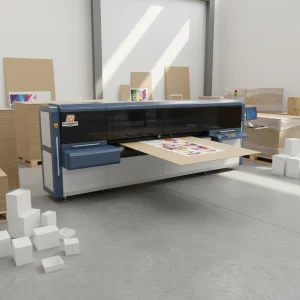
Explore high-speed hybrid rolls, wide-format 2513 beds, and digital corrugated single-pass production equipment direct from our Jinan manufacturing base.