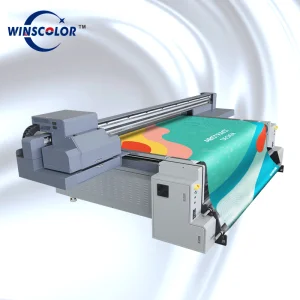
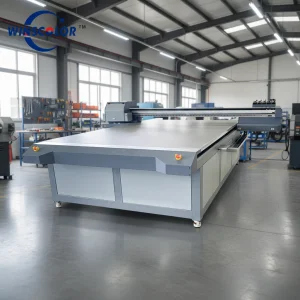
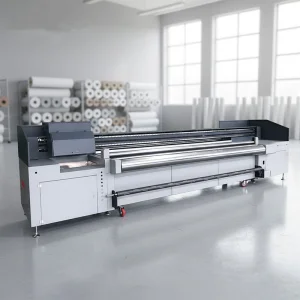
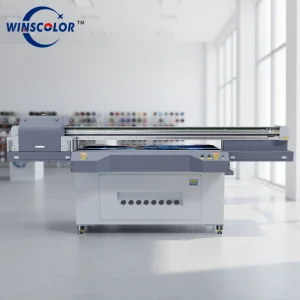
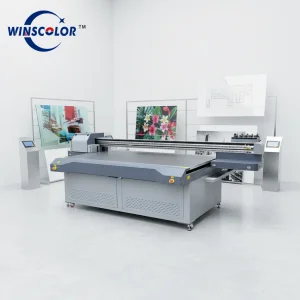
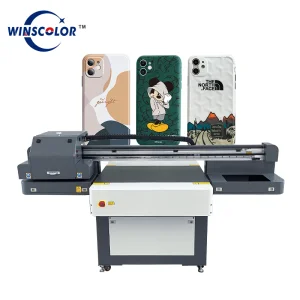
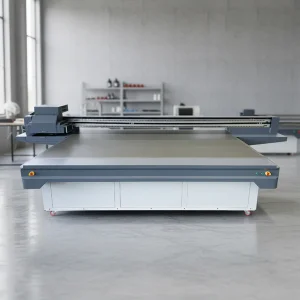
Engineered for relentless cycle times, ultra-fine drop placement, and seamless rigid-flexible hybrid adaptability.
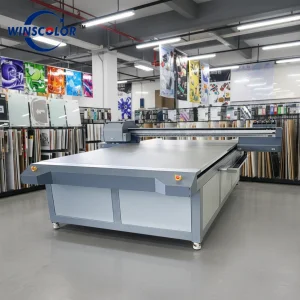
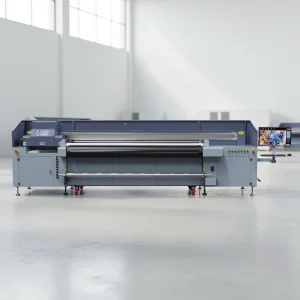
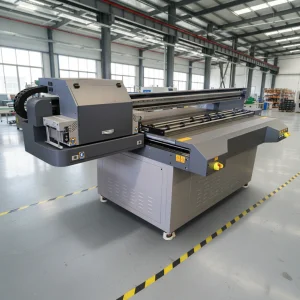
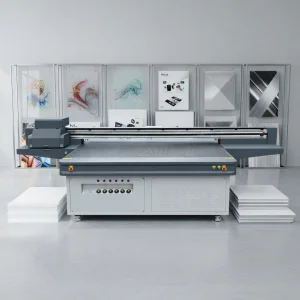

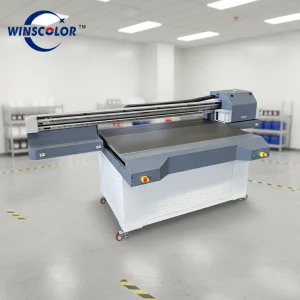
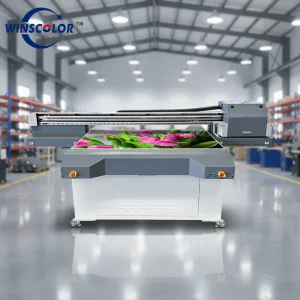
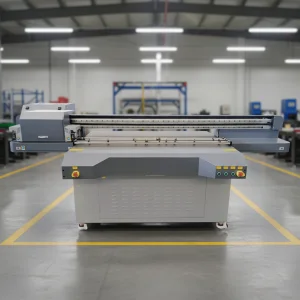
Strategic shift toward sustainable, on-demand industrial digital printing solutions across tier-1 manufacturing hubs.
Traditional screen and pad printing suffer from prolonged setup times, prohibitive pre-press plate expenses, and hazardous chemical usage. LED UV flatbed printing delivers plate-free, micro-run viability, allowing converters to produce custom short-run orders on acrylic, metal, and wood instantly without setup latency.
Transitioning from mercury arc discharge lamps to narrow-band UV-LED illumination yields up to 70% electrical power conservation. Cold curing eliminates substrate thermal deformation, unlocking direct printing on heat-sensitive materials including corrugated panels, thin polypropylene films, and extruded PVC foam boards.
Industrial buyers across interior design, architectural glass, and luxury packaging require high-margin surface enhancements. Digital drop-on-demand varnish channels create gloss highlights, embossed textures, braille signage, and dimensional effects in a single pass without secondary finishing equipment.
Custom motion integration, dynamic vacuum management, and specialized ink chemistries for diverse manufacturing lines.
Engineered for acrylic panels, backlit signage, cast vinyl, and Dibond sheets. Independent multi-zone vacuum tables prevent edge curling, while recirculating white ink systems deliver dense opaque foundations on transparent substrates in multi-layer sandwich print modes.
Integrated chemical priming mechanisms optimize surface tension on vitrified ceramic and tempered architectural glass. High-frequency variable drop-size piezo arrays provide smooth skin tones and gradient shading that resist UV fading and moisture exposure.
Plate-free digital systems tailored for honeycomb paperboard, flute board, and rigid gift cartons. Accommodating automated feeding workflows, these machines eliminate inventory obsolescence by facilitating fast SKU changeovers and just-in-time box production.
Enterprise-grade structural components backed by verified international safety standards and SLA commitments.
Every flatbed and hybrid unit undergoes high-voltage insulation tests, harmonic emission profiling, and dynamic mechanical balancing. Equipment configurations comply with CE Machinery Directive 2006/42/EC, Low Voltage Directive 2014/35/EU, RoHS eco-directives, and UL-certified control systems.
Winscolor supports buyers with certified remote diagnostic protocols, live telemetry analytics, and dispatch agreements for key mechanical assemblies. Regional hubs stock critical spares including industrial piezo heads, mainboards, peristaltic pumps, and optical encoder strips.
R&D pipelines focus on multi-drop greyscale drive waveforms, closed-loop linear optical feedback, and AI-assisted defect inspection cameras. These advancements detect blocked nozzles automatically, performing targeted micro-purging cycles to safeguard continuous batch runs.
Direct technical guidance from factory-certified mechanical, chemical, and software application engineers.
Narrow-band UV-LEDs (395nm peak wavelength) emit minimal infrared thermal radiation, protecting heat-sensitive substrates like thin acrylic or fluted polypropylene from warping. They also deliver instant power toggling without warm-up latency, draw up to 70% less energy, and provide operating lifespans exceeding 20,000 hours.
Our flatbed systems incorporate an active dual-stage white circulation architecture. Continuous recirculating pumps traverse the entire ink loop—from bulk reservoirs down through the carriage dampers and printhead manifolds—preventing titanium dioxide pigment clustering and eliminating nozzle dropouts.
Yes. Mid-format platforms like the YC1610H support precision rotary drive assemblies. High-torque stepper actuators turn bottles, tumblers, and cans smoothly, synchronizing carriage sweeps with circumferential rotation to deliver continuous 360-degree graphics with spot varnish finishes.
While low-surface-energy woods and matte PVC boards accept UV-curable inks directly, non-porous float glass, brass, and coated aluminum benefit from wipe-on chemical adhesion promoters or integrated atmospheric plasma pre-treatments to pass standardized cross-hatch tape adhesion tests.
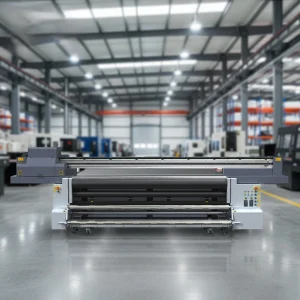
High-volume hybrid platforms, roll-to-roll dual-mode machines, and heavy-duty industrial inkjet engines.