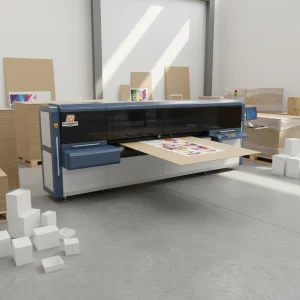
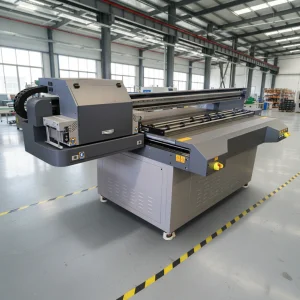
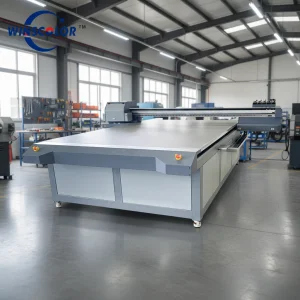
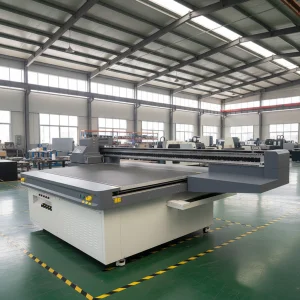
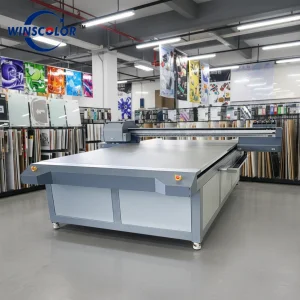
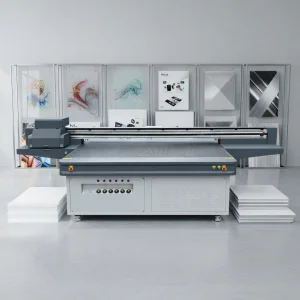
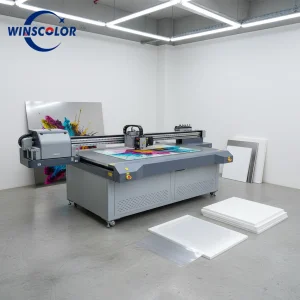
Explore our flagship industrial printing series engineered for ultra-fine micro-piezo drop placement, high-density white base laying, tactile embossed 3D varnish, and rapid continuous throughput.
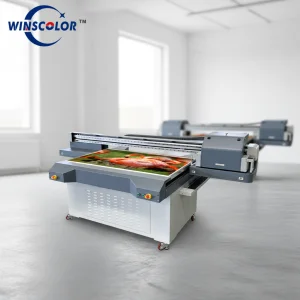
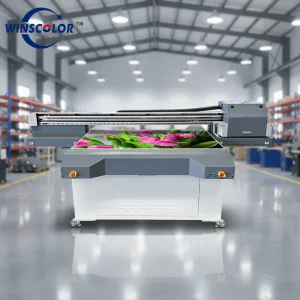
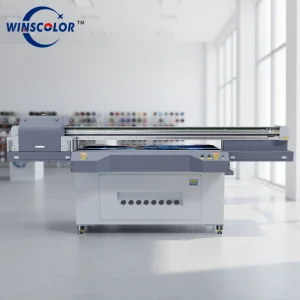
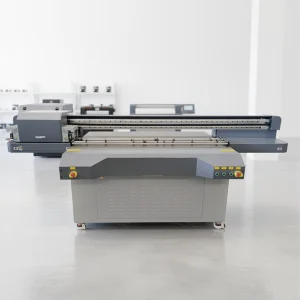
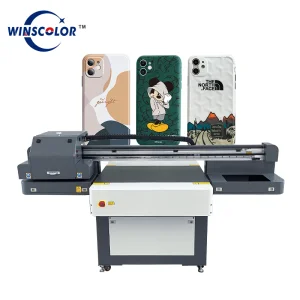
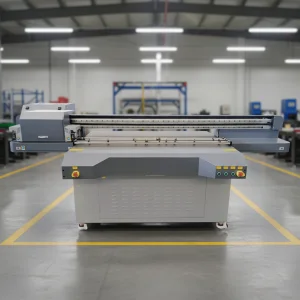
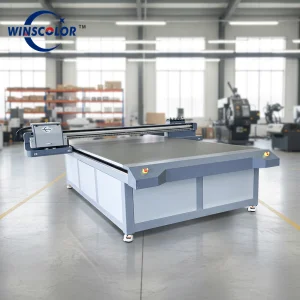
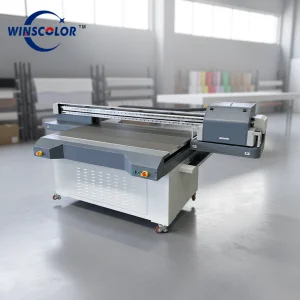
Analyzing cross-continental manufacturing shifts, zero-setup on-demand digital workflows, and the paradigm transition from analog screen to intelligent UV-LED direct inkjet deposition.
The industrial direct-to-object inkjet printer market has grown beyond conventional sign graphics into a multibillion-dollar precision fabrication vertical. Tier-1 manufacturers across North America, the European Union, and Southeast Asia are systematically decommissioning analog screen printing and pad printing equipment. The shift is propelled by skyrocketing labor overhead, tighter environmental volatile organic compound (VOC) compliance limits, and relentless consumer demand for individualized SKU packaging and immediate fulfillment.
Modern automatic UV flatbed systems leverage high-intensity ultraviolet light-emitting diodes (UV-LEDs) oscillating at dialed wavelengths (typically 395nm or 385nm). This localized cold-curing mechanism polymerizes photoinitiator-infused liquid inks instantaneously without thermal dissipation into the substrate. As a consequence, dimensional heat-sensitive materials such as thin polycarbonate, expanded PVC, corrugated fluting, and thermoforming polystyrenes remain perfectly flat without curling or warping under high carriage velocity.
Leading enterprises are integrating flatbed systems directly into automated conveyor lines, cobot-assisted feeding cells, and industrial ERP networks. Modern automatic UV flatbed printers have evolved far beyond standalone print tables: they incorporate pneumatic material registration pins, multi-zone dynamic vacuum beds, automatic substrate thickness sensing, high-speed static eliminator bars, and intelligent anti-crash obstacle sensors that safeguard printheads operating at clearances under 1.5mm.
Why leading global industrial brands, international signage networks, and OEM/ODM distributors source their flagship direct-to-object equipment from China’s premier manufacturing epicenters.
The architectural integrity of an industrial UV flatbed machine dictates its droplet landing precision. Leading Chinese manufacturing plants, particularly within Jinan and the greater Shandong and Guangdong industrial corridors, deploy five-axis CNC bridge milling centers to machine one-piece all-steel welded frames. These heavy structural frames undergo thermal tempering and high-frequency vibratory stress relief to eliminate residual internal mechanical tension prior to guide-rail surfacing.
By pairing structural gantry rigidity with world-class imported motion components—such as Japanese THK or Taiwanese HIWIN dual ultra-silent linear guides, Renishaw metal optical encoder linear scales, and Panasonic or Yaskawa high-torque AC servo drives—Chinese factories achieve bidirectional repeat accuracy within ±0.015mm across table spans extending beyond 3.3 meters.
The global competitive edge of Chinese UV printer manufacturers stems from deep regional supply chain co-location. Everything from custom aluminum extrusion tooling, high-precision vacuum suction blowers, digital LED curing water-chillers, secondary ink tank valves, to specialized motherboard FPGA controllers are manufactured within tightly coupled industrial clusters. This massive concentration compresses prototyping cycles and eliminates bloated component import tariffs.
Consequently, global procurement managers receive enterprise-grade flatbed printing platforms incorporating identical core micro-piezo heads (Ricoh Gen6/Gen5s, Kyocera KJ4A, Epson i3200-U1) at a capital expenditure (CapEx) savings of 40% to 60% compared to Western European or Japanese branded assemblies. This capital efficiency translates directly into accelerated equipment amortization, enabling contract print providers to deliver aggressive per-square-meter bids without sacrificing operational margin.
| Engineering Parameter | Tier-1 China Factory Assembly | Legacy Western Machinery |
|---|---|---|
| Equipment Payback Horizon | 6 to 11 Months | 24 to 36 Months |
| Printhead Integration Options | Ricoh G6, G5, Kyocera, i3200 | Proprietary / Vendor Locked |
| Consumables / Spares Cost | Open-Architecture Economic | Proprietary Encrypted Cartridges |
| Custom Table Dimensions | Highly Configurable (OEM/ODM) | Standard Fixed Footprints Only |
Examining technical implementation parameters, surface energy pretreatment protocols, and photochemical adhesion mechanics across diverse commercial and manufacturing substrates.
Direct printing on architectural glass partitions, splashbacks, and structural balustrades demands specialized chemical coupling. By applying customized silane adhesion primers via digital spray or automated pyrosil flamed flaming pre-treatment, UV inks achieve a 5B cross-hatch tape adhesion rating. Multi-layer inline printing deposits high-opacity white ink backing between full-color CMYK layers, generating vibrant double-sided visuals impervious to solar UV degradation, moisture, and window cleaning chemicals.
In high-end architectural ceramics and sanitary ware manufacturing, UV flatbeds deliver lifelike stone, marble, and hyper-realistic wood grain replications without expensive kiln firing cycles. Specialized high-build gloss varnish channels build micro-textures matching underlying vein contours, providing tactile relief effects. This enables custom interior design studios to run short-lot bespoke decorative murals, fireplace mantels, and luxury hotel feature walls on demand.
For durable consumer electronics, medical device chassis, and automotive control fascias, automatic flatbed printing eliminates screen stencil tooling costs. Printers lay down high-definition legends, regulatory serial matrices, and high-contrast iconography directly onto ABS, polycarbonate, and anodized aluminum enclosures. Flexible UV ink formulations permit post-print vacuum thermoforming, stamping, and mechanical drilling without micro-cracking or ink delamination along stress axes.
The rapid growth of e-commerce and retail subscription packaging has created unprecedented demand for short-run, plate-free corrugated board printing. Automatic flatbed and single-pass industrial systems print directly onto kraft paperboard, bleached multi-wall flute, and honeycomb cardboard sheets. Instant curing enables immediate automated CNC knife cutting, creasing, and slotting workflows without drying delays or offset ink smudging during downstream folding.
Equipped with motorized rotary synchronizers, automatic flatbed printers transition seamlessly from flat sheet handling to 360-degree seamless seamless cylindrical printing. Utilizing micro-step rotary chucks or friction-driven roller fixtures, the machine adjusts printhead firing timing to match vessel rotational velocity. This enables edge-to-edge printing across stainless steel drinkware, vacuum flasks, cosmetic glass bottles, and craft aluminum cans.
Architectural wayfinding systems must adhere to strict accessibility regulations, including US ADA and European standards requiring precise domed Braille dots and raised tactile alphanumeric characters. High-viscosity white UV inks, precisely cured in multi-pass deposition layers, build dimensionally stable, rounded-top tactile dots reaching 0.6mm to 0.9mm relief without cracking, peeling, or degrading under repeated finger friction.
A rigorous examination of micro-piezo drop ejection mechanics, fluid viscosity stabilization, recirculating ink hydraulics, and spectrum-tailored UV-LED curing arrays.
At the center of high-fidelity printing is the micro-piezo actuator. State-of-the-art printheads such as the Ricoh Gen6 (MH5320) and Kyocera KJ4A incorporate robust stainless steel nozzle plates capable of high firing frequencies exceeding 40 kHz. Through precise multi-pulse voltage waveforms, these printheads modulate droplet volumes between 3, 5, 8, and 12 picoliters (pl).
Small 3-5pl droplets render grain-free skin tones, soft photographic gradients, and legible 2-point micro-type, while large 10-12pl droplets achieve dense optical saturation in solid vector backgrounds at significantly elevated carriage speeds.
Heavy inorganic pigments—specifically titanium dioxide (TiO₂) utilized in white UV ink—exhibit a natural physical tendency toward gravitational sedimentation. Without active circulation, pigment fallout creates irreversible nozzle clogs and uneven opacity. Modern industrial flatbeds deploy continuous closed-loop negative pressure systems combined with active sub-tank peristaltic stirring.
White ink circulates constantly through the printhead manifolds even during machine idle periods. Negative meniscus pressure at the nozzle plate is dynamically maintained within ±0.05 kPa to prevent spontaneous dripping under gantry acceleration.
Traditional mercury-arc lamps emitted extreme infrared thermal radiation, generated ozone gas, and degraded within 1,000 operational hours. Modern UV-LED cold curing systems focus optical energy strictly within narrow spectral bands (385–395nm), aligning precisely with ink photoinitiator activation thresholds.
Integrated water-cooling loops stabilize diode junction temperatures, guaranteeing over 25,000 hours of continuous irradiance without UV decay. Independent shutter controls let operators calibrate gloss levels—from deep matte to mirror-finish high-gloss—by adjusting trailing lamp delay timings.
| Printhead Model | Nozzle Configuration | Native Drop Volume | Max Firing Frequency | Industrial Durability & Application |
|---|---|---|---|---|
| Ricoh Gen6 (MH5320) | 1,280 Nozzles (4 × 320) | 5 – 15 pl Variable | 50 kHz | Extreme Production Metal, glass, 24/7 continuous cycles |
| Kyocera KJ4A-0300 | 2,656 Nozzles (One-Piece) | 3, 5, 8 pl | 40 kHz | Ultra Precision Fine art reproduction, luxury cosmetics |
| Epson i3200-U1 HD | 3,200 Nozzles (8 × 400) | 3.8 – 12 pl | 21.6 kHz | Cost-Efficiency Signage, acrylic awards, promotional items |
| Konica Minolta 1024i | 1,024 Nozzles (Independent Drive) | 6 – 30 pl | 45 kHz | High Viscosity Building ceramics, heavy textures, outdoor signage |
A strategic blueprint for plant managers and procurement executives evaluating industrial UV flatbed investments, ink yields, and total cost of ownership (TCO).
Unlike aqueous or solvent inks where 50% to 70% of carrier liquid evaporates into the ambient atmosphere, industrial UV-curable ink contains 100% solid active polymers that cross-link fully on the substrate. A standard 4-color job running at standard 100% composite coverage requires approximately 9 to 12 ml of ink per square meter. With bulk UV inks priced from tier-1 manufacturers at $28 to $45 per liter, direct ink costs typically calculate between $0.28 and $0.55/m², ensuring robust gross margins.
Industrial uptime hinges on automated capping, purging, and wiper cleaning stations. Leading machines feature independent multi-valve purging that isolates single color channels during maintenance routines, reducing unnecessary ink loss across functioning heads. In multi-head production systems, advanced RIP architectures support "nozzle masking" and head recovery profiles, permitting production to continue at slightly adjusted speeds even if a nozzle experiences momentary drop deflection.
Proper operational site preparation avoids printhead failure and premature ink curing. UV flatbed machinery should operate within a climate-controlled environment maintained at 20°C to 26°C with 40% to 65% non-condensing relative humidity. Substrate static electricity must be controlled using active AC deionizing blower bars mounted on the carriage, preventing fine ink mist deflection and protecting sensitive electronic board components from high-voltage discharge.
Comprehensive solutions and answers compiled by application specialists for engineering directors, procurement teams, and commercial print supervisors.
A true UV flatbed features a stationary cast-aluminum or steel-honeycomb vacuum bed where substrates remain clamped while the gantry traverses the Y-axis. This architecture delivers optimal registration on heavy, thick, or irregular items (e.g., stone slabs, 50mm acrylic, metal plates, wood blocks). Conversely, a hybrid machine moves substrates via pinch rollers or vacuum conveyor belts across a narrow stationary print bar. While hybrids accommodate roll media and light boards, true flatbeds eliminate substrate slippage, delivering superior registration on heavy materials.
White UV ink incorporates dense titanium dioxide (TiO₂) particles to achieve high opacity. Because TiO₂ has a significantly higher specific gravity than organic color pigments, it settles out of suspension if allowed to stagnate. Unmitigated sedimentation causes pigment agglomeration, channel starvation, and irreversible nozzle clogging. Recirculating ink systems continuously cycle white ink through sub-tanks, delivery tubing, and internal printhead manifolds, keeping solids suspended even during system standby.
Smaller droplets (3 to 5 picoliters) produce crisp line edges, subtle highlight transitions, and legible 2-point fonts, but require more firing pulses per square inch, limiting carriage velocity. Larger droplets (10 to 15 picoliters) deposit higher fluid volumes rapidly, achieving dense solid coverage at fast carriage speeds, but can introduce visible graininess in delicate gradient areas. Variable drop grayscale printheads (e.g., Ricoh Gen6) address this trade-off by firing multi-pulse droplets dynamically within the same pass based on RIP image density data.
Substrates such as untreated polypropylene, polyethylene, raw float glass, and polished stainless steel often exhibit surface energy below 36 dynes/cm, leading to ink beading and weak adhesion. To achieve durable cross-hatch bonding, surface energy should be raised above 44 dynes/cm. Common surface treatment methods include applying chemical silane/titanate primers via wipe or spray, atmospheric corona discharge, or inline pyrosil flame treatment to introduce polar hydroxyl groups to the substrate surface.
Raised tactile textures and spot gloss are achieved through structured multi-layer software deposition. The RIP divides artwork into dedicated texture maps, white underbase masks, and CMYK color channels. The printer deposits multiple successive layers of high-build white ink to construct dimensional relief (up to 1mm to 2mm in height), followed by a registered color pass, and finishes with a clear gloss varnish cured under controlled UV-LED exposure to seal the texture with a mirror or matte finish.
Key preventative maintenance routines include: 1) Daily automated negative pressure purging and lint-free polyurethane blade wipes to keep the nozzle plate clear of debris; 2) Daily wet-capping with specialized flushing solution during non-operational hours; 3) Weekly optical linear encoder scale cleanings using high-purity isopropyl alcohol; 4) Monthly inspection and purging of secondary sub-tank fluid line filters; and 5) Regular replacement of UV water chiller coolant to prevent LED diode thermal throttling.
Complete your production setup with specialized single-pass corrugated printers, super-wide 2513/2030 formats, rotary systems, and hybrid production machinery.