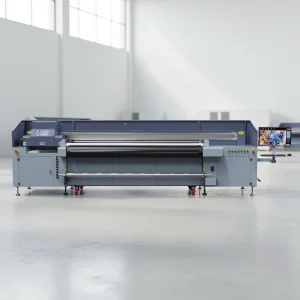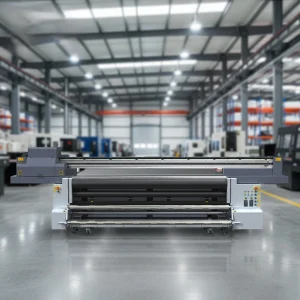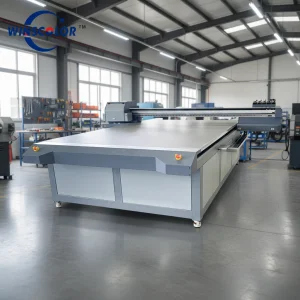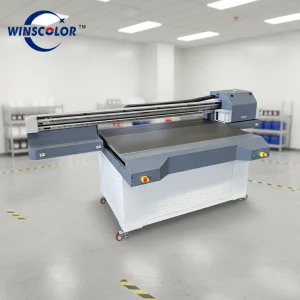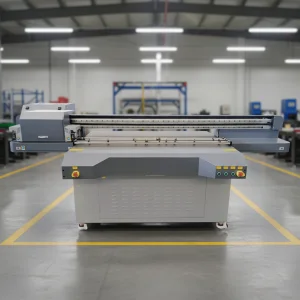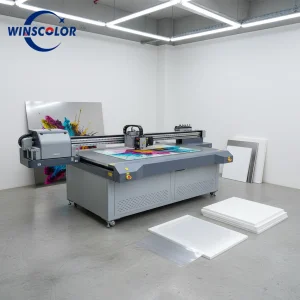
Explore production-grade UV platforms deployed across European and Danish facilities requiring ultra-fine micron dot placement and rapid curing workflows.

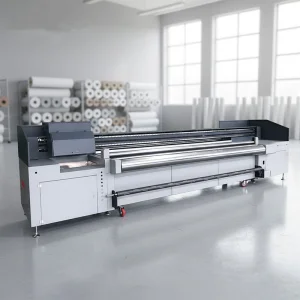

An authoritative analysis of Danish print procurement, environmental regulatory frameworks, and industrial digital transformation.
Denmark's graphic arts and manufacturing landscape—concentrated in regions like the Capital Region (Region Hovedstaden), Central Denmark (Midtjylland), and Southern Denmark (Syddanmark)—places unprecedented value on clean production methods and sustainable output. The YC2513H flatbed platform meets these exacting commercial criteria. Danish converters are rapidly replacing traditional screen and solvent lines to comply with strict workplace VOC rules and the Nordic Swan Ecolabel standards.
Worldwide, the wide-format UV printing sector is experiencing rapid expansion, fueled by consumer demand for short-run customisation and just-in-time delivery. The global migration toward UV-LED curing engines stems from lower thermal dissipation, allowing heat-sensitive substrates like fluted polypropylene, thin polycarbonates, and recycled polymers to be processed without warping or structural degradation.
With Danish enterprises actively striving toward carbon-neutral objectives by 2030, production capital equipment must align with low-carbon footprints. The YC2513H utilizes energy-efficient ultraviolet diode arrays with an instant on/off architecture, eliminating warm-up power draw and significantly reducing operational electrical overhead compared to legacy mercury vapour systems.
From minimalist Copenhagen furniture design to rigorous maritime identification labels, discover how the YC2513H integrates into regional production workflows.
Denmark is world-renowned for timeless furniture design. Danish studios in Aarhus and Copenhagen utilize the YC2513H to apply custom textures, tactile wood-grain embellishments, and white ink underlays directly onto solid oak, beech veneers, acoustic PET felt boards, and engineered composite architectural elements with micrometer-level registration.
Given Denmark's status as a global clean energy and maritime logistics powerhouse (wind turbine manufacturing and offshore shipping), industrial durability is mandatory. The YC2513H delivers direct-to-substrate printing on anodized aluminium, stainless steel, and powder-coated instrumentation panels capable of withstanding aggressive North Sea saline exposure.
Supplying major Scandinavian retail chains necessitates responsive point-of-sale (POS/POP) display fabrication. The zoned vacuum system of the YC2513H securely anchors re-board, corrugated honeycomb structures, and biodegradable acrylics, enabling single-pass CMYK + White + Gloss varnish production runs without tooling delays.
Our engineering group provides full-scale profiling and material adhesion analysis on your proprietary Nordic substrates prior to purchase.
Request Technical ConsultationStrategic advancements ensuring long-term investment protection and operational uptime across modern Danish industrial environments.
Variable greyscale drop architectures reaching down to 3.5 picolitres, maximizing color gradients and edge acuity while reducing overall pigment consumption by up to 22%.
Embedded spectrophotometer feedback loops providing inline delta-E color consistency verification on multi-board production batches across Denmark-wide franchises.
Next-generation ink formulations derived from plant-based monomers engineered specifically to pair with our high-output UV arrays, meeting future EU circular economy directives.
Telemetry nodes feeding performance telemetry to remote Danish engineering partners, anticipating printhead wear and vacuum pressure drift before operational stalls occur.
Clear, authoritative answers addressing supply chain logistics, regulatory compliance, and operational best practices.
The YC2513H is fully CE compliant and incorporates low-emission LED curing modules operating in tandem with zero-VOC, REACH-certified UV curable inks. When operated in typical Danish light-industrial or print shop settings, it emits zero hazardous air pollutants (HAPs), making workplace exhaust scrubbing requirements straightforward and minimizing risk under Arbejdstilsynet regulations.
Standard logistics routes to Danish seaports (Copenhagen, Aarhus, or Fredericia) or direct consolidated transit typically take between 25 and 35 days. Full installation, gantry alignment calibration, and operational RIP software training are managed via certified engineering personnel with comprehensive English-language documentation and ongoing remote telemetry support.
Yes. The YC2513H can be configured with an automated dedicated inline primer channel or used alongside specialized chemical wipes for non-polar materials like tempered architectural glass and untreated stainless steel. This ensures tape-test passing adhesion and scratch resilience even in cold Nordic indoor climates.
The platform features an automated negative pressure ink system and timed capping station purge functions. A simple daily maintenance routine of under five minutes—wiping the printhead carriage plate and inspecting the wiper blade—is sufficient to maintain peak dot accuracy, preventing nozzle dropouts during high-intensity 24/7 production cycles.
Comprehensive portfolio of UV flatbed, hybrid, and specialized roll-to-roll machinery accessible for European enterprise supply chains.