Factory-tested Ricoh Gen6 and industrial piezo configurations engineered for heavy-duty substrates, packaging prototypes, and architectural panels.
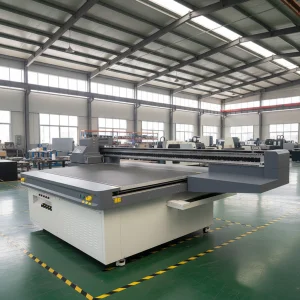
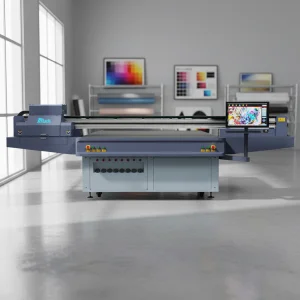
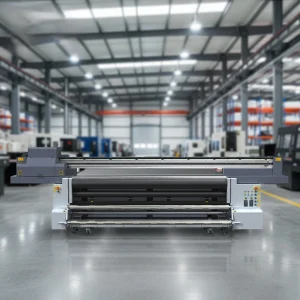
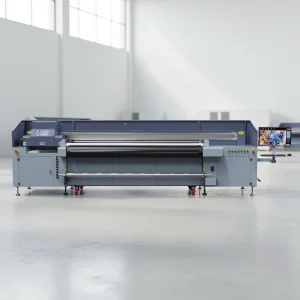
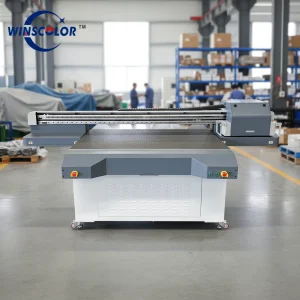
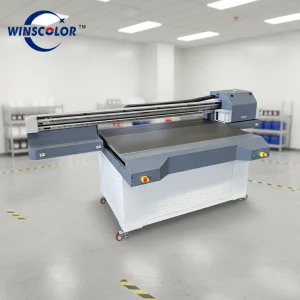
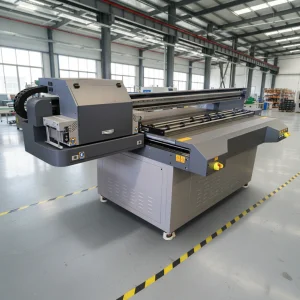
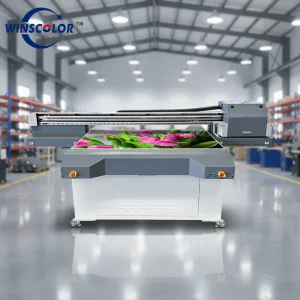
An authoritative analysis of technical shifts away from mercury-vapor discharge lamps and solvent systems toward solid-state LED-curable deposition.
Global environmental mandates—including the European Green Deal, REACH Annex XVII, and US EPA Title VI standards—have dramatically accelerated the phase-out of conventional solvent, eco-solvent, and mercury-arc curing apparatus. Industrial facilities require cold-curing solid-state LED arrays emitting within narrow spectral bandwidths (385–395nm).
This photochemical efficiency prevents thermomechanical distortion on heat-sensitive substrates, such as fluted polypropylene and oriented polystyrene, while reducing plant power draw by up to 65% per operational shift.
Modern wide-format manufacturing demands industrial micro-electro-mechanical system (MEMS) piezo printheads capable of multi-level grayscale drop generation. Jetting configurations, such as the Ricoh Gen6 and Gen7 series, utilize isolated ink channels firing native droplets down to 5 picoliters at 30 to 50 kHz jetting frequencies.
This allows precise drop placement fidelity across variable throws (up to 5mm), enabling seamless color gradients, micro-text clarity down to 2-point typestyles, and exceptional edge sharpness on textured materials.
Traditional flexographic, gravure, and rotary screen printing setups involve steep pre-press photopolymer tooling expenses and heavy make-ready material waste. In contrast, NTEK digital flatbed and hybrid solutions eliminate setup lead times entirely, driving agile on-demand manufacturing models.
Print service providers and original packaging manufacturers can profitably deliver short-run customized batches, serialized packaging, tactile thermoformed plastics, and architectural samples directly from vector RIP data.
Rooted in Jinan’s heavy precision machine tool belt, NTEK combines aerospace-grade stress-relieved steel frameworks with certified international mechanical and electrical components.
Every NTEK large format chassis undergoes high-temperature thermal annealing in a dedicated gantry furnace to dissipate residual welding stresses. The platform is then precisely faced on a 12-meter computer numerically controlled (CNC) five-axis double-housing milling center.
This process guarantees longitudinal flatness and planarity within 0.03mm across a 3.2-meter span, preventing the mechanical warping common in lightweight aluminum extruded frames under sustained industrial operations.
To deliver smooth motion mechanics over millions of continuous duty cycles, our platforms integrate precision dual Japanese THK or Taiwanese Hiwin silent linear guide rails paired with dual-slider carriage blocks. Sub-micron position feedback is maintained via high-resolution Renishaw or Megadyne metal raster linear encoders.
Power transmission is driven by closed-loop AC Panasonic servomotors with integrated planetary gearboxes, preventing step loss during acceleration and deceleration up to 1.5G.
Operating from our Jinan manufacturing base, NTEK leverages China's advanced industrial supply ecosystem. Raw steel casting, CNC finishing, surface anodization, wire harness fabrication, and assembly testing are centralized within a 50-kilometer radius.
This cluster density insulates overseas distributors from supply disruption, ensures consistent inventory of critical spares, and reduces machine build-to-order cycles from industry averages of 45 days down to just 15 to 20 working days.
Tailoring curing profiles, chemical primers, and media handling systems to meet regional substrate standards and commercial demands.
Primary Regions: North America, Western Europe
Non-contact digital inkjet printing on E/B/C-flute corrugated board and multi-wall folding cartons. Eliminates litho-lamination processes for subscription boxes, display stands, and short-run consumer product packaging.
Primary Regions: Middle East (GCC), Southern Europe
Direct deposition on annealed, laminated, and tempered float glass for interior partitions, decorative splashbacks, and commercial curtain walls. Uses inline silane primers to ensure cross-hatch adhesion compliance.
Primary Regions: Latin America, Southern Europe
High-precision 3D tactile texture generation on large-format ceramic slabs and porcelain tiles. Layered UV clear varnish channels build natural stone veins and woodgrain structures with durable abrasion resistance.
Primary Regions: North America, Southeast Asia
Three-layer simultaneous C+W+C (Color + White + Color) back-lit printing for point-of-purchase (POP) lightboxes, retail graphics, and architectural displays on cast acrylic, polycarbonate, and foamed PVC boards.
Developing closed-loop intelligent systems, sub-drop Greyscale control, and self-correcting fluid dynamics for automated continuous operation.
Traditional edge-detect sensors struggle with irregular, un-squared, or warped materials. NTEK's next-generation platforms integrate high-speed multi-camera CCD machine vision systems mounted directly on the carriage assembly.
These optical cameras capture surface orientation fiducials in real-time, enabling the RIP motion controller to mathematically calculate skew, rotate the vector raster layer, and ensure precise print registration across irregular natural wood and pre-cut composite parts.
Heavier pigment formulations—specifically titanium dioxide (TiO2) white inks—suffer from settling issues in conventional gravity-feed systems. Our architecture employs independent, electronically monitored negative-pressure control loops for white, color, and varnish circuits.
White ink is continuously recirculated through the sub-tank and internal printhead chambers at calibrated flow rates, keeping heavy particles suspended and eliminating jet drop-outs even during extended line stoppages.
Flatness across large-format vacuum beds is essential to prevent head strikes and maintain dot roundness. NTEK tables use internal honeycomb-core structural baffles divided into 4 to 8 electronically isolated vacuum zones.
High-vacuum side-channel blowers generate high negative static pressure. Operators can concentrate vacuum suction directly under heavy or warped boards while leaving idle zones closed, removing the need for manual masking.
Comprehensive Factory Acceptance Testing (FAT), electrical safety certifications, and robust lifecycle engineering support.
Prior to crating, every NTEK platform undergoes an exhaustive 72-hour Factory Acceptance Testing protocol. The machine executes high-speed bi-directional mechanical scanning under maximum acceleration, accompanied by continuous full-coverage pattern jetting.
Thermal infrared imaging monitors servo drive amplifiers, LED power stages, and linear guide friction points to identify and correct any thermal buildup or mechanical anomalies before overseas dispatch.
NTEK digital printing platforms are certified to European Machinery Directive 2006/42/EC and Electromagnetic Compatibility (EMC) Directive 2014/30/EU. All low-voltage electronics, Schneider contactors, and IGUS drag chains comply with RoHS 3 restrictions.
For North American industrial customers, electrical control cabinets are designed to UL 508A and CSA C22.2 standards, with labeled wiring harnesses and isolated emergency stop circuits for straightforward local permitting.
Every printer features an integrated Ethernet diagnostics interface that allows NTEK factory field engineers to securely review operating parameters, wave profile timing, and circuit statuses remotely.
We work closely with regional distribution hubs across Europe, Latin America, and the Middle East, maintaining consigned inventories of printheads, damper assemblies, driver boards, and UV ink stocks to provide rapid local technical support.
Clear, technical answers to common integration, chemical, and operational queries from global manufacturing buyers.
Rotary-capable, high-speed hybrid, and high-precision flatbed machinery optimized for versatile industrial, decorative, and promotional production lines.
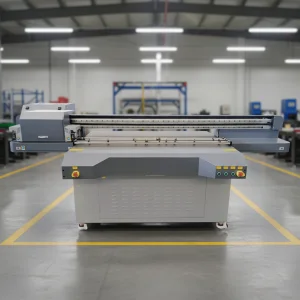
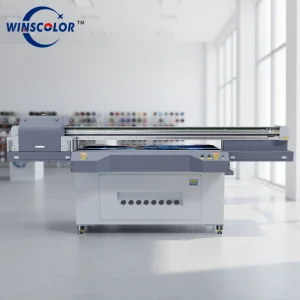
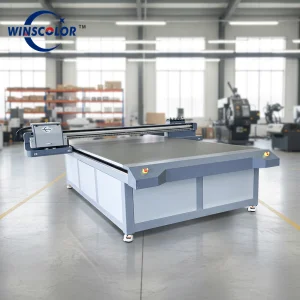
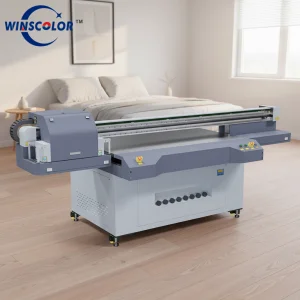
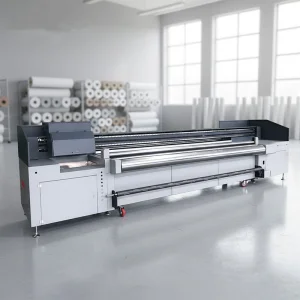
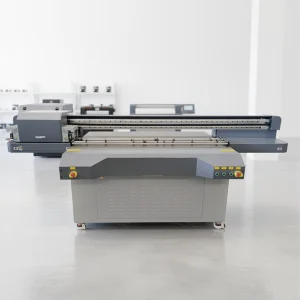
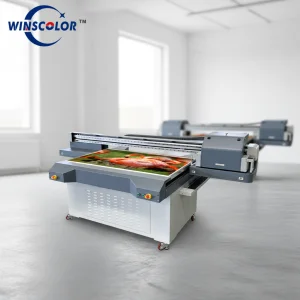
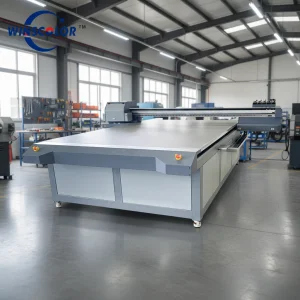
Send our applications engineering team your substrate dimensions and target output rates. We will review your production requirements, recommend the ideal printhead configuration, and provide detailed return-on-investment projections.
