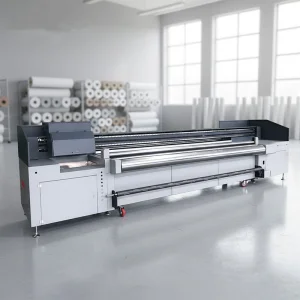
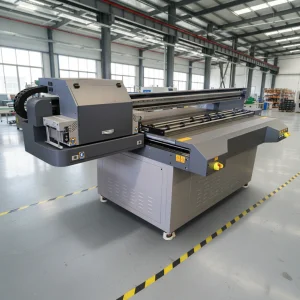
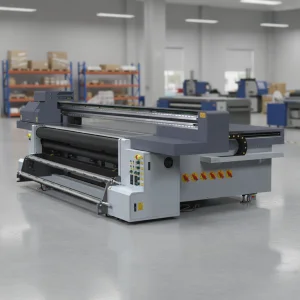
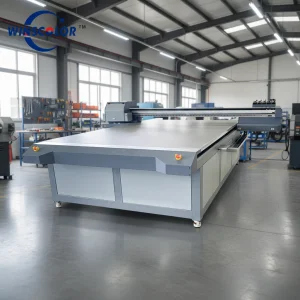
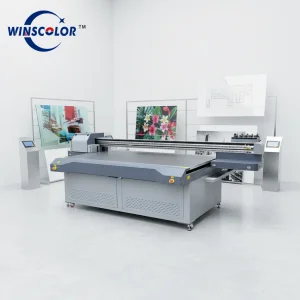
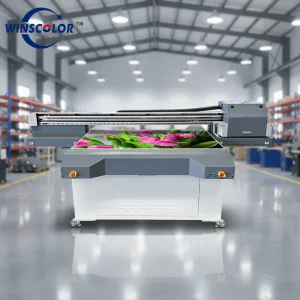
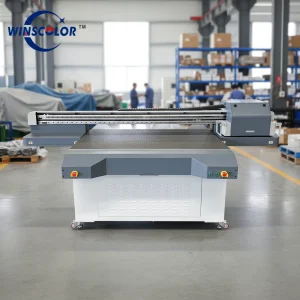
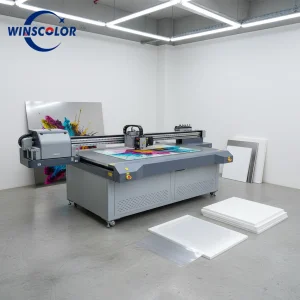
Explore our foundational direct-to-substrate flatbed platforms, single-pass carton lines, and rotary UV systems designed for high-throughput continuous manufacturing.
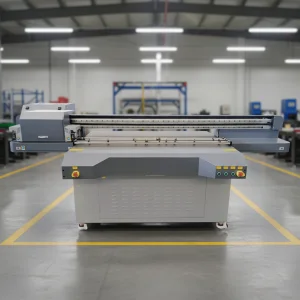
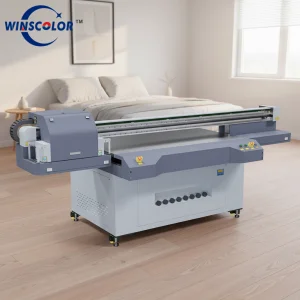

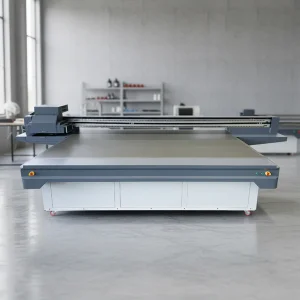
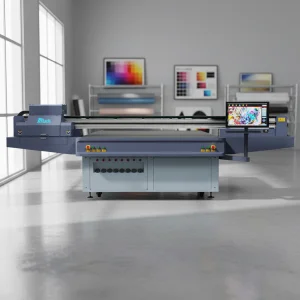
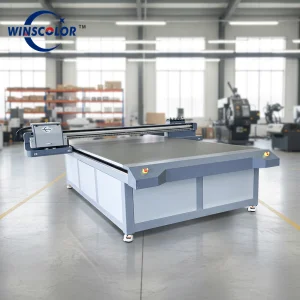
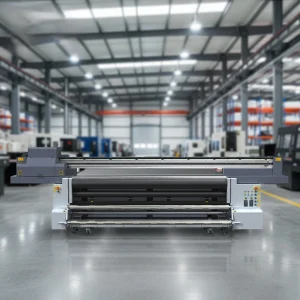
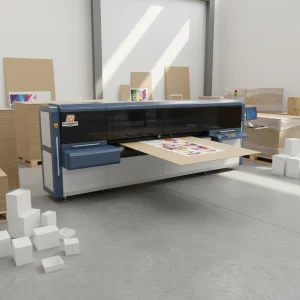
Analyzing the macro-economic and structural manufacturing dynamics that make Chinese direct manufacturers the premier engineering hub for industrial flatbed UV platforms.
Unlike Western brand aggregators, leading Chinese factories in industrial hubs like Jinan control the complete mechanical synthesis: heavy-gauge cast gantry machining, high-frequency internal stress relief annealing, in-house vacuum suction bed milling, and complete cable harness drafting. This vertical integration mitigates global supply disruption and cuts capital procurement expenditures by 38% to 52% without sacrificing component pedigree.
Top-tier Chinese OEM/ODM factories combine localized heavy structural frames with tier-1 international motion mechanics. Our flagship units utilize Ricoh Gen6 and Gen5 piezo printheads from Japan, German-engineered IGUS drag chains, Japanese Panasonic or Yaskawa AC digital servo systems, and dual Hiwin/THK mute linear guide rails. The result is micron-grade sub-droplet landing accuracy under 24/7 industrial shift stresses.
Industrial printing is not a one-size-fits-all sector. Direct Chinese factories offer unmatched bespoke engineering: extending Z-axis clearance to accommodate 400 mm thick architectural slabs, retrofitting dynamic rotary jigs for conical bottles, adding multi-zone intelligent vacuum reverse blowers, or designing automated single-pass conveyors for inline folding-carton manufacturing lines.
How technological convergence, environmental mandates, and automation are transforming the economics of flatbed digital printing worldwide.
Traditional metal-halide mercury lamps are rapidly being phased out under global energy regulations. Water-cooled LED-UV curing delivers instant ON/OFF cycling, eliminates substrate heat distortion on PVC and acrylic, and reduces power consumption by over 65% while extending lamp longevity beyond 25,000 continuous operating hours.
High-volume corrugated carton and packaging manufacturers are aggressively ditching flexographic plate costs. Stationary-printhead single-pass corrugated board machines reach linear velocities of 60–100 m/min, empowering on-demand personalization, zero plate inventory, and rapid turnaround for e-commerce box converters.
Advanced RIP waveform tuning allows simultaneous multi-layer printing: White Underbase + High-Density CMYK + Gloss/Matte Spot Varnish. This builds hyper-realistic haptic textures, oil-painting brushstrokes, and ADA-compliant Braille signage at ultra-fine 1440 × 1200 DPI resolution in a single carriage travel pass.
Accelerating environmental mandates across the European Union (RoHS, REACH) and North America have forced print shops to abandon solvent-evaporative workflows. Industrial UV inks solidify instantly via photopolymerization, creating zero VOC emissions and meeting stringent indoor air quality criteria for architectural installations.
Comprehensive engineering analysis of mechanical adhesion, chemical pre-treatment, and curing protocols across high-demand industrial substrates.
| Substrate Material | Surface Preparation / Primer | Ink Configuration | Target Industries & Applications | Durability / Standard |
|---|---|---|---|---|
| Cast Acrylic (PMMA) | Electrostatic clean; Flame/Primer optional | W + CMYK + Varnish (Sandwich) | Backlit architectural signage, POS displays, luxury awards | Fade-resistant 5+ yrs outdoor |
| Tempered Architectural Glass | Silane Coupling Wipe-on Primer | High-Density White + CMYK | Shower doors, glass splashbacks, elevator facades | Cross-hatch tape test: Class 0 (ISO) |
| Aluminium / Dibond Sheets | Degreasing wash; optional metal primer | CMYK + High-Gloss Varnish | Industrial rating plates, exterior facade panels, wayfinding | Scratch & chemical wash resistant |
| PVC Foam Board & Foren | Direct print without chemical primer | CMYK + White Underbase | Retail graphics, exhibition stands, trade-show wall systems | Instant stack curing, crack-free |
| Solid Wood & Natural MDF | Dust extraction; pre-sanding | Selective White + CMYK | Custom furniture, artisanal cabinetry, acoustic wall panels | Maintains organic grain relief |
| Corrugated Cardboard (E/B Flute) | None (High-absorbency surface) | CMYK Water-based / Pigment / UV | Short-run consumer cartons, subscription boxes, POP dumps | Zero warping, high rub-resistance |
Strategic purchasing benchmarks and turnkey architectural workflows for high-volume enterprise production facilities.
Global procurement teams must assess machine price along with total consumables footprint. Factory-direct machines with bulk open-ink supply protocols lower production costs to $0.45 – $0.85 per square meter, compared to proprietary ink cartridges from traditional Western suppliers costing over $2.50/m².
Look for monolithic steel gantry frames, milled on heavy 5-axis CNC portal milling centers. The print carriage must retain planar flatness within ±0.03 mm across a 2.5 m span under continuous reciprocating inertia, preventing micro-banding and jetting deviation during multi-layer overprinting.
Reliable Chinese manufacturers maintain standardized global technical assistance protocols: cloud-based diagnostic telematics, expedited DHL/FedEx spare-part delivery within 48 hours, modular plug-and-play board architectures, and comprehensive remote onboarding suites for factory technicians.
In-depth engineering answers addressing printhead longevity, substrate adhesion, ink delivery, and multi-shift operations.
Review our specialized hybrid roll/sheet solutions, high-speed wood production engines, and versatile mid-to-wide format flatbeds.