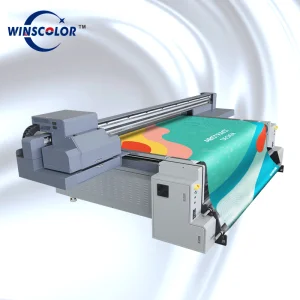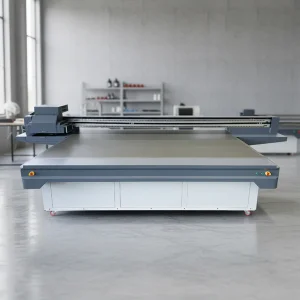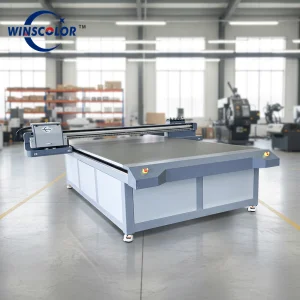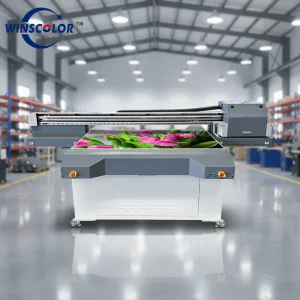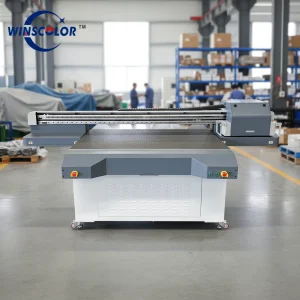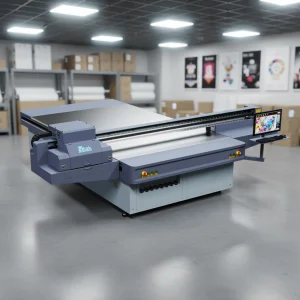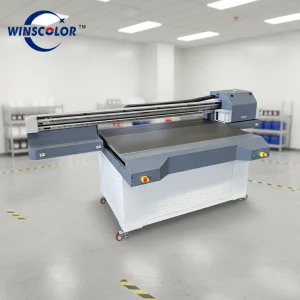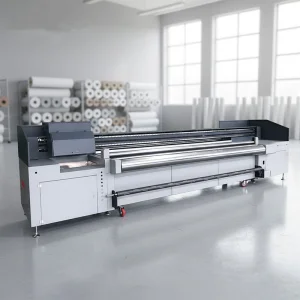
Engineered to balance industrial endurance with micro-piezo drop accuracy, our primary export platforms support high-volume manufacturing hubs across Bucharest, Ilfov, Cluj, Timiș, and Brașov with instant UV-LED curing and dual rigid-flexible handling.
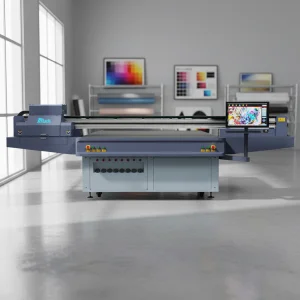
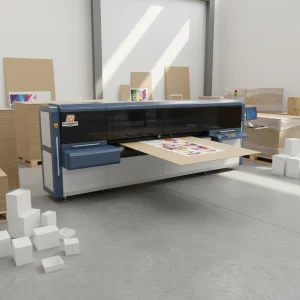

Romania represents one of the most vibrant manufacturing hubs in the Central and Eastern European (CEE) region. Driven by an accelerated wave of European industrial nearshoring, continuous expansion of logistical transport arteries (such as the A3, A10, and A7 motorways), and the relentless growth of retail infrastructure, the demand for flexible, high-capacity UV digital printing systems has outpaced traditional analogue production equipment.
Historically dominated by conventional screen printing, eco-solvent roll units, and high-energy thermal curing systems, Romanian print service providers (PSPs) and specialized industrial processors face a dual operational challenge: rising electricity tariffs under EU decarbonization frameworks and client demand for hyper-customized, just-in-time delivery without plate setup costs.
Accounting for more than 28% of national GDP, the capital metropolitan zone functions as the command center for national retail advertising campaigns, large-format building wraps along major boulevards, and rapid prototyping for multinational consumer goods headquarters.
Anchored by Cluj-Napoca, Timișoara, and Arad, this corridor represents Romania’s technology and manufacturing epicentre, closely linked to Western European supply chains via the Hungarian border connections.
Centered around Constanța Port and the emerging logistics centers in Iași and Bacău, these territories handle large volumes of maritime shipping materials, cold-chain packaging, and cross-border distribution.
Across North America, Germany, Northern Italy, and East Asia, industrial print houses have transitioned heavily away from separate dedicated flatbeds and roll-to-roll units toward consolidated UV Hybrid Roller Platforms. In classical factory layouts, dedicating 60 square meters of floor space to a 3.2m dedicated roll printer and another 50 square meters to a 2.5m × 1.3m rigid flatbed incurs prohibitive real-estate costs, duplicate operator staffing, redundant RIP software licensing, and splintered maintenance schedules.
The YC3200HR platform unifies these disparate operational workflows into an integrated, heavy-duty mechanical chassis. Utilizing an advanced industrial conveyor-assisted feeding drum and balanced front-and-rear extension tables, an operator can shift from 3,200 mm wide PVC mesh banner printing to 10-foot rigid aluminum composite panels (Dibond) in fewer than five minutes.
| Evaluation Parameter | Traditional Split Shop (Separate Flatbed + Roll) | Legacy Solvent / Eco-Solvent Production | YC3200HR Industrial UV Hybrid Platform |
|---|---|---|---|
| Substrate Flexibility | Rigid on one machine, flexible on another; high floor usage. | Flexible roll media only; rigid media requires mounting. | Universal Hybrid Rigid boards up to 50mm + flex rolls on one footprint. |
| Curing Mechanics | Dual sets of high-wattage mercury arc lamps or heaters. | Evaporative thermal heaters (high gas/electric consumption). | Dual water-cooled LED UV curing lamps; instant cold curing. |
| Substrate Thermal Stress | Risk of warping thin flute plastics, soft acrylic, or vinyl. | Heat distortion on PVC film and heat-sensitive foams. | Zero Heat Distortion Ideal for thermo-sensitive fluted polypropylene. |
| Eco-Compliance & VOCs | Moderate to high; ozone exhaust extraction ducting required. | High volatile organic compounds; stringent ventilation mandates. | 100% Solid UV inks; zero VOC, RoHS & REACH compliant formulation. |
| Production Turnaround | Secondary handling for mounting, lamination, and roll transfer. | 24-hour mandatory outgassing before slitting or lamination. | Instant Finishing Direct cutting, packing, or CNC routing right off the belt. |
Industrial reliability is not accidental; it is built into every millimeter of structural steel, every micro-piezo nozzle array, and the motion control calibration. Designed for 24/7 continuous duty cycles in arduous manufacturing environments, the YC3200HR embodies precision mechatronics capable of maintaining sub-millimeter droplet placement over a 3.2-meter beam span.
The core structural integrity of the YC3200HR relies on a whole-welded gantry processed through industrial thermal tempering and high-precision five-face CNC milling. This stress-relieving sequence guarantees that the gantry structure will never deform under temperature fluctuations or carriage acceleration inertia over a 10-year lifespan.
Equipped with industrial-grade Ricoh Gen6 (MH5320) drop-on-demand printheads, the YC3200HR achieves remarkable firing frequency up to 50 kHz. With variable greyscale drop sizing spanning from 5 to 15 picolitres, fine photographic details, crisp typography down to 2-point type, and saturated solid tone fills are rendered without banding.
Feeding media reliably across a 3.2m expanse demands extraordinary pneumatic control. The conveyor table features multi-zone independent turbine vacuum extraction. Heavy substrates such as 20mm thick acrylic sheets or lightweight PVC backlit films remain completely flat against the belt without curling or slipping.
Traditional metal-halide lamps radiate massive infrared energy that buckles plastics and demands heavy electricity draw. The YC3200HR integrates high-flux cold UV-LED arrays with direct water chilling. Operators can dial in custom power percentages per side to achieve matte or gloss finishes on demand.
In the global machinery sector, sourcing directly from a vertically integrated equipment manufacturer represents the decisive edge between a healthy operational margin and crippling capital overheads. Winscolor (Jinan Yingcai Digital Technology Co., Ltd) operates from a dedicated 20,000-square-meter facility with six advanced assembly lines, representing the industrial core of China's heavy CNC machinery cluster.
By bypassing third-party European trading houses and distributor markups, Romanian businesses obtain tier-one industrial engineering at honest manufacturer costs, backed by direct factory engineering support and extensive spare-parts inventories.
Before any YC3200HR departs our Jinan facility for the port of Constanța or rail terminals, it undergoes a mandatory 72-hour stress-testing regimen. This protocol includes full-stroke gantry movement, micro-stepping calibration, continuous ink firing tests, and thermal imaging of electronic boards.
Romanian production environments vary greatly depending on power infrastructure and specialized product lines. We offer complete customization on chassis color, printhead configuration (up to 8 heads across CMYK, Light Cyan, Light Magenta, White, and Varnish), table vacuum zoning, and software RIP integrations.
Distance is eliminated through our multi-tier support infrastructure. Romanian clients receive direct access to our senior mechatronics and software application engineers via high-definition video assistance, remote desktop diagnostics, and rapid overnight express dispatch of consumable and critical spare components.
The versatility of the YC3200HR hybrid system allows Romanian manufacturing enterprises and printing facilities to diversify revenue channels without purchasing secondary production machines. Below are the predominant industrial use cases deployed throughout the Romanian commercial territory.
With massive commercial building projects active throughout Bucharest, Brașov, and Iași, architectural subcontractors print directly onto aluminum composite material (ACM/Dibond) for building facades, petrol station cladding, and durable corporate branding.
Transylvanian interior designers and furniture producers utilize the YC3200HR for customized hotel lobbies, restaurant partitions, shower enclosures, and luxury kitchen splashbacks.
With Romania hosting significant automotive tier manufacturers (Dacia-Renault ecosystem in Mioveni/Pitești, Ford Otosan in Craiova, and Continental in Timișoara/Sibiu), the YC3200HR provides high-precision industrial printing capabilities.
The explosive rise of Romanian e-commerce platforms (such as eMAG) and nationwide supermarket chains (Kaufland, Lidl, Mega Image) creates immense demand for short-run promotional packaging and cardboard displays.
Purchasing capital printing equipment requires careful calculation of operating expenditures (OpEx), consumable efficiencies, and realistic payback horizons. Below is an operational cost projection modelled on standard industrial operating parameters in Romania (average industrial electricity rate of €0.22/kWh, typical Romanian labor metrics, and standard European ink consumption patterns).
| Cost Metric | Legacy Solvent 3.2m Platform | Imported European UV Hybrid Brand | Winscolor YC3200HR Manufacturer Direct |
|---|---|---|---|
| Initial Capital Outlay (CapEx) | €35,000 – €45,000 (Flexible rolls only) | €180,000 – €260,000 | Optimized CapEx Direct Factory Direct Investment |
| Ink Cost per Square Metre | €0.85 – €1.20 / m² (High solvent evaporation) | €1.80 – €2.50 / m² (OEM chipped cartridge lock-in) | Economical OpEx €0.65 – €0.95 / m² (Open bulk ink supply system) |
| Power Consumption Draw | 12 kW – 18 kW (High heat bed + drying fans) | 6 kW – 9 kW (UV-LED lamps) | High Efficiency 4.5 kW – 5.5 kW total machine draw |
| Replacement Printhead Cost | €1,800 / unit (Older generation) | €3,200 – €4,500 / unit (Restricted distributor channels) | Standard Factory OEM Pricing on Genuine Ricoh Gen6 |
| Substrate Versatility | Strictly roll media. Cannot print rigid panels. | Rigid + Roll. High changeover setup time. | Fast changeover: 5 minutes between roll and rigid media. |
| Estimated Capital Amortization | 18 – 24 months (Constrained by low margin roll work) | 36 – 48 months (Burdened by massive upfront cost) | Fast Payback 8 – 14 months based on mixed substrate production |
Prior to commissioning a 3.2-metre hybrid platform in your Romanian manufacturing facility, your plant manager and maintenance team should evaluate key environmental and technical infrastructure criteria to guarantee flawless day-one operation.
Ensure a stable 220V/380V (±10%) 50Hz electrical supply equipped with an independent industrial ground wire (<4 Ohms impedance). This protects high-frequency micro-piezo waveform boards against electrostatic spikes common during low-humidity winter months.
UV inks maintain optimal firing viscosity when ambient production temperatures hover strictly between 20°C and 28°C, with non-condensing relative humidity between 40% and 65%. In-floor heating or industrial air-conditioning is recommended for consistent droplet sizing.
Allocate a minimum footprint of 6.5 metres in width by 5.0 metres in depth to accommodate the machine chassis, extended front/rear material staging tables, and forklift maneuvering corridors for full 3000 × 2000 mm sheet loading.
Comprehensive engineering clarifications addressing customs importation, operational maintenance, substrate chemistry, and technical performance.
Browse our extended product portfolio tailored to specialized Romanian industrial applications—from compact prototyping beds to super-wide continuous roll systems and high-speed packaging engines.