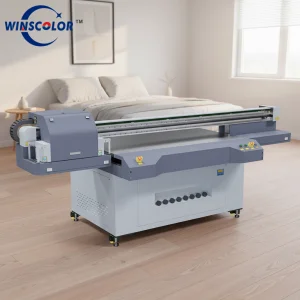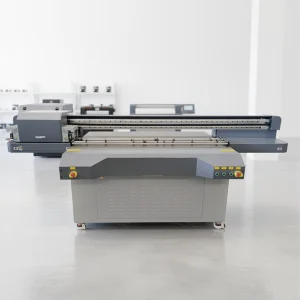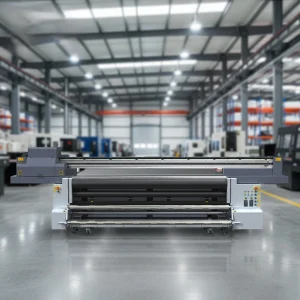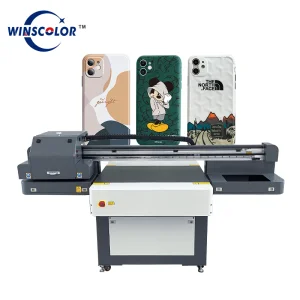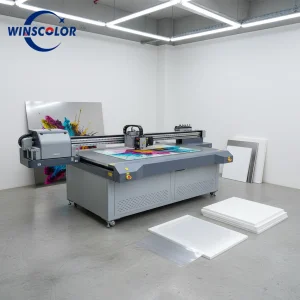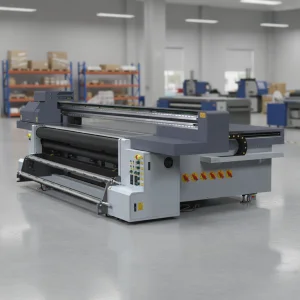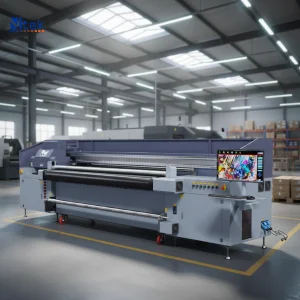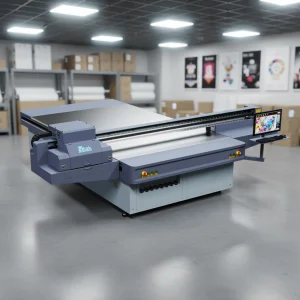
Configured for rigorous thermal stability, Ricoh Gen6 drop-on-demand ink arrays, and uncompromised surface energy adaptability across rigid metals and polymers.
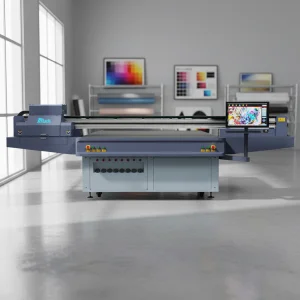

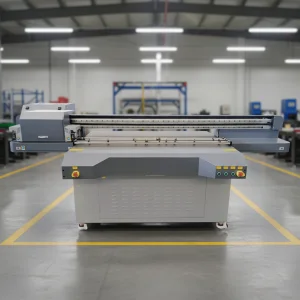
Analyzing the convergence of high regional labor costs, stringent maritime safety mandates, and the shift toward zero-VOC automated manufacturing platforms.
Norway’s high hourly manufacturing wage rates demand automated machinery capable of multi-pass continuous execution without human intervention. The YC2030L production line integrates multi-zone vacuum fixation and pneumatic registration pins, reducing tactile positioning cycles by over 68% compared to traditional flatbed fixtures.
From the shipyards of Stavanger, Bergen, and Ålesund to offshore supply bases, equipment labelling demands compliance with NORSOK standards. The YC2030L enables high-resolution direct deposition on anodized marine aluminum, phenolic resins, and polymer switchgear with saline-resistant UV photopolymerization.
Aligning with Norway’s aggressive environmental policies and European Green Deal taxonomies, industrial manufacturers cannot sustain mercury vapor curing systems. The dual water-cooled LED UV arrays of the YC2030L eliminate toxic ozone emissions and drop energy consumption down to a mere 1.8 kW during active exposure phases.
Advanced multi-substrate material science calibrated for low ambient workshop temperatures and high humidity coastal manufacturing corridors.
Norway’s cutting-edge architectural ethos leans heavily on timber framing interlaced with high-performance aluminum composite panels (Dibond) and sintered stone. The YC2030L’s precise variable dot printing (grayscale from 5pl to 15pl) allows high-definition, non-repeating wood-grain and Nordic granite aesthetics directly printed on composite building sheets. The cured polymers resist cyclic freeze-thaw cracking (-30°C to +40°C), preventing micro-fissuring and color bleaching caused by high-latitude UV exposure.
Norwegian marine infrastructure—spanning offshore salmon aquaculture systems in Trøndelag to deep-sea seismic telemetry consoles—requires non-delaminating functional switchgear graphics. By pairing the YC2030L’s dual-channel dedicated adhesion promoter deposition with white backings, operators execute chemical-resistant, tactile button indicators directly onto thick PMMA, tempered polycarbonate, and marine stainless sheets, eliminating vinyl overlay failure.
How international contract manufacturing centers are standardizing on large-format modular UV systems to hedge against localized margin compression.
Across central Europe, North America, and high-efficiency Asian manufacturing hubs, the transition away from traditional screen-making is accelerating. Global supply disruptions have revealed that traditional analog printing runs—burdened by screen manufacturing, chemical reclamation baths, and extensive makeready losses—cannot survive in an environment defined by on-demand production and mass-customization.
Industrial operations increasingly standardize on the 2000 mm × 3000 mm form factor. This exact footprint matches international standard sheet sizes (such as full 2m × 3m Dibond sheets, standard European acrylic extrusions, and double 4×8 industrial board layouts). The YC2030L meets this cross-border requirement, offering complete geometric interchangeability between standard engineering boards without secondary trimming cuts.
Dissecting the vertical integration, precision metallurgy, and modular design philosophy executed within our 20,000 m² Jinan manufacturing center.
Our gantries are fabricated from aircraft-grade tensile steel alloys, subjected to controlled 600°C electric annealing to eliminate micro-structural lattice stresses. This ensures our machines maintain absolute flatness tolerances below 0.05 mm across the entire 3000 mm beam traversal span, protecting critical alignments during continuous international freight transit.
Our supply chain avoids non-standard proprietary locks. Motion control relies on dual Japanese THK ultra-quiet linear rails, Panasonic or Delta high-torque AC servo drives, and industrial German IGUS drag chains. This architecture guarantees Norwegian field engineers can effortlessly source, inspect, and service core wear components locally.
By concentrating CNC manufacturing, bed milling, and optical testing lines within our factory cluster in Shandong, capital costs are lowered by 40% to 55% compared to Western European assembled hardware, while delivering equal or superior MTBF (Mean Time Between Failures) metrics across demanding production shifts.
Anticipating the integration of embedded computer vision, dynamic nozzle compensation, and automated cloud profiling systems through 2026-2030.
Current R&D paths are embedding high-speed CMOS visual sensors directly alongside the printhead carriage assembly. This closed-loop edge AI evaluates droplet satellite deviations, nozzle deflection, and substrate height variations in real-time. If an automated deviation is registered, dynamic masking algorithms instantly compensate by distributing surrounding nozzles to cover potential banding paths, maintaining continuous print run integrity.
Working alongside European polymer specialists, our engineering teams are developing dynamic UV-LED spectra modulation. Depending on whether flexible polyolefins, architectural glass, or powder-coated steel are fed across the vacuum bed, the curing engine adjusts output power milliwatt-by-milliwatt, preventing substrate bowing while securing deep chemical bonding at the ink-substrate boundary.
Ensuring complete regulatory harmonization with EEA frameworks, CE Low Voltage Directives, and resilient spare-parts logistics channels.
Every unit deployed to Norway ships with comprehensive Declaration of Conformity document packages verified under the EU Machinery Directive 2006/42/EC, EMC Directive 2014/30/EU, and RoHS directives, satisfying both national Arbeidstilsynet audits and internal enterprise EHS mandates.
Strategic supply agreements via international courier networks guarantee that printheads, boards, optical decoders, and negative pressure assemblies land at Oslo Gardermoen, Bergen Flesland, or direct maritime terminal hubs within predictable time windows to protect operational continuity.
Secure IP-tunneling links provide direct communication with our senior system engineering team in Jinan. Real-time board diagnostics, waveform calibration, and ICC profile optimization are provided without requiring on-site service calls, keeping maintenance overhead predictable and lean.
Comprehensive engineering insights addressing system configurations, material capabilities, and maintenance protocols.
Comprehensive printing solutions spanning precision desktop units, specialized packaging engines, and wide-format hybrid platforms.