Pre-configured with Greyscale Ricoh Gen6 / Kyocera piezo heads, active LED pinning, and high-precision media feeds tuned for Japanese production standards.
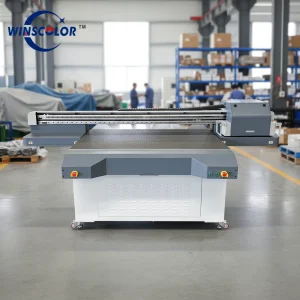


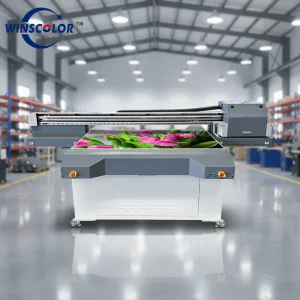
As Japan's undisputed manufacturing capital, the Greater Nagoya (Chubu) region demands printing equipment that bridges heavy industrial endurance with microscopic dot placement accuracy.
Direct printing onto textured polycarbonates, ABS dashboards, thermoformed fascia, backlit buttons, and instrument panels without expensive tooling or film plates.
Modernizing legendary Aichi pottery and architectural cladding via plate-free high-relief gloss varnish, ceramic slip simulation, and weatherproof UV-curable formulations.
High-speed printing on non-tearable PVC, aluminum composite panel (ACP), PET films, and acrylic boards for Meitetsu, JR Central, and commercial retail fit-outs in Sakae and Meieki.
A complete technical breakdown of how hybrid UV printers surpass traditional standalone flatbeds and dedicated roll-to-roll units in high-throughput Japanese workshop settings.
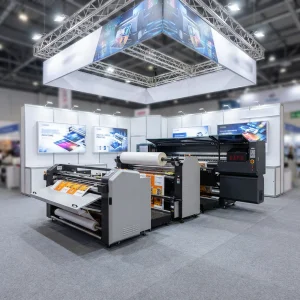
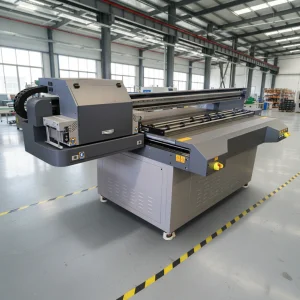
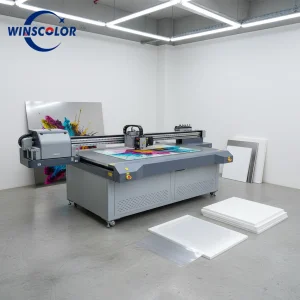
Unlike standard flatbeds constrained by stationary bed boundaries, or roll printers unable to advance unyielding boards, the UV Hybrid Architecture employs a precision-milled vacuum conveyor belt combined with heavy-duty pneumatic feed/retrieval tables. This allows continuous line feeding of heavy rigid sheets—such as 15mm thick extruded acrylic, sheet aluminum, and composite honeycomb paperboard—while instantly transitioning to roll media like backlit film, leatherette, and architectural vinyl.
Our hybrid platforms incorporate dual Renishaw magnetic optical linear scales with sub-micron feedback loops. This neutralizes stepping discrepancies caused by thermal expansion during long manufacturing runs in non-climate-controlled factory bays throughout the humid Tokai summer.
Thermal management is critical when printing thin heat-sensitive media like Japanese PVC films and polycarbonate membranes. Our UV hybrids incorporate closed-loop water-chilled UV-LED arrays (395nm primary curing + 365nm surface pinning). This design keeps platen temperatures below 38°C, preventing substrate warp, dot elongation, and cockling.
Independent curing intensity modulation enables multi-layer printing in a single pass: White underbase + CMYK + Tactile Gloss Varnish. This produces Braille signaling meeting Japanese Barrier-Free Transportation standards (JIS T 0921) with tactile longevity exceeding 5 years of heavy public transit usage.
Request Engineering CAD & Data Specs| Evaluation Parameter | Winscolor UV Hybrid (YC3200HR / 2500HR) | Traditional Fixed Flatbed | Standard Roll-to-Roll UV |
|---|---|---|---|
| Media Versatility | Dual-Mode: Infinite Roll & Rigid Boards | Rigid Boards Only (Bed Limited) | Flexible Roll Media Only |
| Workshop Footprint Ratio | 1 Machine : 2 Roles (Optimized Space) | Requires Dedicated Floor Space | Secondary Machine Required for Boards |
| Continuous Production Throughput | High-Speed Belt Feed (Up to 85 m²/h) | Batch Loading (Substrate Dwell Penalty) | Fast for Roll / Zero Rigid Handling |
| Substrate Thickness Tolerance | Up to 50 mm (Self-Levelling Height Sensor) | Up to 100 mm depending on gantry | Max 1.2 mm flexible gauge |
| Aichi Automotive Prototyping Suitability | Exceptional (Rigid Trim & Soft Leather) | Limited to rigid components | Limited to dashboard vinyls |
Balancing Japanese precision demands with modern direct-factory cost containment: how our Jinan manufacturing facility empowers Aichi print houses to beat domestic margins.
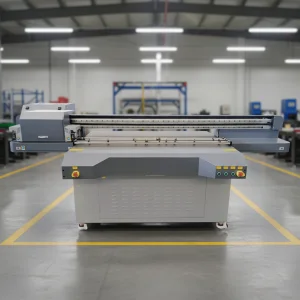
Every gantry is heat-treated and stress-relieved inside our 20,000 m² factory before 5-axis CNC machining, guaranteeing parallel accuracy of ±0.02 mm across full 3.2-meter widths.
Bypassing multi-tier Japanese distributor markups allows print shops in Nagoya, Ichinomiya, and Kasugai to invest directly in industrial multi-head Ricoh Gen6 systems at unmatched price-to-performance.
Direct maritime routing from Qingdao Port to Nagoya Port (Kinjo Pier) takes only 4 to 6 days transit, ensuring minimal customs dwell time, lower sea freight, and prompt door-to-door delivery.
Speak with our senior UV application engineers. We offer customized RIP ICC profiling for Japanese media brands, sample test prints on your local substrates, and direct factory delivery quotations.
We do not simply export machines; we engineer turn-key operational confidence compliant with Japanese workplace and electrical statutory mandates.
All export models destined for the Japanese market are engineered with:
Zero language barrier and immediate technical responsiveness:
How next-generation AI vision registration, low-migration monomer inks, and automated conveyor sorting are shaping future UV hybrid installations in Nagoya.
Real-time optical sensors dynamically compensate for sheet distortion, skewed manual feeding, and thermal edge shrinkage, ensuring zero-defect printing on irregularly cut panels.
Formulated to comply with Japanese food-contact display regulations and indoor architectural air quality thresholds without pungent acrylates or harmful evaporative distillates.
Full integration with cobot robotic arm unloaders and roll buffering units, lowering night-shift operator overhead and achieving true 24-hour manufacturing cadence.
Detailed technical, shipping, and maintenance clarifications compiled by our export engineering division.
Explore our full lineup of flatbeds, hybrids, rotary platforms, and high-speed packaging converters exported worldwide.
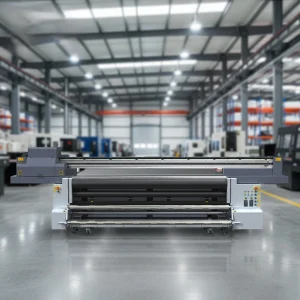
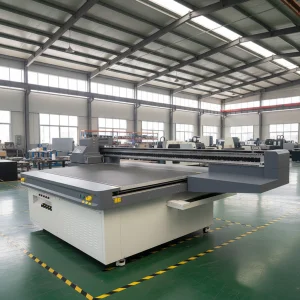
Elevate your workshop throughput with factory-direct pricing, custom engineering configurations, and dedicated Japanese technical assistance. Request an immediate evaluation quote or courier your material samples for free print tests today.
