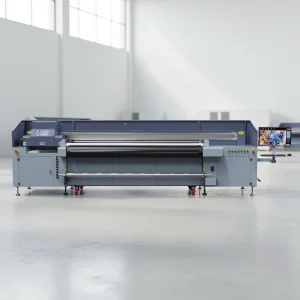
Swiss Spec
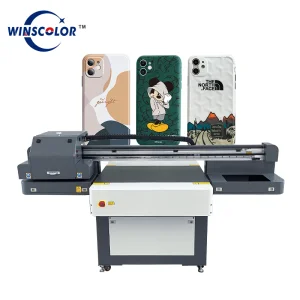
Configured specifically to meet the high dimensional repeatability, low-vibration damping, and ultra-high DPI demands of Swiss cleanrooms and boutique micro-assembly plants.
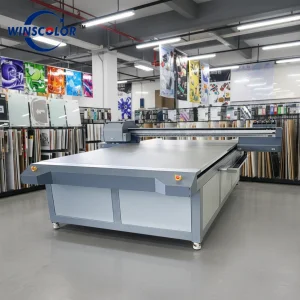
The Swiss manufacturing sector occupies an uncontested position at the zenith of global industrial craftsmanship. Built upon a legacy of horological mastery, micro-mechanical tooling, and cutting-edge biomedical instrumentation, Switzerland does not compete on raw volume; it dominates via unrivaled quality, micrometer-level dimensional tolerances, and relentless technological reliability. In this rigorous ecosystem, digital additive decoration has historically faced steep barriers to entry. Traditional screen printing and mechanical pad tampography require labor-intensive plate-making, multi-hour make-readies, and high solvent VOC footprints that conflict directly with stringent Swiss environmental codes and the economic reality of high-mix, low-volume (HMLV) fabrication runs.
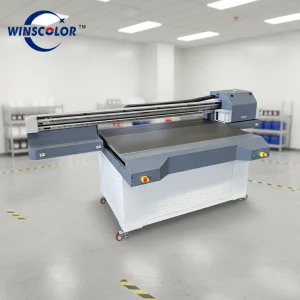
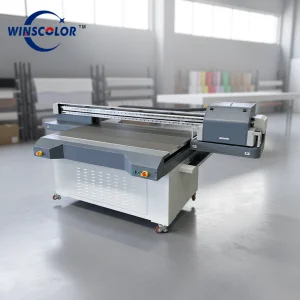
The YC6090 UV flatbed printer represents an engineering paradigm shift engineered to resolve this exact bottleneck. Spanning a 600 mm × 900 mm printable vacuum bed, the YC6090 platform bridges the historical performance chasm between entry-level consumer desktop printers and gargantuan multi-meter industrial gantries. By packaging industrial-grade Ricoh Gen6 / Gen5i / Epson micro-piezo printheads into a heavily stabilized, aerospace-grade aluminum gantry framework, OEM suppliers are now providing Swiss system integrators and contract manufacturers with sub-3-picoliter drop control, dynamic multi-layer tactile varnishing, and uncompromising registration accuracy across refractory metals, passivated titanium, sapphire crystal, PEEK composites, and anodized aluminum.
To understand why OEM YC6090 solutions are achieving rapid adoption across Switzerland, one must dissect the unique sectoral demands of its economic clusters:
Globally, the flatbed UV printing sector is undergoing an aggressive transition from decorative signage to functional, additive manufacturing enhancement. While early UV flatbeds focused on rigid PVC foam and acrylic point-of-sale display boards, the modern industrial buyer requires integration into automated factory lines. The YC6090 platform reflects this macro-evolution by utilizing heavy steel welded frames that undergo precision annealing and CNC planar milling. This structural rigidity prevents the micro-chatter and carriage harmonic resonance that otherwise lead to chromatic aberration and satellite drop spray on high-gloss substrates.
Furthermore, global environmental directives—led by European REACH and RoHS compliance standards—are forcing chemical and print manufacturers to eliminate hazardous aromatic amines, heavy metal colorants, and volatile organic solvents. In Switzerland, where the Federal VOC Incentive Tax (Lenkungsabgabe auf flüchtige organische Verbindungen) imposes financial penalties on solvent releases, our water-cooled 395nm UV-LED curing system offers immediate operational cost reductions by curing photocurable acrylate oligomers instantly without atmospheric off-gassing.
Explore the mechanical, optical, and chemical subsystems that enable the YC6090 to achieve Swiss-level micro-deposition performance.
Configured with Ricoh Gen6 / Gen5i industrial piezo heads featuring stainless steel nozzle plates. Utilizing variable droplet technology (2.5pl to 12pl), the system generates smooth continuous tones, photographic micro-gradients, and pin-sharp typography down to 1-point font sizes without graininess.
Carriage motion is driven by Japanese THK silent linear guide rails paired with dual high-precision ground ball screws. A high-torque Panasonic or Delta AC servo motor eliminates backlash and jitter, maintaining a true linear positional accuracy of ±0.015 mm across the entire 600×900 mm bed.
Dual adjustable water-cooled 395nm UV-LED lamps provide cold, instant curing. Independent left/right intensity modulation prevents thermal warpage on heat-sensitive materials such as thin polycarbonate foils, polystyrene dials, and delicate optical acrylic films.
Milled from an ultra-flat monolithic aviation aluminum slab, the vacuum platform features localized independent zone switches. An integrated negative-pressure reverse-air turbine facilitates effortless part release and ensures heavy or warped panels remain perfectly planar.
Constant white ink negative-pressure recirculation prevents titanium dioxide pigment sedimentation, eliminating nozzle dropouts. Integrated sub-tank heating and inline mechanical degassers maintain fluid viscosity at ±0.5 mPa·s regardless of ambient workshop temperature swings.
CMYK + W + Varnish + Primer multi-channel architecture. Proprietary RIP algorithm coordinates multi-layer printing in a single carriage pass, creating up to 5mm tactile Braille relief, haptic leather textures, or high-gloss selective spot varnishes with glass-like optical clarity.
| System Parameter | YC6090 Standard Spec | Swiss High-Precision Industrial Option |
|---|---|---|
| Effective Printable Bed Area | 600 mm × 900 mm (23.6" × 35.4") | Customized Vacuum Matrix with Alignment Micro-Pins |
| Printhead Technology | Epson i3200-U1 / Ricoh Gen5i Piezo | Dual/Triple Ricoh Gen6 Industrial Printheads (2.5pl) |
| Substrate Thickness Clearance | Up to 150 mm Standard Motorized Z-Axis | Extended 250 mm Clearance with Optical Thickness Sensor |
| Color Configuration | CMYK + White + Varnish (6 Channels) | CMYK + Lc + Lm + Double White + Varnish + Primer (8-10 Ch) |
| Curing Engine | Dual Air-Cooled UV-LED Units | Ultra-Quiet Chilled Water-Cooled 395nm UV-LED Arrays |
| Vacuum Table Flatness | ±0.05 mm across total bed | ≤±0.02 mm (Diamond Face Planar Milled) |
| Motion Drive Architecture | Leadshine High-Definition Stepper / Servo | Panasonic AC Digital Servos with THK Dual Mute Linear Rails |
| Compliance & Certifications | CE, RoHS Standard | CE (Machinery Directive 2006/42/EC), ISO 9001, Swiss VOC Proof |
Deploying an industrial OEM YC6090 UV flatbed printer in Switzerland entails far more than uncrating a piece of machinery. It requires the deep integration of mechanical hardware, intelligent color profiling, substrate chemistry, and production floor software into an optimized, high-yield digital manufacturing cell. Below are four comprehensive macro-solutions tailored for leading Swiss industry verticals:
Traditional watch dial pad printing demands separate etched cliché plates, ink viscosity balancing, and intricate silicone pads for every individual color layer and dial diameter. When artisanal Swiss watchmakers produce limited runs of 50, 100, or 500 bespoke pieces, the setup costs of conventional pad printing make high-mix runs commercially non-viable.
The YC6090 Horology Solution: The printer is fitted with custom-machined brass jig plates featuring kinematic locating balls. The operator loads up to 48 watch dial blanks simultaneously. Utilizing an integrated CCD industrial fiducial vision camera, the YC6090 automatically detects individual dial rotational offset and centers the print pattern within a 10-micron radius. Incorporating an inline primer channel, the printer lays down a sub-micron adhesion promotor onto circular satin, sunburst-brushed, or PVD-coated brass and titanium dial blanks, followed instantly by high-pigment opaque white and micro-relief numerals. The final gloss varnish pass encapsulates the luminescent pigments without baking or heat distortion.
Swiss medical technology companies located along the Lake Geneva basin and Zurich micro-tech clusters manufacture surgical instruments, endoscope controllers, and in-vitro diagnostic equipment. These components undergo repeated chemical disinfection with isopropyl alcohol, peracetic acid, and steam autoclave cycles.
The YC6090 MedTech Solution: We supply OEM-modified YC6090 engines equipped with specialized medical-grade UV formulations certified under ISO 10993 cytotoxicity parameters. The machine firmware is integrated into the client's Manufacturing Execution System (MES) via an open REST API / OPC-UA bridge. As surgical device handles enter the printing envelope on palletized trays, a barcode scanner transmits individual serial numbers and Unique Device Identification (UDI) Data Matrix vectors to the RIP queue. The YC6090 executes high-contrast, permanent marking that directly penetrates micro-etched medical-grade stainless steel (316L) and medical PEEK without flaking or chemical leach.
Precision instrumentation producers in St. Gallen, Aargau, and Solothurn construct custom industrial controllers, laboratory spectrometers, and railway electronics. Aluminum front plates require abrasive-resistant nomenclature, schematic wiring diagrams, and tactile switch bezels.
The YC6090 Electronic Fabrication Solution: Designed to replace multi-color screen printing on anodized or powder-coated aluminum, the YC6090 deposits vibrant CMYK under an ultra-durable matte or semi-gloss topcoat. The white ink density achieves an optical density (OD) greater than 2.8, guaranteeing 100% opacity over dark brushed gunmetal or black anodized surfaces. The machine’s motorized Z-axis automatically tracks varying panel elevations—such as countersunk screw wells, milled terminal cutouts, and raised gasket ribs—adjusting drop flight trajectories in real-time to eliminate overspray mist.
Request our comprehensive engineering dossier, complete Swiss compliance audit, and dispatch your substrate samples for certified laboratory print testing in our Jinan testing center.
The horizon of UV flatbed technology is expanding beyond passive visual graphics toward functional digital additive processing. As an OEM manufacturer actively partnering with Swiss distributors and industrial engineering firms, our R&D roadmap targets five foundational pillars of technological evolution:
Transitioning to next-generation silicon MEMS printhead architectures producing native 1.5-picoliter droplets. This unlocks 2400×4800 true optical resolution, completely matching traditional photographic silver halide plates and offset lithography sharpness on miniature watch dials and jewelry backings.
Formulating photocurable monomers synthesized from renewable plant-based resins and circular raw materials. Designed to meet forthcoming 2030 EU Green Deal mandates and Swiss Federal Office for the Environment (FOEN/BAFU) regulations, reducing carbon lifecycle impact by over 45%.
Integrating ultra-fast line-scan cameras positioned directly on the print carriage. Edge AI neural networks analyze droplet trajectory in flight, automatically identifying deflected nozzles and remapping pixel firing channels in milliseconds to completely eliminate print banding.
Engineered responses compiled by our senior applications and chemical engineering divisions to address the exact technical criteria of Swiss procurement managers.
Beyond the compact YC6090, our manufacturing facility engineers large-format production flatbeds, continuous roller hybrids, and roll-to-roll engines for high-volume European manufacturing operations.