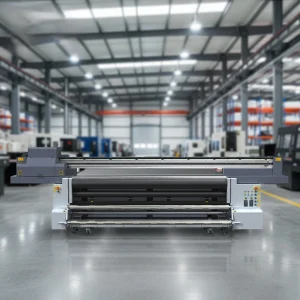
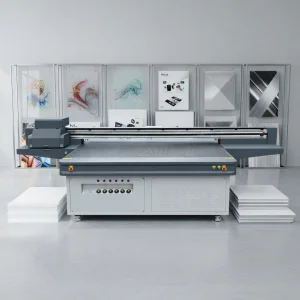
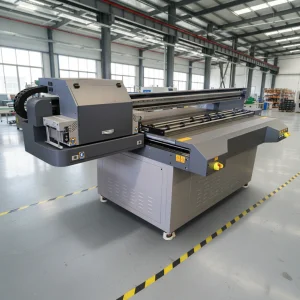
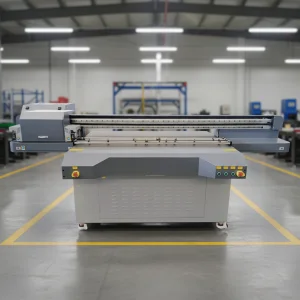
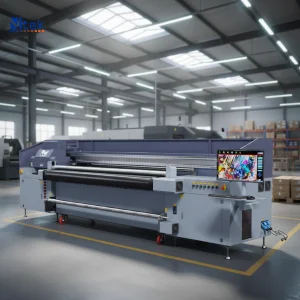
Engineered specifically for Northern California's stringent fabrication specifications, delivering micro-piezo drop accuracy, dual UV-LED pinning, and ultra-wide rigid substrate handling.
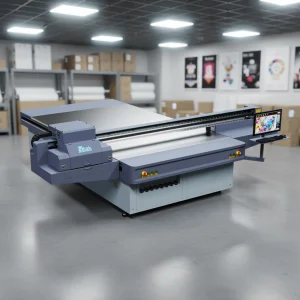

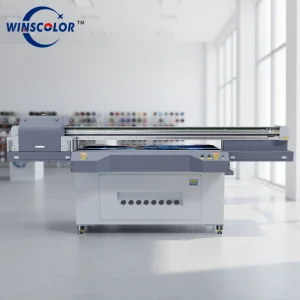
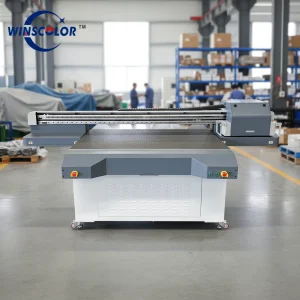
Bridging the gap between rapid tech hardware iteration, South San Francisco life sciences diagnostic equipment, and urban architectural fabrication demands.
San Francisco and the broader Bay Area have undergone a structural manufacturing shift. Unlike traditional low-margin, high-volume production zones, San Francisco's commercial landscape thrives on high-value, low-batch, hyper-customized output. Product development laboratories in SoMa, robotics incubators in the Mission District, and biotech facilities in South San Francisco demand immediate on-substrate imaging without the weeks-long setup times of screen printing or offset tooling.
The YC2030L (2.0m x 3.0m printable footprint) addresses this industrial reality directly. Equipped with high-density Ricoh Gen6 piezo printheads capable of variable droplet firing (5pl to 12pl), the system enables industrial designers to output photorealistic UI overlays, tactile control panels, and structural composites within minutes of CAD export.
Commercial square footage across the Bay Area is among the most capital-intensive in North America. Production facilities in Hunters Point, the San Francisco Design Center, and Richmond cannot afford bloated machine footprints that serve single-purpose applications. Equipment must demonstrate exceptional square-meter return-on-investment (ROI).
The YC2030L maximizes physical floor space by delivering a true 2000mm x 3000mm active vacuum zone over an integrated single-chassis footprint. Its multi-zone vacuum system allows shops to run multiple 12"x18" prototypes simultaneously, transition instantaneously to a 4'x8' standard architectural panel, or print uninterrupted across a full-sized 2m x 3m sheet of Dibond or acrylic.
A deep dive into greyscale micro-droplet technology, cold-curing UV-LED diodes, and total cost of ownership (TCO) benchmarks for industrial printheads.
Modern enterprise contracts reject banding, graininess, and optical dot gain. Industrial buyers demand sub-visible dot patterns even under macro inspection. The YC2030L integrates Ricoh Gen6 MH5320 printheads, which utilize multi-pulse piezoelectric actuation. By modulating droplet volumes between 5pl for fine edge definition and up to 15pl for solid deep-color saturation, the platform ensures photographic tonal transitions across architectural backlit films and micro-printed control fascias.
Global sustainability mandates have accelerated the phase-out of high-heat mercury arc lamps. Mercury lamps release ozone, consume up to 80% more electricity, and distort heat-sensitive thin polymers like 0.5mm polycarbonate or fluted polypropylene. The YC2030L deploys dual solid-state water-cooled UV-LED curing arrays operating at 395nm wavelength. This yields instantaneous polymerization without thermal substrate warping, achieving instant cure at line speeds up to 45 m²/hr.
Global OEMs scrutinize mean-time-between-failures (MTBF) and consumable wear. The YC2030L addresses long-term total cost of ownership by utilizing dual high-precision THK linear guide rails, an aviation-grade aluminum gantry beam, and an industrial anti-static ionizer system that eliminates electrostatic ink misting. Furthermore, independent negative pressure ink recirculation for white and varnish channels prevents costly head clogging during idle states.
How the YC2030L resolves material adhesion, durability, and texture requirements across demanding sector applications.
| Industry Vertical | Common Substrates | Ink Layer Stack & Process | Performance & Compliance Standards |
|---|---|---|---|
| San Francisco Commercial Architecture | Tempered glass, architectural bronze, anodized aluminum | Silane Primer + High-Opacity White + CMYK + 3D Matte Varnish | ASTM D3359 cross-hatch adhesion 5B, UV resistance 5+ years outdoor without delamination. |
| Silicon Valley Tech Prototyping | Polycarbonate sheets, rapid 3D prints, ABS, acrylic | CMYK + High-Gloss Spot Varnish (haptic micro-embossing) | Resistant to isopropyl alcohol wiping (50+ rubs), MIL-STD-810G vibration tolerance. |
| Bay Area Retail POP & Trade Exhibitions | Dibond aluminum composite, honeycomb cardboard, PVC board | CMYK + CMYK dual-strike or White sandwich (Color-White-Color) | Zero-flaking during CNC Zund/Kongsberg digital flatbed routing; class A fire-rated inks. |
| Bespoke Interior & Art Production | Hardwood oak, natural birch, ceramic tiles, acoustic felt | Selective White underbase + CMYK photographic layering | Low-odor GREENGUARD Gold certified formulation for interior environmental quality. |
Operating industrial machinery in Northern California requires rigorous compliance with environmental, electrical, and labor safety regulations. Purchasing from an unvetted exporter often results in severe local permitting delays, unexpected fines, or failed inspections.
Our YC2030L flatbed systems engineered for the San Francisco market are manufactured with components that conform directly to local operating frameworks:
Every YC2030L platform earmarked for San Francisco facilities undergoes a mandatory 72-hour continuous stress test before export:
1. Laser Interferometer Gantry Alignment
Calibrating carriage travel along the X and Y axes to within ±0.02mm across the entire 3000mm bed length.
2. Multi-Zone Vacuum Pressure Differential Test
Ensuring sustained suction pressure against warped rigid substrates up to 100mm thickness.
3. 100-Cycle High-Density Color Stress Run
Continuous execution of high-ink-load patterns testing negative pressure ink supply stability and nozzle firing consistency.
How our R&D pipeline integrates artificial intelligence, robotics, and cloud telemetry into the YC2030L hardware architecture.
Dual optical infrared sensors automatically map substrate elevation to 0.05mm precision. High-speed safety bumper bars kill carriage travel instantly in the event of sheet corner warping.
Carriage-mounted micro-cameras scan real-time test patterns. AI computer vision models detect deflected or missing nozzles on the fly, dynamically rerouting firing channels without stopping output.
Standardized I/O protocols and pneumatically triggered registration pins for automated suction-cup crane loading, eliminating manual operator substrate staging.
Continuous sensor feeds track motor thermal load, ink viscosity, and LED degradation, providing predictive component servicing schedules before downtime strikes.
Detailed answers addressing procurement specs, installation footprints, chemical adhesion, and local power configurations.
The YC2030L operates on 220V AC (±10%), single-phase, 50/60Hz, with a peak consumption under 6.5kW (including vacuum turbine and water chillers). We recommend standard commercial 30A dedicated circuits. Operational temperature should be maintained between 20°C and 28°C (68°F - 82°F) with relative humidity between 40% and 60% non-condensing to ensure optimal ink droplet flight characteristics.
Non-porous, smooth substrates such as float glass, architectural ceramic tiles, and mirror-finish stainless steel require chemical coupling agents. The YC2030L can be configured with an automated dedicated primer channel or utilized with wiping-based silane primer compounds. This breaks surface energy tension, yielding an ASTM cross-hatch adhesion score of 5B with zero flaking under water exposure.
Standard 2513 machines accommodate 2.5m x 1.3m (roughly 8.2' x 4.2'). The YC2030L provides an expanded 2.0m x 3.0m (6.56' x 9.84') working area. This width allows two standard 4'x8' boards to be staged side by side or seamless execution of oversized 2-meter wide architectural panels without physical seam joining or split-file processing.
Yes. With configured Varnish and White channels, the YC2030L executes multi-layer micro-deposition in a single carriage pass. By repeatedly laying high-viscosity UV varnish or white ink with precisely controlled curing delays, users can produce ADA-compliant Braille signage, raised wood textures, simulated oil paintings, and glass crystal relief finishes.
The system ships with industry-standard Onyx, Caldera, or Photoprint (SAi Flexi) software support. We furnish complete ICC color profiles for standard substrates including cast acrylic, Dibond, Sintra PVC, birch plywood, and corrugated fluted boards, guaranteeing predictable delta E values and precise white-underbase generation.
We provide complete factory direct support backed by remote technician video diagnostics and express air dispatch for critical components (piezo printheads, mainboards, peristaltic pumps, UV-LED power supplies). Most wear items are shipped with transit delivery to San Francisco international logistics hubs within 48 to 72 hours.
Connect directly with our senior application engineering team to calculate return-on-investment models, request custom substrate print evaluations, and receive full machine specifications.
Send Inquiry NowComplementing the YC2030L series with hybrid roll-to-roll, compact format, and automated digital carton finishing lines.