Pre-calibrated hybrid and flatbed configurations delivering continuous operation for advertising agencies, industrial nameplate printers, and packaging producers across Moscow Oblast.
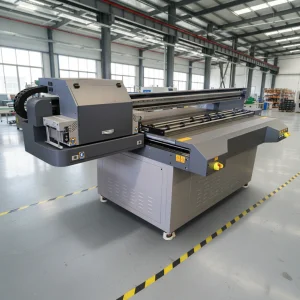
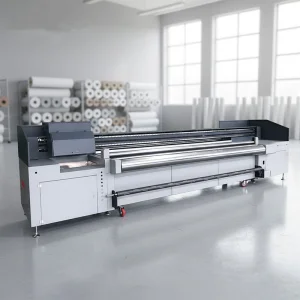


How the Russian capital's print houses, packaging conglomerates, and industrial manufacturers have restructured equipment procurement toward high-uptime, Chinese direct-factory manufacturing.
The print production ecosystem of the Moscow Metropolitan Area—encompassing major manufacturing clusters along the Moscow Ring Road (MKAD), Podolsk, Khimki, Noginsk, and Domodedovo—has undergone a profound structural transformation over recent years. Historically dependent on Western European printing equipment manufacturers, Russian print enterprises previously faced spiraling operational costs, severe supply-chain bottlenecks for proprietary replacement components, and protracted shipping times for European spare parts. In response, enterprise decision-makers in Moscow have pivoted decisively toward direct-factory partnerships with tier-one Chinese industrial UV printer manufacturers who offer equivalent mechanical rigidity, advanced grayscale piezoelectric printhead arrays, and transparent component supply lines.
In this transformed industrial theater, the demand for UV Hybrid Printers (combining vacuum conveyor belt feeding with foldable extension tables) has outstripped dedicated single-function flatbeds. Moscow's commercial print shops operate in an intensely competitive commercial real-estate environment where warehouse square-meter rental costs dictate compact equipment footprints. A high-speed UV hybrid platform allows a single operator in an industrial park in Lyubertsy or Mytishchi to execute a 500-meter run of flexible backlit vinyl for retail installations, swiftly attach pneumatic extension tables, and directly transition to printing on 30mm thick expanded PVC sheets, ACP (Aluminum Composite Panels), or corrugated cardboard—without requiring two dedicated production lines.
Furthermore, currency settlement directly through Russian Ruble (RUB) and Chinese Yuan (RMB) cross-border channels, coupled with accelerated containerized rail freight via the Trans-Siberian corridor and the Khorgos/Manzhouli border ports directly into Vorsino and Bely Rast logistics terminals, has truncated lead times to under 18–25 days. By bypassing intermediaries, Russian factory buyers eliminate inflated third-party distributor margins and establish direct technical communication with Jinan's elite CNC gantry fabrication and motion-control engineering divisions.
Understanding the micro-mechanics, vacuum conveyor tensioning, and sub-micron piezoelectric drop ejection that define tier-one factory manufacturing.
Industrial UV hybrid printing is fundamentally an engineering compromise solved through rigorous mechanical tolerances. Unlike a fixed vacuum table flatbed where the substrate remains static while the gantry traverses the Y-axis, a hybrid printer's gantry remains stationary along the Y-axis, moving solely along the X-axis carriage, while the substrate is transported beneath the beam on an industrial-grade rubber-mesh vacuum conveyor belt. This mechanical topology introduces unique fluid dynamic and mechanical friction challenges that separate consumer-grade machinery from heavy-duty factory systems.
Equipped with infrared optical sensors and pneumatic pneumatic-actuated steering rollers, the conveyor continuously monitors belt tracking. If lateral drift exceeds 0.5 mm during heavy board feeding, automatic micro-adjustments restore balance, preventing media skewed printing across 100-meter continuous runs.
Features independent negative pressure regulators for color inks and white ink channels, accurate to ±0.01 kPa. Continuous ink circulation through the sub-tanks and printhead nozzles prevents titanium dioxide settlement in white pigment, eliminating nozzle dropouts during overnight cold standbys.
Utilizes dual chilled-water UV-LED irradiation units delivering up to 14 W/cm² dosage. Operating at a narrow 395nm wavelength ensures instant photopolymerization of monomers without generating excess radiant heat, allowing safe processing of heat-sensitive thin PVC, PET film, and acrylic.
In our Jinan manufacturing plant, machine chassis are stress-relieved via 600°C electric thermal annealing furnaces over a 36-hour cycle before undergoing precision 5-axis CNC gantry milling. This eliminates internal residual stress within the structural steel beams, ensuring that over a decade of operation in harsh continental environments, the dual THK linear guide rails maintain a parallelism variance of under 0.015 mm per running meter. This sub-micron mechanical foundation is vital when deploying Ricoh Gen6 (MH5320) industrial printheads that fire 5-picoliter variable droplet matrices at jetting frequencies exceeding 50 kHz.
How Chinese industrial factory designs solve low indoor humidity, electrostatic dust attraction, and sub-zero supply chain logistics across Central Russia.
The climate profile of Moscow presents extreme operational conditions for digital inkjet hardware. During the prolonged winter window spanning November through April, outdoor temperatures routinely sink between -15°C and -30°C. When ambient air is brought into heated manufacturing facilities, indoor relative humidity levels frequently plummet to below 20–25%. For precision UV inkjet printing, these environmental conditions trigger three severe technical failure modes if the machinery is not engineered specifically to mitigate them:
| Environmental Challenge | Technical Impact on Printing | Our OEM Engineering Countermeasure |
|---|---|---|
| Low Winter Relative Humidity (<25% RH) | Extreme electrostatic charge accumulation on acrylic, fluted polypropylene, and expanded PVC, causing ink droplet deflection ("ink misting") and fuzzy edges. | Integrated active industrial AC Ionizer Bars mounted on both carriage flanks, neutralizing up to ±20 kV surface static prior to droplet contact. |
| Cold Supply Chain / Transit Inks | Monomers freeze or precipitate during multi-week winter rail shipping from Vladivostok or Zabaikalsk into Moscow freight terminals. | Specially stabilized cold-resistant UV-curable ink formulas paired with factory thawing and homogenization mixing protocols provided to Moscow operators. |
| Workshop Thermal Fluctuations | Viscosity drift in printheads when workshop heating drops overnight; 1°C shift creates a ~2% viscosity change, altering jetting speed and color profiles. | Tri-zone closed-loop sub-tank heating and heated printhead manifolds maintaining constant 42°C–45°C printhead operating temperatures continuously. |
| Airborne Carbon Dust from Winter Heating | Central Russian industrial parks often feature localized boiler heating, introducing fine airborne soot particles that contaminate nozzle plates. | Positive-pressure sealed carriage enclosures coupled with automatic pneumatic capping stations and dual silicon wiper blades for nozzle integrity. |
By engineering these proactive safeguards directly into the machine's firmware and fluidic architecture, Moscow production managers achieve repeatable color delta values (ΔE < 1.5) across long multi-panel wall mural prints, even when outdoor blizzards cause wide temperature differentials across the facility envelope.
From architectural cladding in Moscow-City to fast-moving consumer packaging, our UV hybrid solutions deliver industrial versatility across diverse media.
Utilizing high-adhesion ceramic primers and high-opacity white ink backings, our hybrid systems print photorealistic motifs and textures onto 6–12mm architectural glass panels for corporate interiors, residential kitchen splashbacks, and office partitions across high-end Moscow developments.
Packaging converters in Noginsk and Podolsk use hybrid conveyor systems to eliminate rotary die and flexographic plate costs. Micro-flute, E-flute, and honeycomb cartons are printed on demand with zero setup time, serving fast-growing Russian e-commerce brands on Wildberries and Ozon.
Multi-layer ink stacking deposits up to 2mm of raised relief text and tactile Braille symbols in full compliance with GOST accessibility standards for public transit stations and medical institutions throughout the Moscow municipal infrastructure.
A transparent technical roadmap for print directors and plant engineers evaluating Chinese UV printer OEMs prior to capital allocation.
Global procurement directors and Russian industrial equipment buyers can no longer rely on superficial brochure claims. To ensure long-term return on investment (ROI), enterprise RFP evaluation requires strict verification across five mission-critical manufacturing benchmarks:
Submit your material specifications, target hourly square-meter throughput, and factory floor dimensions. Our Jinan application engineers will deliver an exhaustive equipment configuration matrix, cost-per-square-meter ink calculations, and localized logistics routing.
In-depth responses compiled by our senior field application engineers addressing customs, maintenance, ink chemistry, and cold-weather operations.
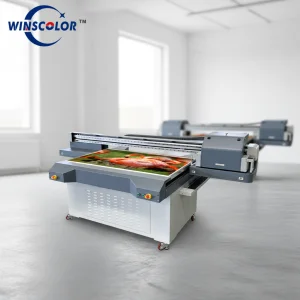
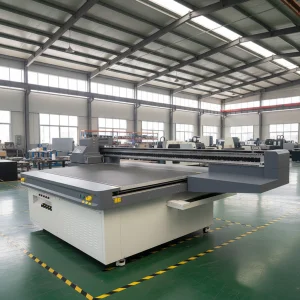
Comprehensive equipment series engineered for round-the-clock reliability, heavy board handling, and high-margin bespoke manufacturing.
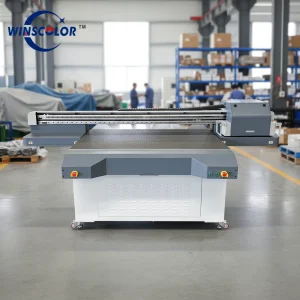

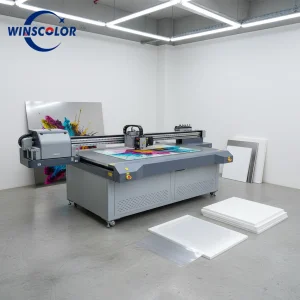



Partner directly with Jinan's premier industrial digital inkjet manufacturer. Receive personalized equipment configurations, factory pricing, localized customs clearance guidance, and full EAC documentation.
Send Inquiry Now