
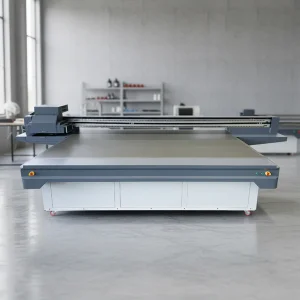
Heavy-duty, precision-engineered UV flatbed and corrugated platforms tailored to the production requirements of Jakarta, Surabaya, Jepara, and regional industrial parks.
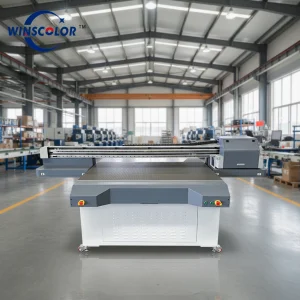
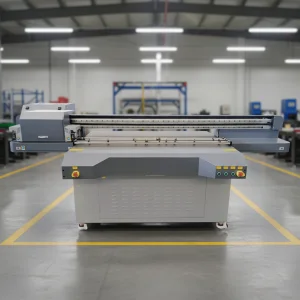
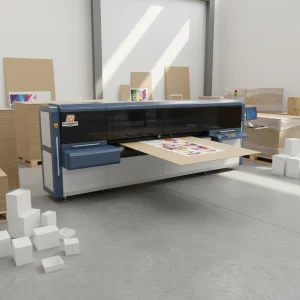
A rigorous industrial analysis of the mechanical, fluidic, and optical subsystems designed to sustain uninterrupted 24/7 print cycles across Southeast Asia.
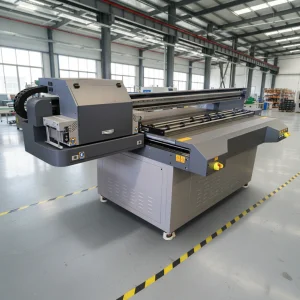
Fabricated using an annealed double-gantry steel chassis subjected to high-temperature stress-relieving furnaces. Provides zero structural deflection under 120 kg/m² substrate loads such as solid teak, laminated glass, or monolithic marble slabs.
Configured with up to 8 industrial Ricoh Gen6 (MH5320) piezo printheads. Features variable drop sizes (5pl to 15pl) at firing frequencies up to 50 kHz, ensuring high-density solid coverage and micro-text legibility down to 2-point font sizes.
Separate negative pressure reservoirs manage white ink independently from CMYK, light colors, and gloss varnish. Prevents nozzle starvation, ink weeping during rapid raster sweeps, and white sedimentation through continuous peristaltic recirculation.
How the national digital transformation roadmap "Making Indonesia 4.0", regional urbanization, and tightening environmental standards are accelerating UV-LED adoption across the archipelago.
Indonesia represents the largest economy in Southeast Asia, with a GDP expanding consistently at over 5% annually. The relocation and expansion of administrative institutions towards Ibu Kota Nusantara (IKN) in East Kalimantan, coupled with vigorous commercial real estate development in Greater Jakarta (Jabodetabek) and Surabaya, has unleashed unprecedented demand for architectural decor, acoustic interior paneling, and custom structural facades.
Traditional screen printing and conventional solvent-based roller technologies can no longer keep pace with the short-run customization, rapid turnarounds, and bespoke geometric designs required by Indonesian architects and general contractors. The NTEK YC3321L enables commercial converters to eliminate analog plate-making, directly mapping high-definition architectural motifs onto gypsum, wood-plastic composite (WPC), acrylic, and metal panels.
The Ministry of Industry (Kemenperin) has progressively rolled out sustainability benchmarks targeting industrial Volatile Organic Compound (VOC) emissions. Conventional solvent equipment releases substantial hazardous air pollutants into the shop environment, requiring expensive ventilation infrastructure and triggering workplace health inspections.
Equipped with cold-curing UV-LED lamp systems, the YC3321L generates zero ozone and minimizes thermal load on sensitive substrates. The UV-curable inks solidify instantly via high-efficiency photoinitiators under 395nm wavelength light, consuming up to 65% less electrical energy than conventional mercury-vapor arcs and drastically reducing operational carbon footprints for Indonesian manufacturers seeking Green Industry Certifications (Standar Industri Hijau).
Specific hardware modifications installed on NTEK YC3321L systems configured for Indonesian industrial deployment.
Indonesian industrial complexes frequently experience micro-surges and supply fluctuations from PLN networks. YC3321L units export-configured for Indonesia incorporate isolated high-capacity servo drivers, industrial EMI filters, and dedicated uninterruptible circuit breakers to prevent mainboard logic disruption.
With ambient operational temperatures regularly hitting 32°C to 38°C and relative humidity exceeding 85%, ink viscosity can degrade rapidly. The machine integrates active closed-loop chilling coupled with secondary sub-tank heating cartridges, holding ink jetting temperature strictly within ±0.5°C tolerances.
Synthetic substrates like cast acrylic, polycarbonates, and expanded PVC boards (Forex/Foam Board) generate massive triboelectric charges during dry tropical loading. Dual ionizing bars mounted directly onto the carriage neutralize up to 15kV charges before droplet ejection, eliminating overspray mist.
Targeted manufacturing workflows where the NTEK YC3321L delivers immediate ROI and operational advantages over legacy manufacturing methods.
Indonesia's wooden furniture export corridor centered in Jepara, Surakarta, and Semarang requires intricate decorative patterns, distressed vintage finishes, and custom brand logos. Conventional manual stencil painting is labor-intensive and inconsistent. The YC3321L prints directly onto raw, sanded, or sealed teak, plywood, and MDF boards up to 100mm thick. High-opacity white ink creates an opaque foundation, allowing vivid CMYK color fidelity over dark tropical wood grains without ink absorption bleed.
Luxury residential and commercial office constructions in Sudirman Central Business District (SCBD) and PIK require customized splashbacks, decorative partitions, and elevator surround cladding. By jetting specialized adhesion primers directly inline or offline, the YC3321L achieves Class 0 cross-hatch adhesion onto glass and glazed ceramic tiles. Tactile 3D varnish textures recreate natural stone veins and embossed textures that withstand tropical commercial wear.
Regional outdoor advertising firms managing campaigns across the Trans-Java and Trans-Sumatra toll networks face punishing UV exposure and monsoon rainfall. Solvent inks degrade and peel within months. The NTEK YC3321L utilizes automotive-grade pigmented UV inks yielding 3-to-5-year exterior weatherfastness without secondary lamination, lowering manufacturing cycle time by 40% on aluminum composite panels (ACP) and rigid signboards.
With the meteoric surge of e-commerce across Tokopedia, Shopee, and Bukalapak logistics hubs, brand packaging has transitioned into an active marketing medium. Converters deploy the YC3321L to execute short-run display stands (FSDU), luxury corrugated subscription boxes, and point-of-sale mockups without investing thousands of dollars in flexographic plate-making and setup scrap.
Rigorous analysis of industrial production methodologies for large-format rigid media operations in Indonesia.
| Evaluation Parameter | NTEK YC3321L UV Flatbed | Conventional Solvent Flatbed | Latex Roll-to-Roll + Mounting | Industrial Screen Printing |
|---|---|---|---|---|
| Direct Substrate Versatility | All Rigids up to 100mm | Limited (Coated synthetics only) | None (Requires mounting to board) | Rigids (Flat sheets only) |
| Pre-Press Tooling Cost | $0 (Pure Digital Workflow) | $0 (Pure Digital Workflow) | $0 (Requires vinyl substrate cost) | $120 - $350 per color screen |
| Drying / Curing Mechanism | Instant UV-LED Cold Photopolymerization | Evaporative Heat (Hours degassing) | High Thermal Radiant (110°C+) | Air Dry / Infrared Tunnel |
| VOC Emissions & Workplace Odor | Zero Ozone, Low VOC | Extremely High Hazardous VOCs | Low VOC / Water-based | Very High Solvent Evaporation |
| Average Ink Cost / m² | $0.75 - $1.20 USD | $0.60 - $0.90 USD | $1.80 - $2.40 USD | $0.30 - $0.50 USD (High runs) |
| Economic Breakeven Threshold | 1 to 500 units | 1 to 100 units | 1 to 50 units | 500+ units identical run |
Ensuring operational continuity and rapid service dispatch across Java, Sumatra, Bali, and Kalimantan industrial corridors.
Critical mechanical and electronic consumables—including Ricoh Gen6 printheads, negative pressure pumps, sub-tank sensor boards, optical linear encoders, and UV-LED driver modules—are held in bonded storage in Greater Jakarta and Surabaya for same-day dispatch.
Factory-trained Indonesian application specialists perform on-site commissioning, color profile calibration (ICC creation with X-Rite spectrophotometers), mechanical gantry realignment, and comprehensive operator safety training in Bahasa Indonesia.
All NTEK units comply fully with CE industrial safety norms, ISO9001 quality manufacturing management, and Indonesian electrical safety parameters (SNI alignment), expediting customs clearance under valid HS codes through Tanjung Priok and Tanjung Perak ports.
Strategic technological advances being integrated into next-generation NTEK hardware platforms serving expanding Indonesian manufacturing operations.
Integrating high-speed CCD camera arrays directly above the YC3321L gantry to automatically calculate substrate rotational skew and edge offsets down to ±0.05mm. Operators simply place irregular timber slabs or CNC-cut acrylic sheets on the vacuum bed without physical jig alignment.
R&D efforts are currently focused on transitioning monomer formulations to renewable vegetable-oil based acrylic esters. These inks retain instantaneous UV-LED cure speeds while enabling non-toxic recyclability of paperboard packaging, aligning with corporate ESG policies across Southeast Asia.
Embedded sensors constantly monitor piezo pulse shapes, pump duty cycles, vacuum chamber differential pressures, and UV-LED irradiance degradation. Fleet managers in Indonesia receive real-time predictive service alerts via cloud portals prior to any component failure.
Comprehensive engineering insights compiled from factory audits and enterprise procurement evaluations.
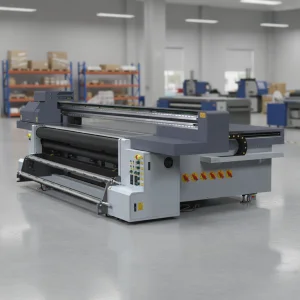
Explore specialized industrial hybrid, roll-to-roll, and multi-format flatbed systems engineered to optimize manufacturing output.

Consult with our lead hardware engineers to evaluate substrate sample testing, custom ICC color profiling, total cost of ownership estimates, and factory-direct sea freight logistics to Indonesian ports.