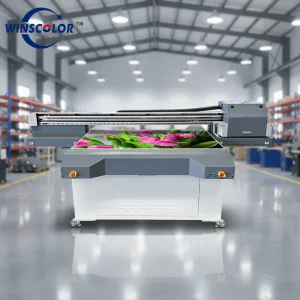
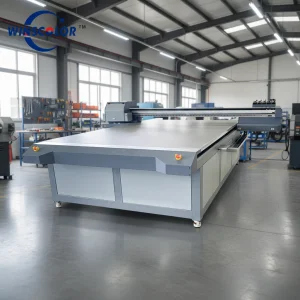
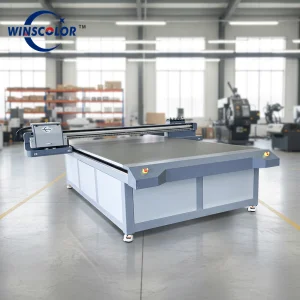
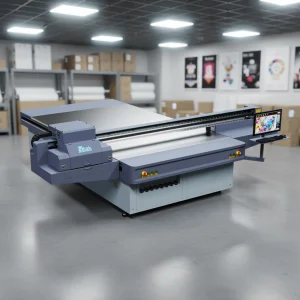
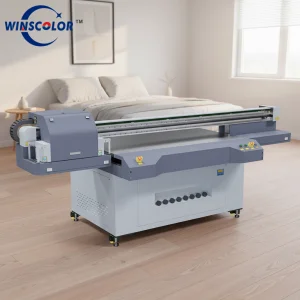
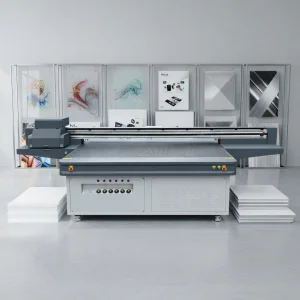
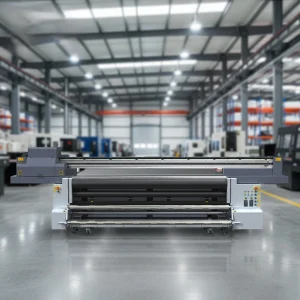
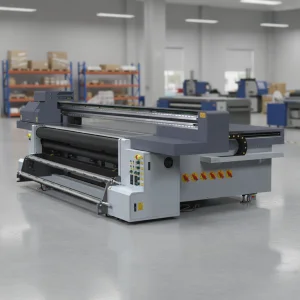
Field-engineered for high-yield architectural fabrication, high-duty cycles, and micron-level ink deposition on ceramic, porcelain, and structural building substrates.
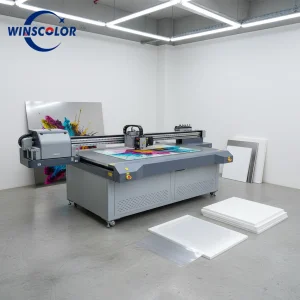

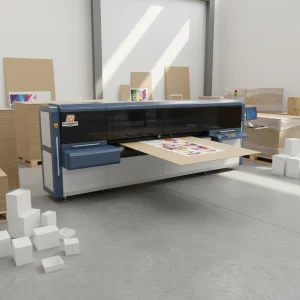
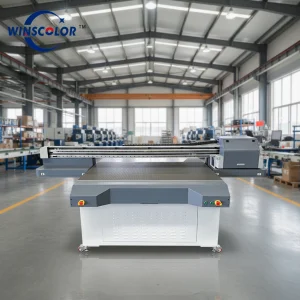
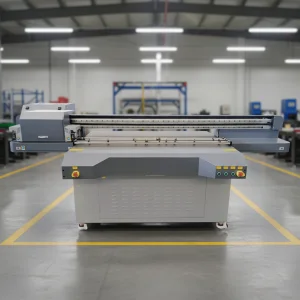
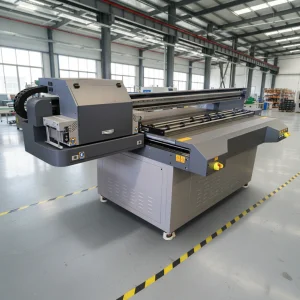
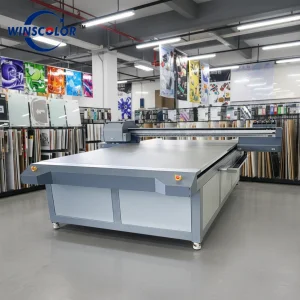
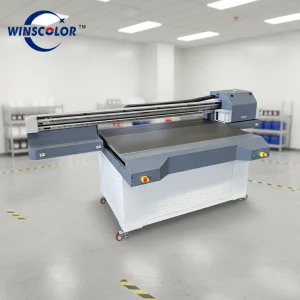
The shift from analog rotary screen printing to high-definition industrial inkjet has rewritten capital expenditure and design agility across the global ceramics and interior building products supply chains.
Traditional ceramic tile manufacturing relied heavily on organic solvent carriers that required long drying tunnels and emitted significant VOCs. Modern digital UV flatbed and hybrid machines utilize photo-initiated polymerizing formulations, curing within milliseconds under narrow-spectrum UV-LED arrays (395nm), eliminating volatile emissions and accelerating finishing cycles.
Global architecture demands oversized continuous formats (such as 1600 × 3200 mm and 1200 × 2400 mm slabs). Production lines require precision linear motor gantries and dual-rail stability to deliver edge-to-edge pattern continuity, hyper-realistic marble veining, and stone grain synchronization without registration errors.
Beyond two-dimensional surface coloration, leading global exporters are integrating high-viscosity digital varnish and white underbase layering. By depositing high-build transparent inks, manufacturers achieve 3D bas-relief effects, simulating natural cleft slate, hand-chiseled travertine, and non-slip commercial coatings dynamically.
Procurement directors and factory operators face distinct mechanical and operational variables when auditing direct manufacturers and overseas exporters.
Industrial ceramics processing is an abrasive, dusty environment. Global buyers require printhead architectures (such as Ricoh Gen6) featuring stainless-steel nozzle plates, internal ink recirculation, and customizable voltage waveforms to prevent ink starvation and nozzle dropping under non-stop continuous shifts.
Dense porcelain and natural stone panels exert heavy loads on machine beds. Enterprise procurement mandates heavy-gauge, heat-treated steel frames combined with multi-chamber high-torque vacuum beds capable of holding bowed tiles completely flat to maintain uniform printhead standoff (1.5mm - 2.0mm).
A major vulnerability in cross-border equipment acquisition is proprietary ink locking. International tile manufacturers demand open-architecture or factory-stabilized bulk ink delivery systems, drastically reducing running cost per square meter compared to monopolized OEM cartridge arrangements.
Beyond isolated printers, modern factories deploy complete, automated digital printing workflows designed to scale from sample development to continuous mass manufacture.
Ceramic glaze density rejects water-based and standard UV drops without engineered preparation. Our integrated systems include automated roll-coating or aerosolized priming modules that deposit molecular silane coupling agents, ensuring cross-hatch tape test pass rates (ISO 2409 Class 0) and high scratch resistance.
Reproducing natural stones (such as Calacatta marble, Onyx, or Basalt) requires broad color gamut conversion. Our proprietary color management workflows support 8-channel configurations (CMYK + Lc + Lm + White + Varnish), computing grain micro-textures and ink layer thickness in a single unified RIP pass.
Porcelain tiles withstand high temperatures, but delicate composite backing and glass-ceramic tiles deform under excess thermal radiation. Our water-cooled UV-LED curing engines ensure consistent energy output without substrate surface warping, reducing factory power draw by up to 65% compared to legacy metal-halide lamps.
Operating across 100+ countries, our manufacturing base enforces strict international electrical, environmental, and maritime packaging protocols.
Every industrial printer chassis leaving the production plant complies with the European Machinery Directive 2006/42/EC, low-voltage directive electrical safety standards, and UL-certified pneumatic and power distribution components tailored for North American and European industrial electrical grids.
Equipment downtime directly impacts production margins. Our machines feature integrated IoT network controllers that allow factory service engineers to monitor printhead driver temperature, negative pressure regulation, and board-level errors in real time via secure remote protocols, cutting troubleshooting cycles down to minutes.
Transoceanic shipping exposes equipment to salt-spray condensation and severe transit vibration. Each gantry is mechanically locked, optical scales are isolated, and the entire assembly is vacuum-sealed in multi-layer moisture-barrier foil before enclosure in fumigated steel-braced plywood crates.
Our engineering department continually refines deposition accuracy, variable droplet algorithms, and green printing chemistry to address emerging manufacturing challenges.
Production integration of 5pl-15pl variable grayscale drop ejection. Minimizes ink consumption while eliminating tonal banding on delicate transitions like micro-cement, white Carrara gradients, and soft plaster architectural panels.
Deployment of high-speed industrial CCD cameras mounted directly on the print carriage. Allows automatic scanning of pre-molded, textured ceramic blanks to register digital glaze and gloss varnish directly onto physically pressed surface veins in real time.
Developing piezoelectric fluid handling systems capable of ejecting nano-ceramic pigment particles dispersed in eco-friendly matrices designed for post-print firing at 1100°C–1200°C, permanently fusing the printed graphics directly into the molten ceramic matrix.
Detailed answers to critical equipment engineering, substrate adhesion, and operational questions asked by plant managers and procurement leads.
Select the optimal mechanical format, table dimensions, and printhead arrays engineered specifically for your commercial production volumes.